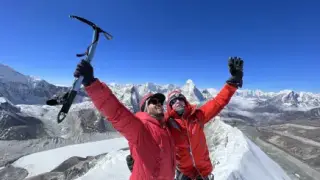
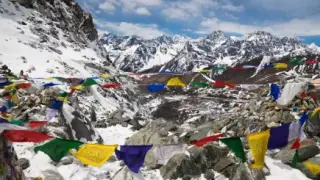
A strenuous 21-day restricted trek to Yalung Base Camp (4,500 m) on the south face of Kanchenjunga, the world's third-highest peak.
Duration
21 Days
Max Altitude
4,663 m / 15,299 ft
Difficulty
Moderate
Group Size
Max 14 trekkers
Region
Kanchenjunga Treks, Nepal
Best Season
Spring · Autumn
Accommodation
Teahouses & camping above Tseram
Meals
All meals on trek
Transport
Fly KTM-Bhadrapur; private drive
Dates & Prices
Choose your date
All dates are guaranteed departures — we never cancel for low numbers. Book online or send a quick enquiry.
YearMonth
4 departures · 2026
Oct
5
Oct 5, 2026 — Oct 25, 2026
Guaranteed departure — from 2 trekkers
Available
USD2,250
per person
Oct
6
Oct 6, 2026 — Oct 26, 2026
Guaranteed departure — from 2 trekkers
Available
USD2,250
per person
Nov
3
Nov 3, 2026 — Nov 23, 2026
Guaranteed departure — from 2 trekkers
Available
USD2,250
per person
Nov
4
Nov 4, 2026 — Nov 24, 2026
Guaranteed departure — from 2 trekkers
Available
USD2,250
per person
Can’t find a suitable date? We run private departures on any date with as few as 2 trekkers.
Trip Overview
About the Kanchenjunga South Base Camp
The Kanchenjunga South Base Camp Trek is a 21-day restricted-area trek to Yalung Base Camp (4,500 m) on the south face of Kanchenjunga (8,586 m), the world's third-highest peak, in far-east Nepal's Taplejung district. The route approaches through the lower Tamor river valley, climbs past Limbu and Rai villages to the Yalung glacier and the Oktang viewpoint, then returns via Ghunsa and the Tamor gorge to Suketar.
Kanchenjunga is one of the least-visited of the 8,000 m peaks. Its name in Tibetan, Kangchen Dzonga, translates as Five Treasures of Snow, after the five summits and the five repositories they are said to hold. The Kanchenjunga Conservation Area (KCA), established in 1997, covers 2,035 sq km around the massif and protects red pandas, snow leopards, and one of Nepal's most intact rhododendron and bamboo forests.
This is a strenuous, remote trek that requires restricted-area permits and a mandatory licensed guide. Days above 3,500 m are several, and the route has no rescue infrastructure. The sections below cover permits, altitude profile, seasons, accommodation and what to pack for 21 days on the south side of the world's third-highest mountain.
Last updated June 2026
Trip Highlights
Highlights
1
Stand at Yalung Base Camp (4,500 m) below the south face of Kanchenjunga
2
Views of Kanchenjunga (8,586 m), the world's third-highest peak, up close
3
One of Nepal's most remote and least-visited restricted treks
4
Trek through the Kanchenjunga Conservation Area rhododendron and bamboo forest
5
Pass the Oktang monastery viewpoint on the Yalung glacier moraine
6
Wildlife habitat: red panda, snow leopard and 250+ bird species in the KCA
Day by Day
Kanchenjunga South Base Camp Itinerary: 21 Days
Tap any day to expand — altitudes, walking times, meals, and overnight details for every stage of the journey.
A Swotah representative meets you at Tribhuvan International Airport and transfers you to your hotel. Your guide briefs you on the trek, checks your gear and confirms permit paperwork for the Kanchenjunga restricted area. Overnight in Kathmandu.
Sleep at 1,400 mDinner
Tonight’s stay
Hotel
A guided day around Kathmandu's UNESCO World Heritage Sites, including Pashupatinath, Boudhanath Stupa and Swayambhunath, with time to complete any outstanding permit photos or documents. Overnight in Kathmandu.
Sleep at 1,400 m
Tonight’s stay
Hotel
A 45-minute domestic flight reaches Bhadrapur in the far-east Terai, then a 3 to 4-hour jeep drive climbs through terraced hills to Suketar (2,420 m), the small trailhead town above Taplejung district. Overnight in Suketar.
Sleep at 2,420 mBreakfast
Tonight’s stay
Guesthouse
The walking begins from Suketar through pastures and subtropical forest, passing Limbu settlements whose stone-and-bamboo villages are scattered across the ridge. Lali Kharka (2,265 m) sits on an open spur with early views of the distant massif. About 3 to 4 hours. Overnight in Lali Kharka.
Sleep at 2,265 mBreakfastLunchDinner
Tonight’s stay
Teahouse
The trail descends and climbs through millet and rice fields, crosses the Phawa Khola on a suspension bridge, passes the Gurung hamlet of Sinchebu Bhanjyang and climbs to Phumphe Danda before dropping to Khesewa (2,120 m), where the first clear view of Kanchenjunga rewards the day. About 5 to 6 hours. Overnight in Khesewa.
Sleep at 2,120 mBreakfastLunchDinner
Tonight’s stay
Teahouse
The trail follows the Kabeli river valley through dense green forest, passing the villages of Anpan and Loppoding and ascending briefly to Ponpe Danda before dropping to Mamankhe (1,785 m) on the Nandeva river. About 5 to 6 hours. Overnight in Mamankhe.
Sleep at 1,785 mBreakfastLunchDinner
Tonight’s stay
Teahouse
Yamphudin (2,080 m) is a multi-ethnic village of Sherpa, Rai, Limbu and Gurung communities, set among terraced farmland above the Tenguwa Khola. This is the last significant settlement before the trail turns upward toward the high country; stock up on any supplies. About 3 to 4 hours. Overnight in Yamphudin.
Sleep at 2,080 mBreakfastLunchDinner
Tonight’s stay
Teahouse
A sustained climb from Yamphudin ascends through lush forest and the Omje Khola valley, passing Deurali Danda and gaining over 1,200 m to the high camp at Lasiya Bhanjyang (3,310 m). Kanchenjunga's ridgeline comes into view here for the first time at close range. About 7 to 8 hours. Camping at Lasiya Bhanjyang.
Sleep at 3,310 mBreakfastLunchDinner
Tonight’s stay
Camping
The trail continues through rhododendron forest and the Lupung valley, passing views of the Tuplung Peak and the first sections of the Yalung glacier moraine, to reach Tseram (3,870 m). Tseram is the main teahouse stop on the upper approach and the last reliable lodge before Ramche. About 5 to 6 hours. Overnight in Tseram.
Sleep at 3,870 mBreakfastLunchDinner
Tonight’s stay
Teahouse
Ramche (4,580 m), also called Ramchaura, is the highest teahouse stop on the south route. The trail climbs past mani walls, a glacial lake, moraine and grazing meadows to reach this exposed high-camp settlement. Rest the afternoon and hydrate well. About 5 to 6 hours. Overnight in Ramche.
Sleep at 4,580 mBreakfastLunchDinner
Tonight’s stay
Teahouse
An acclimatisation and exploration day from Ramche, ascending to a viewpoint at approximately 4,663 m where the southern wall of Kanchenjunga and three of its main summits, South (8,494 m), Central (8,482 m) and the main peak (8,586 m), fill the skyline at close range. Packed lunch; return to Ramche by afternoon. Overnight in Ramche.
Sleep at 4,663 mBreakfastLunchDinner
Tonight’s stay
Teahouse
The day's main objective: the trail climbs from Ramche through the valley, follows the glacial stream, ascends moraine past the Oktang monastery viewpoint and reaches Yalung Base Camp (4,500 m) on the Yalung glacier, the south-side base for Kanchenjunga expeditions. Jannu (Kumbhakarna, 7,711 m) and Yalung Kang (8,505 m) are prominent to the north. Return to Ramche the same afternoon. About 7 to 8 hours total. Overnight in Ramche.
Sleep at 4,500 mBreakfastLunchDinner
Tonight’s stay
Teahouse
The return route heads north and west through the Kanchenjunga Conservation Area, descending via Lamba Sumba Khraka with views of Jannu's southwest face to reach Ghunsa (3,427 m), a Tibetan village decorated with prayer flags and a small gompa. About 7 to 8 hours. Overnight in Ghunsa.
Sleep at 3,427 m
Tonight’s stay
Camping
A 5-hour descent through mixed forest of rhododendron, conifer, oak and birch follows the river valley from Ghunsa to Kyapra (2,730 m). The air thickens noticeably and the flora changes from high-alpine to temperate forest. About 5 hours. Overnight in Kyapra.
Sleep at 2,730 mBreakfastLunchDinner
Tonight’s stay
Teahouse
The trail drops steeply through a zigzag path via Amjilasa and along the Gunsa Khola to Sukethum (1,600 m) at the Tamor river confluence. About 7 to 8 hours of sustained descent. Overnight in Sukethum.
Sleep at 1,600 mBreakfastLunchDinner
Tonight’s stay
Teahouse
An easier day follows the Tamor Nadi downstream through small villages and across the Thunsa Khola to Chirwa (1,270 m), a hamlet near Tapethok. About 6 to 7 hours. Overnight in Chirwa.
Sleep at 1,270 mBreakfastLunchDinner
Tonight’s stay
Teahouse
The trail passes through Sinuwa village, follows the Pathibhara trek trail and crosses a suspension bridge above the Yaphre Khola before reaching Phurumba (1,542 m). About 5 to 6 hours. Overnight in Phurumba.
Sleep at 1,542 mBreakfastLunchDinner
Tonight’s stay
teahouse
The final walking day follows the Pathibhara trail back up to Suketar (2,420 m), climbing through terraced farmland and forest to the trailhead town where the trek began. About 6 to 7 hours. Overnight in Suketar.
Sleep at 2,420 mBreakfastLunchDinner
Tonight’s stay
Teahouse
A 3 to 4-hour jeep drive descends from Suketar to Bhadrapur in the Terai. The afternoon is free to rest or explore the town. Overnight in Bhadrapur.
Sleep at 100 mBreakfastLunchDinner
Tonight’s stay
Teahouse
A 45-minute domestic flight returns you to Kathmandu. A Swotah representative transfers you to your hotel. The rest of the day is free to rest or explore. Overnight in Kathmandu.
Sleep at 1,400 mBreakfastLunchDinner
Tonight’s stay
Teahouse
Your trek ends today. A Swotah representative transfers you to Tribhuvan International Airport for your onward flight. If you would like to extend your stay in Nepal or add another trip, we are glad to help arrange it.
Sleep at 1,400 mBreakfastLunch
Tonight’s stay
Hotel
What’s included
What's included
Every cost on the trail is broken out below — no hidden fees, no surprises at the trailhead.
Included
11 items
Airport transfers.
Standard/Deluxe rooms in Kathmandu on twin/double sharing with breakfast.
Guided sightseeing tour in Kathmandu, along with ticket fees.
Accommodation during trek (or camping in case of need).
All meals (Breakfast, lunch, dinner) during the trek.
Authorized English-speaking guide along with required Porters (3:1) for the trek.
Equipment clothing for porters, including their insurance.
All applicable government taxes.
All expenses for all staff –meals, accommodation, salary, equipment, insurance, transportation.
All necessary paperwork.
Medical kit (carried by your trek leader)
Not included
6 items
International flights; Nepalese visa fee.
Extra-night accommodation in Kathmandu is available for early arrival, late departure, or early return from the mountain for any reason other than the scheduled itinerary.
Lunch and evening meals in Kathmandu.
Travel and rescue insurance.
Personal expenses (phone calls, laundry, bar bills, battery recharge, extra porters, bottle or boiled water, shower, etc.).
Tips for guide(s), porter(s) and driver(s).
How Hard Is the Kanchenjunga South Base Camp?
The Kanchenjunga South Base Camp Trek is graded strenuous. The route spends multiple nights above 3,500 m, reaches 4,663 m on the Ramche exploration day, and covers remote, trail-only terrain with limited rescue access and basic lodging at high altitude.
▲Strenuous. Max 4,663 m (Ramche exploration). Multi-day high camp, remote trail, restricted area. Good fitness and acclimatisation essential.
Overall Rating
4
Moderate
out of 10 · physical effort scale
Max altitude4,663 m
Trekking days19 days
Trip Details
Planning your Kanchenjunga South Base Camp
Everything you need to plan the trek, topic by topic. Tap any one to open it.
The Kanchenjunga South Base Camp Trek is graded strenuous, and the combination o…
The Kanchenjunga South Base Camp Trek is graded strenuous, and the combination of altitude and remoteness drives that grade. The route peaks at around 4,663 m on the Ramche exploration day and at Yalung Base Camp (4,500 m), with several nights above 3,500 m at Tseram, Ramche and Ghunsa. Acute mountain sickness (AMS) is a genuine risk, and the itinerary includes a rest and acclimatisation day at Ramche before the base camp push.
Daily walking is 5 to 8 hours over maintained but often steep and rough trail, and the section from Yamphudin to Lasiya Bhanjyang (3,310 m) is particularly sustained. The return from Yalung BC via Ghunsa (3,427 m) adds a north-side traversal through the Kanchenjunga Conservation Area, with more elevation change. Swotah guides carry a first-aid kit, pulse oximeter and emergency contacts; travel insurance covering helicopter evacuation to 5,500 m is required.
Spring (March to May) and autumn (October to November) are the two windows for t…
Spring (March to May) and autumn (October to November) are the two windows for the Kanchenjunga South Base Camp Trek. Autumn brings the clearest skies after the monsoon, cold but stable air above 3,500 m, and the most reliable trail conditions; it is the most popular window for this route.
Spring sees warm temperatures in the lower Tamor valley, rhododendron in bloom on the approach, and good visibility at Yalung Base Camp, though late-season snow can still lie on the higher sections in early March. The monsoon (June to August) brings heavy rain, leeches on the lower trail and landslide risk in the Tamor gorge, and is not recommended. December to February sees snow above 3,000 m and possible closure of the higher trail sections.
The Kanchenjunga South Base Camp Trek passes through a restricted zone and requi…
The Kanchenjunga South Base Camp Trek passes through a restricted zone and requires two mandatory permits: the Kanchenjunga Conservation Area Permit (KCAP) and the Restricted Area Permit (RAP), also known as TIMS for restricted areas. Nepal law requires trekkers here to be in a minimum group of two, booked through a registered agency with a licensed guide. The RAP costs approximately USD 20 per week; confirm the current rate with Swotah before departure.
Because this is a restricted zone, permits must be processed in Kathmandu before travel to Taplejung. Swotah arranges all permit paperwork once you provide a passport copy and two passport-size photos, and confirms current fees. Attempting the route solo or without a registered guide is not permitted and will result in the trek being stopped at checkpoints along the trail.
Accommodation on the Kanchenjunga South Base Camp Trek is the teahouse, simpler…
Accommodation on the Kanchenjunga South Base Camp Trek is the teahouse, simpler and more basic than on the Annapurna and Everest routes because the region is restricted and rarely visited. Lower villages from Suketar to Yamphudin have adequate guesthouses; the section from Lasiya Bhanjyang onward includes camping at some stops. Above Tseram (3,870 m), lodges are very basic, cold and shared.
Ramche, the highest teahouse stop, is functional and unheated. Ghunsa (3,427 m), on the return, is a colourful Tibetan village with prayer flags and a small gompa, and its lodges are among the most welcoming on the route. Kathmandu provides comfortable hotels at the start and end. A four-season sleeping bag is important throughout, and in the high teahouses it is the difference between a comfortable and a sleepless night.
Food on the Kanchenjunga South trek is teahouse cooking, and dal bhat (lentil so…
Food on the Kanchenjunga South trek is teahouse cooking, and dal bhat (lentil soup, rice and vegetable curry) is the most reliable choice because lodge kitchens always have it and it carries you through long days. The menu broadens in the lower villages and narrows considerably above Tseram, where noodles, Tibetan bread, potatoes and eggs form the core menu; above 4,000 m, avoid fresh meat.
Swotah includes three meals a day on the trek. For water, aim for 3 to 4 litres a day to help prevent altitude sickness. At high altitude do not drink untreated stream or tap water: boiled water is available at lodges for a small fee, and purification tablets, a filter bottle or a UV pen all work. This is a remote route with no reliable resupply above Tseram, so carry any specialist food or energy products from Kathmandu.
The Kanchenjunga South Base Camp Trek starts with a 45-minute domestic flight fr…
The Kanchenjunga South Base Camp Trek starts with a 45-minute domestic flight from Kathmandu to Bhadrapur in the far-east Terai, followed by a 3 to 4-hour jeep or van drive up to Suketar (2,420 m), the small airstrip town above Taplejung that serves as the trailhead. The same flight-and-drive combination closes the loop on the return journey.
Swotah runs both road legs by private jeep. The Bhadrapur-to-Suketar drive climbs through terraced hills and river valleys and is rough in places; it is straightforward in good weather but can slow significantly in the monsoon. Unlike many Nepal treks, there is no road alternative that reaches the walking start point, so the domestic flight is the only practical access. Book the Bhadrapur flights well in advance in the October and April peaks.
Kanchenjunga at 8,586 m is the world's third-highest mountain, straddling the Ne…
Kanchenjunga at 8,586 m is the world's third-highest mountain, straddling the Nepal-India border in Sikkim and Taplejung, and it was first climbed on 25 May 1955 by George Band and Joe Brown of a British expedition. Its Tibetan name, Kangchen Dzonga, means Five Treasures of Snow, after the five summits: the main peak (8,586 m), South (8,494 m), Central (8,482 m), West or Yalung Kang (8,505 m) and Kangbachen (7,902 m).
The Yalung glacier on the south face is the main geographic feature of this trek. The walk from Tseram passes the Oktang monastery viewpoint, from which the southern wall of Kanchenjunga and the Yalung Kang and Central summits fill the skyline at close range. Yalung Base Camp itself sits at 4,500 m in the glacier's moraine, and on clear days the summit is less than 4,000 vertical metres above. The glacier is large and active; stay on established paths and follow your guide's instructions at all times.
The Kanchenjunga Conservation Area (KCA) is a 2,035 sq km protected zone establi…
The Kanchenjunga Conservation Area (KCA) is a 2,035 sq km protected zone established in 1997 and managed with community participation, making it one of Nepal's first community-managed conservation areas. It shelters red pandas (Ailurus fulgens), snow leopards, Himalayan black bears, blue sheep (bharal) and more than 250 bird species, including the red-billed chough and several pheasant species.
The lower trail passes through dense rhododendron and bamboo forest, particularly rich between Yamphudin and Tseram, with magnolia and oak below. Red panda sightings are possible above 2,500 m, especially on the Ghunsa side. Travel quietly and do not disturb wildlife; the KCA rules prohibit hunting, logging and the collection of plants. Trekking responsibly here directly supports the community ranger programme funded partly by permit fees.
A licensed guide is mandatory on the Kanchenjunga South Base Camp Trek, both bec…
A licensed guide is mandatory on the Kanchenjunga South Base Camp Trek, both because Nepal law requires one in this restricted zone and because permits are issued only to guided groups of at least two trekkers. Swotah's guides hold Ministry of Tourism licences, carry a pulse oximeter and first-aid kit, and know the trail from Suketar to Yalung BC and the return via Ghunsa.
A porter is strongly recommended on this 21-day route: one porter carries 20 to 25 kg, and we cap loads at that weight because porters face the same altitude conditions as trekkers. Swotah provides a free duffel bag for the porter's load, so you walk with a light daypack and a warm layer for the high sections. Porter wages, insurance and equipment are included in the Swotah price.
Mobile coverage on the Kanchenjunga South route is sparse, and lower than on the…
Mobile coverage on the Kanchenjunga South route is sparse, and lower than on the standard Everest and Annapurna routes, because the region is remote and restricted. Nepal Telecom (NTC) gives the best chance of a signal in Taplejung town and the lower villages, with dead zones from Lasiya Bhanjyang to Yalung BC. Swotah provides a tourist SIM, but treat the upper trek as off-grid. Wi-Fi exists in some guesthouses in the lower villages; above Tseram it is essentially absent.
Charging electronics costs a small fee per device at lodges, rising with altitude. A power bank with sufficient capacity for 4 to 5 days is important. Responsible trekking here means carrying out all non-biodegradable waste, using a reusable bottle with purification rather than buying plastic, tipping guides and porters fairly, and following the KCA rules on fire, noise and wildlife disturbance. Tipping 10 to 15% of trip cost is the local standard and goes directly to seasonal workers with limited other income.
What to pack
What to pack
The full kit list. Anything we loan (sleeping bag, down jacket) is called out — bring everything else.
✓Duffel bag (carried by porter)
✓Daypack (25-30 L)
✓Dry bag or rain cover
✓Packing cubes
Frequently Asked
Questions & Answers
Everything trekkers ask before booking. Don't see yours? Tap Enquire — we usually reply within a few hours.
Yes, our representative will be there to greet you at the airport. Upon arrival, you will be transferred to your hotel by a private car/jeep.
Yes, there is going to be a small orientation/briefing program before we embark on our adventure by the tour manager, leader/guide.
For nights in cities, we use standard/superior standard/deluxe rooms whereas, during the trek we use lodges/tea houses/guesthouses/home stay for our clients, and whatever is available and accessible. We also arrange sleeping bags for our clients, on their request.
We believe in operating small intimate group to provide personal attention and services to our guests. Small groups can enjoy the trek hassle free and enjoy the customized trip according to their need and suitability. We do not incorporate more than 14 People in a group, unless we get special requests from our clients.
Nepal is a safe country for anyone who wants to explore on their own although professional guidance is highly recommended by our team for the safety in remote mountainous lands.
Kanchenjunga Base Camp can be trekked all year around excluding monsoon season and winters. February to May and Mid-September to November are the best time to do this trek. In winter, it is difficult to trek in snow and harsh weather.
Usually, we have to walk about 7-9 hours a day. But it shouldn't be taken as certain thing. Because number of hours of walk really depend on clients' speed. So it's really relative.
To confirm your booking, a deposit of 15% of total trip amount is required if you are booking at least a year in advance before trip departure date. If booking is made between 100-364 days before the trip departure, you'll need to pay 20% to confirm the trip. If payment is made between 99-60 days, 25% of the total trip amount will need to be paid and if booked between 59-30 days, 50% of the total trip amount needs to be paid and finally, if you are booking 29 days prior to trip departure, then 100% payment should be made. The payments can be easily made by the bank transfer. The due balance is payable on arrival in Kathmandu with cash (preferably USD/EURO) or card on POS/credit card machine. Please note that non refundable fee is 10% or $200 whichever is greater.
No, you cannot use the credit card during the trek. You have to withdraw the money before you start the trek. You can use credit card only in Kathmandu.
You have to carry your personal bags with water bottle and medicines remaining bags will be carried by porters to make you easy to trek. The weight limit for porters is 15 KG.
We customize the trip according to your preference but if you need to change plan during the trek consult the guide.
If you need extra day to complete the trekking, you'll need to inform the guide in advance and the guide will let the company know. Adding a day to trekking can result in many changes in other arrangements such as transportation, guides' schedule, flight details, hotel bookings and all, so we really don't recommend this to our clients unless there's an emergency cases. But it's true that those changes could be made but it will cost extra. The best way to do it is to inform the agent company about it.
Kanchenjunga Base Camp is the remotest trek in Nepal but still provides wide range of delicious western meals like Pasta, noodles, pizzas, bread, soup etc. Dal Bhat (Rice, Lentils and Vegetables) are great way to gain energy for the strenuous trek. As you trek higher, you should avoid meat for health purpose as it is not good to eat meat in higher altitude and also the meat is not very fresh.
There are plenty of water stations on each stop on the route. You can easily fill up the bottle from the open taps. We recommend that you bring water purifier tablets with you or at least get it from Kathmandu before you depart for trekking. You can also buy mineral waters but we usually recommend tap water which is pure and it helps us not promoting plastic bottled water.
.We use private car/jeep/van depending on the size of the group for sightseeing inside the Kathmandu Valley and transfer to Biratnagar on domestic flight.
Yes, Nepal can boast as one of the safest country in South Asia for women, you will find people very friendly and respectful towards foreigners especially towards women. Kanchenjunga Base Camp is one of the most visited areas by the tourists so the service providers are professional and local people are respectful with welcoming hospitality towards the trekkers.
We make sure to take security measures during trek to make your trip delightful. We hire experienced and license holding guides to safeguard your life in mountains. We suggest you to follow the guide’s instruction carefully and take responsibility for personal belongings. Always keep your valued belongings near you and lock the door from inside during the night.
Trekking is a tiresome activity that requires a lot of physical movement so pack your active wears and trekking pants for at lower altitudes. Weather at high altitude is unpredictable so carry a light weight waterproof jacket along with thick down jacket, pant and thermal innerwear t to escape severe cold. Needless to say that, good shoes are very important for trekking in rough and snowy terrain, so invest on good quality shoes or rent it from us in a minimum price. As you are trekking in remote village, try to wear modest clothes to quickly gel up with the local people without hesitation.
We contact the lodge/guesthouse owner for reservation of the room before trekking on a particular day. On other days, porters reach the destination on advance and book the rooms for you. But there are always going to be exceptions but even in those cases, we may have to be flexible about very basic sleeping arrangements. We always try to make sure that we have everything well arranged.
All our guides are trekking experts holding license from Nepal Tourism Board, Nepal Government. They are the most valuable assets of the company. Guides know the trekking route like the back of their hand and use their expertise in ensuring your safety in the mountains.
While trekking in higher lands you need to pay for charging the electronics upon request to the owner. The best idea always is to bring your power bank with you. It's easier and cheaper.
While trekking in Annapurna you can make local and international calls from telephone provided by the guesthouse owner after paying the price directly.
Before coming to Nepal, make sure that you are covered by insurance for about 5500 meters. In case of emergency like altitude sickness, dehydration or any medical condition ask your tour leader to contact us ASAP so that we can manage for the rescue. You then will be transferred to hospital for the treatment.
Before coming to Nepal make sure you are covered for diphtheria & TB, hepatitis A, hepatitis B, malaria, typhoid, polio and tetanus. Make sure you are in best shape to complete the trekking without any complication.
Why Travel with Swotah
Why Book the Kanchenjunga South Base Camp with Swotah
Most Nepal operators look the same from the outside. Here's what actually makes the difference.
Born in Nepal
100% locally owned since 2016. Trek profits stay with the mountain families and village schools along your route.
Guaranteed Departures
Every date on our calendar runs — no minimum group size. You never pay to be cancelled.
Certified Guides
Government-licensed, WFR-certified, English-speaking. Most were born within two valleys of the trail.
Small Groups
Small groups, never more than 8 trekkers. You get a real experience, not a convoy.
Gear Included
Sleeping bag and down jacket loaned at no extra charge — both rated to –20°C.
Flexible Payment
Deposit from 10% to confirm, balance before departure or in cash on arrival. Reschedule up to 30 days prior.
24/7 Support
Kathmandu office and dedicated WhatsApp emergency line. We answer at 2am if needed.
Hall of Fame
TripAdvisor Travelers' Choice 2023, 2024 and 2025. Hundreds of verified five-star reviews.
Get a free personalised travel brief for the Kanchenjunga South Base Camp.
Tell us your travel dates and group size. Our team in Kathmandu will put together a tailored itinerary, honest costs, and practical tips — completely free, no commitment.