A demanding 15-day trek over the Ganja La (5,122 m) from Langtang Valley to Helambu, with three nights in tented camp on the high crossing.
Duration
15 Days
Max Altitude
5,122 m / 16,805 ft
Difficulty
Moderate
Group Size
Max 14 trekkers
Region
Langtang Valley Treks, Nepal
Best Season
Spring · Autumn
Accommodation
Teahouses & tented camp (crossing)
Meals
All meals on trek
Transport
Drive KTM-Syabrubesi; return same
Dates & Prices
Choose your date
All dates are guaranteed departures — we never cancel for low numbers. Book online or send a quick enquiry.
YearMonth
2 departures · 2026
Oct
6
Oct 6, 2026 — Oct 20, 2026
Guaranteed departure — from 2 trekkers
Available
USD2,000
per person
Oct
24
Oct 24, 2026 — Nov 7, 2026
Guaranteed departure — from 2 trekkers
Available
USD2,000
per person
Can’t find a suitable date? We run private departures on any date with as few as 2 trekkers.
Trip Overview
About the Langtang Ganja La Pass Trekking
The Langtang Ganja La Pass Trek is a 15-day high-altitude route that crosses the Ganja La at 5,122 m, linking the Langtang Valley with the Helambu region north-east of Kathmandu. It climbs from the Trishuli River at Syabrubesi through rhododendron and pine forest, past the glacier-fed lakes above Kyangjin Gompa, over a steep, snowbound pass, and descends through traditional Tamang villages to the mid-hills of Helambu.
The Ganja La is a non-technical but genuinely demanding high-mountain pass. The approach from Ganja La Phedi is steep on glacial moraine, and crampons and an ice axe are standard kit from October through May. There are no teahouses on the crossing: the three nights from Ganja La Phedi to Dukpu are tented camps, and a supply team carries food and kitchen gear. The trail is unmarked in places and unpassable in heavy snow, so it demands a licensed guide.
Below Kyangjin, the Langtang side is comfortable teahouse trekking through a valley restored after the 2015 earthquake. Above Tarke Gyang on the Helambu side, the stone villages and monasteries of the Hyolmo people add a different cultural register to the finish. The guide sections below cover the pass, the camping logistics, difficulty, permits and best season.
Last updated June 2026
Trip Highlights
Highlights
1
Cross the Ganja La at 5,122 m with views of Langtang Lirung and Dorje Lakpa
2
Link two distinct regions, Langtang Valley and Helambu, in one 15-day circuit
3
Climb Tserko Ri (5,000 m) as an acclimatisation day above Kyangjin Gompa
4
Three nights in tented camp on the high crossing with Swotah's camp kitchen
5
Kyangjin Gompa, Tarke Gyang and traditional Tamang and Hyolmo villages
6
From subtropical Trishuli river road to high alpine glacier and Helambu mid-hills
Day by Day
Langtang Ganja La Pass Trekking Itinerary: 15 Days
Tap any day to expand — altitudes, walking times, meals, and overnight details for every stage of the journey.
A Swotah representative meets you at Tribhuvan International Airport and drives you to your hotel in Thamel. Your guide introduces the trek, checks your gear list, and confirms your Langtang National Park permit and TIMS card paperwork. The afternoon and evening are free to walk Thamel, exchange currency and rest after your flight. Overnight in Kathmandu.
Sleep at 1,400 mDinner
Tonight’s stay
Hotel
A guided half-day visits the Kathmandu Valley's major UNESCO World Heritage Sites including Boudhanath Stupa and Pashupatinath Temple, giving time to finalise any gear shopping and for your guide to complete permit formalities. The afternoon is yours. Trip briefing in the evening over dinner. Overnight in Kathmandu.
Sleep at 1,400 mBreakfast
Tonight’s stay
Hotel
An early morning private jeep follows the Trishuli River road north through terraced farmland and sub-tropical gorge to Syabrubesi (1,400 m), the gateway village to Langtang National Park. The drive takes 7 to 8 hours; the last section from Dhunche is rough gravel. The afternoon is free to walk the village and acclimatise to the mountain air. Overnight in Syabrubesi.
Sleep at 1,400 mBreakfastDinner
Tonight’s stay
Guesthouse
The trek enters Langtang National Park from Syabrubesi, crossing the Langtang Khola on a suspension bridge and climbing steeply through dense rhododendron and oak forest. The gradient is sustained but the forest cover keeps the trail cool. Lama Hotel (2,748 m) is a cluster of teahouses at the edge of the tree line, with the valley beginning to open above. About 5 to 6 hours. Overnight at Lama Hotel.
Sleep at 2,748 mBreakfastLunchDinner
Tonight’s stay
Guesthouse
The trail follows the Langtang Khola upstream, valley walls rising steeply on both sides, past the small teahouse clusters of Riverside and Ghoda Tabela where an army checkpoint processes permits. Langtang Village (3,500 m) was largely destroyed in the April 2015 earthquake and avalanche; the rebuilt settlement honours its 300-plus lost residents with a memorial garden and carries on as a Tamang community with lodges and a small monastery. About 5 to 6 hours. Overnight in Langtang Village.
Sleep at 3,500 mBreakfastLunchDinner
Tonight’s stay
Guesthouse
A short morning walk up the widening valley floor, past yak pastures and mani walls, reaches Kyangjin Gompa (3,800 m), the highest settlement in the valley and the base for the next two nights. The 18th-century monastery is worth a visit, and the famous Kyangjin cheese factory (one of Nepal's oldest, established 1955) sells yak-milk cheese. The afternoon is free to rest and acclimatise. About 3 to 4 hours. Overnight in Kyangjin Gompa.
Sleep at 3,800 mBreakfastLunchDinner
Tonight’s stay
Guesthouse
Tserko Ri at 5,000 m is the acclimatisation climb above Kyangjin and the best viewpoint on the trek: Langtang Lirung (7,227 m), Dorje Lakpa (6,966 m), Shishapangma across the Tibetan border and the full sweep of the Langtang Himal appear from the summit ridge. The ascent gains 1,200 m on steep grass and scree and takes 4 to 5 hours up; descent 2 to 3 hours. The high point reached is 5,000 m, though overnight is back at Kyangjin. This day is critical for acclimatisation before the Ganja La. Overnight in Kyangjin Gompa.
Sleep at 5,000 mBreakfastLunchDinner
Tonight’s stay
Guesthouse
The trek leaves Kyangjin and climbs the moraine above the valley to Ganja La Phedi (4,300 m), the last permanent point before the pass and the first tented camp. The trail ascends through high alpine terrain with Kyangjin and the Langtang Glacier visible below. The Swotah camp kitchen team has arrived ahead; a hot dinner and early bed prepare the group for the pass day. About 4 to 5 hours. Overnight in tented camp at Ganja La Phedi.
Sleep at 4,300 mBreakfastLunchDinner
Tonight’s stay
Guesthouse
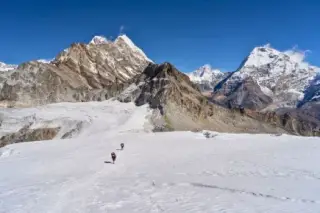
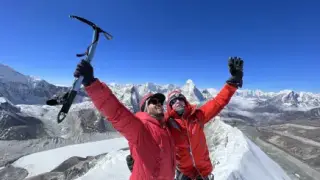
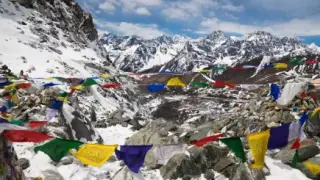
The pass day begins before dawn from Ganja La Phedi (4,300 m). The approach climbs steep glacial moraine, with a short exposed ridge leading to the Ganja La col at 5,122 m, the highest point of the trek. Crampons and ice axe are standard from October through May. The prayer-flag-strewn col offers a panoramic view across Langtang Lirung, Dorje Lakpa and into the Jugal Himal before the long, steep descent to Keldang (4,250 m) on the Helambu side. Allow 7 to 9 hours total. Overnight in tented camp at Keldang.
Sleep at 5,122 mBreakfastLunchDinner
Tonight’s stay
Guesthouse
The trail descends from Keldang along a long ridge through grassland and stunted juniper, dropping toward the treeline on the upper Helambu slopes. Dukpu (4,080 m) is a lonely camp in the forest fringe, calm and spectacular, with the Langtang Himal still visible to the north-west. About 5 to 6 hours of gradual descent and ridge walking. Overnight in tented camp at Dukpu.
Sleep at 4,080 mBreakfastLunchDinner
Tonight’s stay
Guesthouse
A long descent through rhododendron and oak forest drops from the high camp to Tarke Gyang (2,590 m), the largest and most prosperous village in the Helambu region, populated by Hyolmo people and home to one of the oldest gompas in the area. The last teahouse nights begin here; the camp gear heads ahead by porter. About 5 to 6 hours. Overnight in Tarke Gyang.
Sleep at 2,590 mBreakfastLunchDinner
Tonight’s stay
Guesthouse
A gentle traverse across the Helambu hillside through apple orchards and traditional Hyolmo villages reaches Sermathang (2,610 m), a compact village with a 17th-century gompa and fine views back toward the pass ridge. The short day leaves time to explore the monastery and village lanes. About 3 to 4 hours. Overnight in Sermathang.
Sleep at 2,610 mBreakfastLunchDinner
Tonight’s stay
Guesthouse
The trail descends sharply from Sermathang through subtropical forest to Melamchi Pul Bazar (846 m) on the Melamchi River road, losing almost 1,800 m. The valley heat returns sharply after the high passes. A private jeep is waiting for the drive back to Kathmandu. About 5 to 6 hours of descent. Drive Melamchi Pul Bazar to Kathmandu 3 to 4 hours. Overnight in Kathmandu.
Sleep at 846 mBreakfastLunchDinner
Tonight’s stay
Guesthouse
Arrival in Kathmandu the previous evening allows a full free day: rest, souvenir shopping in Thamel, or a last walk in the city. Your guide is available for any queries. A farewell dinner with the Swotah team is held in the evening. Overnight in Kathmandu.
Sleep at 1,400 mBreakfastLunch
Tonight’s stay
Hotel
Your trek ends today. A Swotah representative transfers you to Tribhuvan International Airport for your onward flight. If you would like to extend your stay in Nepal or add another trek or tour, let us know and we will arrange it.
BreakfastLunch
What’s included
What's included
Every cost on the trail is broken out below — no hidden fees, no surprises at the trailhead.
Included
10 items
Airport transfers with an escort by Private Vehicle.
Standard/Deluxe rooms in Kathmandu on twin/double sharing with breakfast.
Guided sightseeing tour in Kathmandu, along with ticket fees.
Accommodation during trek (or camping in case of need).
All meals (Breakfast, lunch, dinner) during the trek.
Authorized English-speaking guide along with required Porters (3:1) for the trek.
Equipment clothing for porter, including their insurance.
All applicable government taxes.
All expenses for all staff –meals, accommodation, salary, equipment, insurance, transportation.
Medical kit (carried by your trek leader).
Not included
5 items
International flights; Nepalese visa fee.
Travel and rescue insurance.
Personal expenses (phone calls, laundry, bar bills, battery recharge, extra porters, bottle or boiled water, shower, etc.).
Tips for guide(s), porter(s) and driver(s).
Emergency evacuation cost.
How Hard Is the Langtang Ganja La Pass Trekking?
The Langtang Ganja La Pass Trek is graded strenuous. The Ganja La approach is steep glacial moraine, crampons are standard October through May, and three nights are spent in tented camp with no facilities. The valley approach and Helambu descent are demanding but well-trailed teahouse trekking.
▲Strenuous. Ganja La Pass 5,122 m with glacier crossing. Requires prior high-altitude trekking experience and camping gear.
Overall Rating
4
Moderate
out of 10 · physical effort scale
Max altitude5,122 m
Trekking days12 days
Trip Details
Planning your Langtang Ganja La Pass Trekking
Everything you need to plan the trek, topic by topic. Tap any one to open it.
The Langtang Ganja La Pass Trek is graded strenuous, and the Ganja La at 5,122 m…
The Langtang Ganja La Pass Trek is graded strenuous, and the Ganja La at 5,122 m is the reason. The approach from Ganja La Phedi is steep on glacial moraine with a short, exposed ridge section before the col, and crampons with an ice axe are standard gear from October through May. Above 4,000 m for several consecutive nights, with three nights in tented camp and no search-and-rescue infrastructure below the pass, the crossing demands good acclimatisation, fitness and experienced guiding.
Trek days on the Langtang side run 4 to 6 hours and are well-graded. The pass day from Ganja La Phedi to Keldang is 7 to 9 hours and starts early. Days in Helambu are 5 to 7 hours of descending trail through villages. Anyone with a respiratory or cardiac condition should have a medical check before booking. Swotah guides carry a first-aid kit, pulse oximeter and a group emergency kit; they are trained to recognise acute mountain sickness early and have clear descent protocols.
Autumn (late September to November) and spring (March to May) are the two window…
Autumn (late September to November) and spring (March to May) are the two windows for the Ganja La Pass Trek, because the pass needs stable, snow-free weather to cross safely. Autumn delivers the clearest skies after the monsoon and the best mountain views; it is the most reliable season and the most popular. Spring is warmer lower down with rhododendrons in bloom on the Langtang approaches, though early-spring snow on the pass can extend the technical crampons requirement.
Winter (December to February) brings deep snow that makes the Ganja La extremely serious and closes it for stretches. Summer monsoon (June to August) creates high landslide and flood risk on the road to Syabrubesi, and cloud obscures the pass entirely. The season cards above give the month-by-month picture.
The Langtang Ganja La Pass Trek is not a restricted-area route, so it needs only…
The Langtang Ganja La Pass Trek is not a restricted-area route, so it needs only two standard permits: the Langtang National Park entry permit and the TIMS (Trekkers' Information Management System) card. Both are obtainable in Kathmandu at the Nepal Tourism Board office or through a registered agency like Swotah. Exact permit fees are set by the Nepal government and reviewed periodically; Swotah confirms current rates before your departure and includes them in the trip cost.
A licensed guide is required by Nepal regulation for all trekking areas, and on a remote, high-mountain crossing like the Ganja La it is also a safety necessity. Swotah provides a Ministry of Tourism-licensed guide for every departure.
Accommodation on the Langtang Ganja La Pass Trek divides clearly at Ganja La Phe…
Accommodation on the Langtang Ganja La Pass Trek divides clearly at Ganja La Phedi. On the Langtang Valley side from Syabrubesi to Kyangjin Gompa, teahouse lodges offer rooms, hot meals and often hot showers; Langtang Village and Kyangjin have comfortable lodges rebuilt after the 2015 earthquake. On the Helambu side from Tarke Gyang down to Melamchi Pul Bazar, traditional guesthouses in Tamang villages provide basic but welcoming accommodation.
On the crossing itself, three nights are spent in tented camp: at Ganja La Phedi (4,300 m), Keldang (4,250 m) and Dukpu (4,080 m). Swotah's kitchen team carries a cook tent, sleeping tents, foam mats and hot meals. Bring a four-season sleeping bag for sub-zero nights at camp. Kathmandu hotels are provided at the start and end of the trip.
Food on the Langtang and Helambu sections is standard teahouse cooking: dal bhat…
Food on the Langtang and Helambu sections is standard teahouse cooking: dal bhat, rice, noodles, eggs, pasta and fresh vegetable dishes, with tea and hot drinks. Dal bhat is the most reliable fuel for long days, and lodges refill it once at no extra charge. On the three-night high crossing, Swotah's camp kitchen provides hot cooked meals including soup, rice, dal and seasonal vegetables, with morning porridge and hot drinks.
Swotah includes three meals a day throughout. For water, aim for 3 to 4 litres a day to help prevent altitude sickness, which is especially important above 4,000 m. Treat all water: boiled water is available at teahouses, and purification tablets, a filter bottle or UV pen work well at camp where boiling is slower at altitude. Carry a reusable 1-litre bottle.
The trek starts with a 7 to 8 hour drive from Kathmandu to Syabrubesi (1,400 m)…
The trek starts with a 7 to 8 hour drive from Kathmandu to Syabrubesi (1,400 m) on the Trishuli River road. The road is paved to Dhunche and rough gravel beyond; a private jeep is more comfortable and faster than a bus on the final stretch. Weather and seasonal conditions can affect drive times.
The trek finishes at Melamchi Pul Bazar (846 m) at the end of day 12, where a vehicle meets you for the 3 to 4 hour drive back to Kathmandu. The circuit is one-way: no backtracking, and the two trailheads are linked by road. Swotah handles all ground transport by private jeep.
The Ganja La at 5,122 m is the high point and crux of the trek, a glacial pass i…
The Ganja La at 5,122 m is the high point and crux of the trek, a glacial pass in the main Langtang Himal ridge with no permanent facilities and an approach that demands respect. The pass day starts from Ganja La Phedi (4,300 m) in the early morning, climbs steeply on moraine to the col, hung with prayer flags and open to a 360-degree view of Langtang Lirung (7,227 m), Dorje Lakpa (6,966 m) and the Jugal Himal, then descends to the tented camp at Keldang (4,250 m). Allow 7 to 9 hours.
Crampons and an ice axe are standard from October through May and recommended in early autumn too when residual glacier ice remains. The approach gully can avalanche in high-snow years, so Swotah guides assess conditions and may delay a day if overnight snowfall changes the slope. There is no rescue infrastructure between Ganja La Phedi and the first Helambu village; self-sufficiency and clear communication with your guide are the primary safety measures on this section.
Langtang Valley is a 40 km glacial valley in Langtang National Park, established…
Langtang Valley is a 40 km glacial valley in Langtang National Park, established in 1976 and Nepal's third-largest protected area at 1,710 sq km. The valley floor sits at 3,500 m at Langtang Village and rises to the Kyangjin Gompa glacial basin at 3,800 m, where a small cheese factory operates and the surrounding peaks top 7,000 m. The Langtang Glacier, visible above the monastery, feeds a string of lakes on the plateau above.
The 2015 Gorkha earthquake and subsequent avalanche destroyed Langtang Village and killed more than 300 people; the village has been partially rebuilt and the community resilient. The acclimatisation day at Kyangjin typically includes a hike to Tserko Ri (5,000 m), which doubles as an altitude-test day and gives the best panoramic views before the pass. Kyangjin Gompa itself dates to the 18th century and is worth an hour before you leave.
A licensed guide is required by Nepal government regulation for all national par…
A licensed guide is required by Nepal government regulation for all national park trekking routes, and on the Ganja La it is an absolute safety requirement: the pass is unmarked, the camping section is remote, and conditions can change fast. Swotah guides hold Ministry of Tourism licences and Nepal Mountaineering Association training, including high-altitude rescue protocols.
A porter is strongly recommended for a 15-day trek with camping gear: one porter carries 20 to 25 kg, capped at that weight, and frees you to walk with a light daypack. On the crossing nights the camp crew carry the full cook kitchen and tent system. Swotah provides a free duffel bag for the porter load, and staff are covered by insurance throughout.
Mobile coverage is good on the lower Langtang Valley section with Ncell and NTC,…
Mobile coverage is good on the lower Langtang Valley section with Ncell and NTC, patchy above Langtang Village, and absent entirely on the Ganja La crossing for 2 to 3 days. Helambu villages from Tarke Gyang down have intermittent NTC coverage. Swotah provides a tourist SIM for Nepal calls.
Wi-Fi is available at some Langtang and Helambu teahouses for a small fee; it is unavailable on the camping section. Charging points exist at teahouses (small rupee fee per device) but not at camp. Bring a fully charged power bank for the crossing, and expect two to three days of phone isolation between Kyangjin and Tarke Gyang.
Langtang National Park and the Helambu villages carry a combined conservation an…
Langtang National Park and the Helambu villages carry a combined conservation and community responsibility. Carry a reusable bottle and treat your own water rather than buying single-use plastic, pack out all non-biodegradable waste, stay on marked trails above 4,000 m to protect fragile alpine soil, and respect the 2015-earthquake-rebuilt communities in the Langtang Valley by patronising local lodges and buying local.
Tipping is customary but not mandatory: a standard guideline is 10 to 15 percent of the trip cost, divided among the guide, porter and camp kitchen staff. Tips go directly to the seasonal workforce that keeps remote trekking economically viable for mountain communities. Booking through a registered agency like Swotah ensures permits, staff insurance, fair porter loads and correct park fees are handled properly.
What to pack
What to pack
The full kit list. Anything we loan (sleeping bag, down jacket) is called out — bring everything else.
✓Duffel bag (carried by porter/camp team)
✓Daypack (25-30 L)
✓Dry bag or rain cover
✓Packing cubes
Frequently Asked
Questions & Answers
Everything trekkers ask before booking. Don't see yours? Tap Enquire — we usually reply within a few hours.
Yes, our representative will be there to greet you at the airport. Upon arrival, you will be transferred to your hotel by a private car/jeep.
Yes, there is going to be a small orientation/briefing program before we embark on our adventure by the tour manager, leader/guide.
We believe in operating small intimate group to provide personal attention and services to our guests. Small groups can enjoy the trek hassle free and enjoy the customized trip according to their will so we try to keep group as small as group of 14 but it can be increased with the special request of the clients.
Nepal is a safe country for anyone who wants to explore on their own although professional guidance is highly recommended by our team for the safety in remote mountainous lands.
This trek is popular among the domestic and international tourist for its beautiful mountains and religious values. Gosaikunda Lake is a sacred lake where thousands of people visit it as a pilgrimage. This trekking route lies to near proximity from the bustling city of Kathmandu but offers scenic views of mountains, exquisite lakes and vivid vegetation and animals.
February to June and October to December are the best time to do this trek. This trek can be done in winter season also.
To confirm your booking, a deposit of $200 or 15% of total trip cost is required if you are booking at least a year in advance before trip departure date. If booking is made less than 100 days before the trip departure, you'll need to pay 20% to confirm the trip, if before two months, 25% of the total trip cost will need to be paid and if booked between 30-60 days, 50% of the total trip cost needs to be paid and finally, if you are booking 30 days prior to trip departure, then 100% payment should be made. The payments can be easily made by the bank transfer or Western Union Money transfer. The due balance is payable on arrival in Kathmandu with cash (preferably USD/EURO) or card on POS/credit card machine. Please note that nonrefundable fee is 10% or $200 whichever is greater.
We customize the trip according to your preference but if you need to change plan during the trek consult the guide.
If you need extra day to complete the trekking, you will need to inform the guide in advance and the guide will let the company know. Adding a day to trekking can result in many changes in other arrangements such as transportation, guide’s schedule, flight details, hotel bookings and all, so we really do not recommend this to our clients unless there is an emergency case. But it is true that those changes could be made but it will cost extra. The best way to do it is to inform the agent company about it.
You cannot use the credit card during the trek. You have to withdraw the money before you start the trek. You can use credit card only in Kathmandu and Pokhara.
We use private car for sightseeing inside the Kathmandu Valley and transfer to Syabru Besi on car, van and deluxe minibus with A/C depending on the size of the group. We also drop and pick up from the starting and ending point of trek on private car or jeep.
For nights in cities, we use standard/superior standard/deluxe rooms whereas, during the trek we use lodges/tea houses/guesthouses/home stay for our clients, and whatever is available and accessible. We also arrange sleeping bags for our clients, on their request.
Langtang Ganja la Pass is popular trekking region for religious and adventure purpose hence this region provides few western meals like Pasta, noodles, bread, soup etc. Dal Bhat (Rice, Lentils and Vegetables) are great way to gain energy for the strenuous trek.
There are plenty of water stations on each stop on the route. You can easily fill up the bottle from the open taps. We recommend that you bring water purifier tablets with you or at least get it from Kathmandu before you depart for trekking. You can also buy mineral waters but we usually recommend tap water which is pure and it helps us not promoting plastic bottled water.
We contact the guesthouse owner for reservation of the room before trekking on a particular day, on other days porters reach to the destination on advance and book the rooms for you.
We contact the lodge/guesthouse owner for reservation of the room before trekking on a particular day. On other days, porters reach the destination on advance and book the rooms for you. But there are always going to be exceptions but even in those cases, we may have to be flexible about very basic sleeping arrangements. We always try to make sure that we have everything well arranged.
While trekking in higher lands you need to pay for charging the electronics upon request to the owner. The best idea always is to bring your power bank with you. It is easier and cheaper.
While trekking in Langtang Ganja La Pass you can make local and international calls from telephone provided by the guesthouse owner after paying the price directly.
Usually, we have to walk about 5-7 hours a day. But it shouldn't be taken as certain thing because the hour of walk depends on client's speed. So it is really relative.
You have to carry your personal bags with water bottle and medicines remaining bags will be carried by porters to make you easy to trek. The weight limit for porters is 15 KG.
Yes, Nepal can boats as the one of the safest country in South Asia for women, you will find people very friendly and respectful towards foreigners especially towards women. This trek is mostly done as it is not hard to do so you can easily do it.
We make sure to take security measures during trek to make your trip delightful. We hire experienced and license holding guides to safeguard your life in mountains. We suggest you to follow the guide’s instruction carefully and take responsibility for personal belongings. Always keep your valued belongings near you and lock the door from inside during the night.
Before coming to Nepal make sure that you are covered by insurance policy for the altitude of 5500 meters. In the case of an emergency like altitude sickness, dehydration or any medical conditions ask your tour leader/guide to contact us as soon as possible so that we can manage/arrange helicopter for the rescue. Then you will be transferred to hospital for the treatment.
Trekking is a tiresome activity that requires a lot of physical movement so pack your active wears and trekking pants for at lower altitudes. Weather at high altitude is unpredictable so carry a light weight waterproof jacket along with thick down jacket, pant and thermal innerwear to escape severe cold. Needless to say that, Good shoes are very important for trekking in rough and snowy terrain, so invest on good quality shoes or rent it from us in a minimum price. As you are trekking in remote village try to wear modest clothes to quickly get up with the local people without hesitation.
Before coming to Nepal make sure you are covered for diphtheria & TB, hepatitis A, hepatitis B, malaria, typhoid, polio and tetanus. Make sure you are in best shape to complete the trekking without any complication.
Why Travel with Swotah
Why Book the Langtang Ganja La Pass Trekking with Swotah
Most Nepal operators look the same from the outside. Here's what actually makes the difference.
Born in Nepal
100% locally owned since 2016. Trek profits stay with the mountain families and village schools along your route.
Guaranteed Departures
Every date on our calendar runs — no minimum group size. You never pay to be cancelled.
Certified Guides
Government-licensed, WFR-certified, English-speaking. Most were born within two valleys of the trail.
Small Groups
Small groups, never more than 8 trekkers. You get a real experience, not a convoy.
Gear Included
Sleeping bag and down jacket loaned at no extra charge — both rated to –20°C.
Flexible Payment
Deposit from 10% to confirm, balance before departure or in cash on arrival. Reschedule up to 30 days prior.
24/7 Support
Kathmandu office and dedicated WhatsApp emergency line. We answer at 2am if needed.
Hall of Fame
TripAdvisor Travelers' Choice 2023, 2024 and 2025. Hundreds of verified five-star reviews.
Get a free personalised travel brief for the Langtang Ganja La Pass Trekking.
Tell us your travel dates and group size. Our team in Kathmandu will put together a tailored itinerary, honest costs, and practical tips — completely free, no commitment.