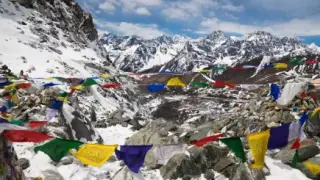
A moderate 11-day trek to Pikey Peak (4,065 m) in the lower Solukhumbu, with Himalayan views Sir Edmund Hillary rated as the finest for Everest, ancient monasteries and no Lukla flight.
Duration
11 Days
Max Altitude
4,065 m / 13,337 ft
Difficulty
Easy
Group Size
Max 8 trekkers
Region
Everest Tour Packages, Nepal
Best Season
Spring · Autumn
Accommodation
Teahouse lodges on trail; hotels in Kathmandu
Meals
3 meals daily on trek; dal bhat, Sherpa stew
Transport
Private vehicle Kathmandu-Dhap and return; no Lukla flight
Dates & Prices
Choose your date
All dates are guaranteed departures — we never cancel for low numbers. Book online or send a quick enquiry.
YearMonth
3 departures · 2026
Oct
24
Oct 24, 2026 — Nov 3, 2026
Guaranteed departure — from 2 trekkers
Available
USD950
per person
Nov
9
Nov 9, 2026 — Nov 19, 2026
Guaranteed departure — from 2 trekkers
Available
USD950
per person
Nov
22
Nov 22, 2026 — Dec 2, 2026
Guaranteed departure — from 2 trekkers
Available
USD950
per person
Can’t find a suitable date? We run private departures on any date with as few as 2 trekkers.
Trip Overview
About the Lower Everest Trek
The Lower Everest Trek via Pikey Peak is an 11-day moderate trek in the lower Solukhumbu district, peaking at Pikey Peak (4,065 m), a viewpoint Sir Edmund Hillary named as his favourite for Everest views. The route enters from Dhap by road, stays well below the crowded high Khumbu corridor, and crosses Sherpa and Rai villages at elevations between 2,400 m and 4,065 m, so altitude pressure is low throughout.
The lower Solukhumbu holds some of the oldest Buddhist monasteries in the Everest region. Thubtenchoeling Monastery, near Junbesi, and Chiwong Monastery above Phaplu are both active monastic communities with painted prayer halls and mountain views. Junbesi itself is one of the most attractive Sherpa villages in Nepal, and the valley has been largely untouched by the trekking traffic that concentrates above Namche Bazaar.
Because the route lies outside Sagarmatha National Park, it requires only a Gaurishankar Conservation Area Permit and local permits rather than the park fee that applies on the classic Everest Base Camp Trek. This makes the lower Solukhumbu a quieter, lower-cost alternative with the same Himalayan backdrop. The itinerary drives in via Dhap with no Lukla flight, lowering both cost and the logistical risk of flight delays.
Trip Highlights
Highlights
1
Sunrise panorama from Pikey Peak (4,065 m): Everest, Makalu, Cho Oyu and Kanchenjunga
2
Visit Thubtenchoeling Monastery near Junbesi and Chiwong Monastery above Phaplu
3
Drive in via Dhap with no Lukla flight, avoiding domestic flight delays
4
Lower Solukhumbu Sherpa and Rai villages with little trekking traffic
5
Edmund Hillary's named favourite viewpoint for the Everest massif
6
No Sagarmatha National Park permit needed; simpler, lower-cost permit structure
Day by Day
Lower Everest Trek Itinerary: 11 Days
Tap any day to expand — altitudes, walking times, meals, and overnight details for every stage of the journey.
A Swotah representative meets you at Tribhuvan International Airport (1,400 m) and transfers you to your hotel in Kathmandu. After settling in, your guide runs a briefing on the 11-day itinerary, covering the permit checkpoints, the drive to Dhap and the pre-dawn Pikey Peak ascent. A welcome dinner of Nepali food follows. Overnight in Kathmandu.
Sleep at 1,400 m
Tonight’s stay
Hotel
A full guided day covers the Kathmandu Valley's UNESCO World Heritage Sites: Pashupatinath Temple on the Bagmati River, the great stupa of Boudhanath (93 m diameter), the Swayambhunath hilltop stupa and Kathmandu Durbar Square with its Hanuman Dhoka palace complex. The afternoon is free for personal shopping in Thamel or rest before the long drive tomorrow. Overnight in Kathmandu.
Sleep at 1,400 mBreakfast
Tonight’s stay
Hotel
Dhap (2,900 m) is the trailhead village on the lower Solukhumbu approach, roughly 270 km from Kathmandu on highway and hill roads, taking about 7 to 9 hours by private jeep. On arrival at Dhap, the trail descends into pine and rhododendron forest for about 2 hours to reach Japre (2,665 m), the first teahouse stop. The evening gives an early view across the Solukhumbu foothills. Overnight in Japre.
Sleep at 2,665 mBreakfastLunchDinner
Tonight’s stay
Teahouse
Pikey Base Camp (3,640 m) is the staging point for the pre-dawn summit ascent and sits roughly 1,000 m above Japre on a forested ridge. The day's climb takes 5 to 6 hours through mixed forest, with views opening across the Solu valley as the treeline thins. Arrive at Pikey Base Camp in the early afternoon, rest, take an early dinner and prepare for the 3:30 AM start. Overnight in Pikey Base Camp.
Sleep at 3,640 mBreakfastLunchDinner
Tonight’s stay
Teahouse
Pikey Peak (4,065 m) is a viewpoint Sir Edmund Hillary named as his favourite for the Everest massif, giving a sweep from Everest (8,849 m) and Lhotse (8,516 m) across Makalu (8,485 m), Cho Oyu (8,188 m) and Kanchenjunga (8,586 m) on a clear morning. The ascent from Pikey Base Camp takes 2 to 3 hours on a steep trail; start at 3:30 AM with headlamp. After the summit, descend back to base camp for breakfast, then continue down a long forested ridge to Loding (2,536 m) in about 4 hours. Overnight in Loding.
Sleep at 4,065 mBreakfastLunchDinner
Tonight’s stay
Teahouse
Junbesi (2,700 m) is one of the most attractive Sherpa villages in the lower Solukhumbu, a broad settlement in a wide valley with Numbur peak (6,957 m) visible above. The walk from Loding takes 5 to 6 hours through oak and rhododendron forest via the Solu Khola. On arrival, a 45-minute side walk climbs to Thubtenchoeling Monastery (2,950 m), a Nyingma Buddhist monastery with an active prayer hall and mountain views. Remove shoes before entering and follow the guide inside. Overnight in Junbesi.
Sleep at 2,700 mBreakfastLunchDinner
Tonight’s stay
Teahouse
Taksindu (2,842 m) sits on a ridge above the Modi Khola with views south across the Solu basin. The trail from Junbesi climbs from the valley floor through terraced fields and mixed forest, passing the Taksindu Monastery complex at the ridge top, to reach the teahouse cluster at Taksindu in about 5 hours. Taksindu Monastery is a smaller Nyingma gompa predating most of the better-known Khumbu monasteries. Overnight in Taksindu.
Sleep at 2,842 mBreakfastLunchDinner
Tonight’s stay
Teahouse
Phaplu (2,413 m) is the administrative centre of Solukhumbu district, home to a small airstrip and the best-equipped medical facility between Kathmandu and Namche Bazaar. The descent from Taksindu takes 4 to 5 hours through pine forest and terraced farmland. On arrival, a short 45-minute climb reaches Chiwong Monastery (2,715 m), a Nyingma gompa founded by Trulshik Rinpoche on the ridge above Phaplu. The monastery's prayer hall holds painted murals and houses a resident monastic community. Overnight in Phaplu.
Sleep at 2,413 mBreakfastLunchDinner
Tonight’s stay
Teahouse
Phaplu to Kathmandu is a 7 to 9 hour private vehicle drive on the same Solukhumbu road used on the approach. Departure is early morning to arrive Kathmandu by evening. The drive covers roughly 250 km, passing through Salleri and the Dudhkoshi valley before joining the Kathmandu highway. A rest stop for lunch is made at a roadside dhaba along the way. Overnight in Kathmandu.
Sleep at 1,400 mBreakfast
Tonight’s stay
Hotel
Kathmandu offers a free day for recovery, shopping in Thamel's trekking and handicraft stores, or optional guided sightseeing. Swotah can arrange a half-day Patan Durbar Square visit (5 km south of Kathmandu at 1,350 m), the Garden of Dreams near Thamel, or a cooking class. The day is yours to use. Your guide is available for city questions and last-minute purchases. Overnight in Kathmandu.
Sleep at 1,400 mBreakfast
Tonight’s stay
Hotel
A Swotah representative transfers you to Tribhuvan International Airport for your onward flight. If your flight departs in the afternoon, the Boudhanath area near the airport offers a final hour at the great stupa. Swotah can arrange extensions to Pokhara, the Annapurna region or a longer Solukhumbu route including the Everest Base Camp approach if you have additional time.
Breakfast
What’s included
What's included
Every cost on the trail is broken out below — no hidden fees, no surprises at the trailhead.
Included
8 items
• Pickup and drop-off at Tribhuvan International Airport in Kathmandu.
• 4 nights' accommodation in Kathmandu in a 3-star hotel on a bed and breakfast basis, and 6 nights in teahouses/lodges on the trek on a twin-sharing basis.
• Breakfast in Kathmandu; all meals (breakfast, lunch, and dinner) during the trek.
• Experienced English-speaking trekking guide and a porter (1 porter for every 2 trekkers) including their salary, insurance, equipment, food, and accommodation.
• Surface transfer to and from the starting point of the trek.
• All necessary permits including TIMS (Trekker's Information Management System) and national park entry permits.
• Down jacket, sleeping bag, and trekking map (to be returned after the trek).
• Arrangement for Emergency Helicopter Evacuation Service (Note: Travel insurance must cover this service).
• Any expenses of a personal nature such as phone calls, laundry, battery recharge, bottled water, hot showers, etc
• Sightseeing permits in and around Kathmandu.
• Alcoholic,hot(beyondtheincludedmeals),andcold drinks. Tips: Tips for trekking staff and drivers (expected but not mandatory).
• Extra nightaccommodation in Kathmandu in case of earlyarrival, late departure, and early return from the mountain (for any reason) other than the scheduled itinerary.
• Anycostsarisingoutofunforeseencircumstanceslikelandslides,roadblocks,bad weather, etc.
How Hard Is the Lower Everest Trek?
The Lower Everest Trek is a moderate trek. Days run 4 to 6 hours on well-used trails between 2,400 m and 4,065 m, with no technical climbing and low altitude risk. Good general fitness is enough.
▲Moderate. 4-6 hr days, max altitude 4,065 m (Pikey Peak). No technical climbing; low altitude risk. General fitness sufficient; short Pikey ascent is steep.
Overall Rating
2
Easy
out of 10 · physical effort scale
Max altitude4,065 m
Trekking days5 days
Trip Details
Planning your Lower Everest Trek
Everything you need to plan the trek, topic by topic. Tap any one to open it.
The Lower Everest Trek is graded moderate, and altitude is not the main concern…
The Lower Everest Trek is graded moderate, and altitude is not the main concern here. The highest point is Pikey Peak at 4,065 m, reached on a 2 to 3 hour ascent from Pikey Base Camp (3,640 m) before dawn on day 4. All other nights are spent between 2,400 m and 3,640 m, well within the range most reasonably fit trekkers handle without acclimatisation issues.
Daily walking time runs 4 to 6 hours on paths through forest and Sherpa village terrain. The short climb to Pikey Peak from base camp is steep and can be cold and windy before sunrise, but it is not technically demanding. Trekkers with a history of heart or respiratory conditions should consult a doctor before travel; all others simply need to walk regularly in the weeks before departure and stay well hydrated on the trail.
Autumn (October to November) and spring (March to May) are the two best windows…
Autumn (October to November) and spring (March to May) are the two best windows for the Lower Everest Trek. Autumn delivers the clearest mountain views after the monsoon, with sharp sightlines to Everest, Makalu, Cho Oyu and Kanchenjunga from Pikey Peak on a good morning. Spring is warmer at the lower elevations, with rhododendrons in bloom on the forested ridges.
Winter (December to February) is feasible and actually gives excellent Pikey Peak views on clear days, because the post-monsoon air remains transparent and the lower elevations stay accessible. Cold nights at Pikey Base Camp are the main challenge in winter, but the route does not reach the altitudes where serious cold risk sets in. The summer monsoon (June to September) brings cloud and rain that reduces mountain views significantly; this window is off-season for the trek.
The Lower Everest Trek does not enter Sagarmatha National Park, so it does not r…
The Lower Everest Trek does not enter Sagarmatha National Park, so it does not require the Sagarmatha National Park permit that applies on the classic routes above Lukla. Instead, the lower section of the route falls within the Gaurishankar Conservation Area, which requires a Gaurishankar Conservation Area Permit. A local trekking permit and a rural municipality fee also apply along the route.
The permit situation is notably simpler and less costly than for the Everest Base Camp Trek. Swotah arranges all permits as part of the package once you provide a passport copy. You will need one passport-size photo for each permit application. Your guide carries all permit documents on the trail and presents them at checkposts, so there is nothing to manage yourself once you arrive in Kathmandu.
Accommodation on the lower Solukhumbu route is teahouse lodges, which are well-e…
Accommodation on the lower Solukhumbu route is teahouse lodges, which are well-established in the main villages of Japre, Pikey Base Camp, Loding, Junbesi and Phaplu. The lodges in Junbesi and Phaplu are among the most comfortable on the trail, with private rooms, attached bathrooms in some cases and a reasonable food menu.
Pikey Base Camp lodges are simpler and can be cold at night, so a good sleeping bag matters for the one night at 3,640 m. Kathmandu hotels at the start and end are comfortable three-star or equivalent. Swotah confirms room type and lodge quality before departure for each night.
Dal bhat (lentil soup, rice and curry) is the main meal on the lower Solukhumbu…
Dal bhat (lentil soup, rice and curry) is the main meal on the lower Solukhumbu trail, and lodges refill it for free, making it the sensible choice for long trekking days. Sherpa stew (thukpa), noodles, fried potatoes, omelettes and momos round out the menu at most stops, and the lodges at Junbesi and Phaplu have a wider selection than the high-altitude stops.
Swotah includes breakfast, lunch and dinner on all trek days. For water, 2 to 3 litres per day is a good target on this moderate-altitude route; treat water at the source with purification tablets, a filter or a UV pen rather than buying single-use plastic bottles. Boiled water is available from most lodge kitchens at a small charge, which is the simplest option at the end of a day.
The Lower Everest Trek starts with a road drive from Kathmandu to Dhap (approxim…
The Lower Everest Trek starts with a road drive from Kathmandu to Dhap (approximately 2,900 m), the trailhead village on the Solukhumbu approach. The drive covers roughly 270 km and takes 7 to 9 hours on the highway and hill roads, passing Salleri and the lower Solukhumbu valley before climbing to Dhap. Swotah runs the drive in a private jeep or 4WD.
The route ends at Phaplu, from where Swotah drives back to Kathmandu on a similar road. There is no Lukla flight on this itinerary, which removes the common problem of domestic flight delays that can disrupt the start or end of a trek. Road travel in Solukhumbu can be slow due to narrow sections; the schedule allows realistic drive times with breaks.
Pikey Peak at 4,065 m is a summit in the lower Solukhumbu that Sir Edmund Hillar…
Pikey Peak at 4,065 m is a summit in the lower Solukhumbu that Sir Edmund Hillary identified as his preferred vantage point for the Everest massif. The pre-dawn climb from Pikey Base Camp (3,640 m) takes 2 to 3 hours on a steep but straightforward path, and the sunrise panorama on a clear autumn or winter morning shows Everest (8,849 m), Makalu (8,485 m), Cho Oyu (8,188 m), Kanchenjunga (8,586 m) and Numbur peak in a single sweep.
The peak sits outside Sagarmatha National Park, so it sees far fewer trekkers than the Everest Base Camp trail above Namche. The climb is cold before sunrise; dress in down and wind layers from the lodge and carry a headlamp. The descent back to Pikey Base Camp takes about 1.5 hours, after which the itinerary continues down to Loding.
Thubtenchoeling Monastery is a Nyingma Buddhist monastery in the hills above Jun…
Thubtenchoeling Monastery is a Nyingma Buddhist monastery in the hills above Junbesi, founded in the twentieth century and now home to several dozen monks and nuns. The monastery complex includes painted prayer halls, a library and an active teaching tradition, and sits at about 2,950 m with views across the Junbesi valley toward the peaks above the Solu Khumbu rim.
Chiwong Monastery is a Nyingma gompa perched at 2,715 m on the ridge above Phaplu. It was founded by Trulshik Rinpoche and hosts an annual Mani Rimdu festival (date varies). Both monasteries welcome visitors who remove shoes, dress modestly and follow the standard practices: walking clockwise around the prayer hall, not touching altar objects and asking before photographing interior spaces. The lower Solukhumbu's monasteries are among the oldest in the Khumbu region and have not been overwhelmed by trekking traffic.
A licensed guide is the most important member of the team on the lower Solukhumb…
A licensed guide is the most important member of the team on the lower Solukhumbu route. Swotah guides hold Ministry of Tourism licences, know the permit checkpost locations, can communicate in Sherpa and Rai villages and carry a first-aid kit and pulse oximeter. The guide leads the pre-dawn Pikey Peak ascent and introduces the monastery communities at Junbesi and Phaplu.
A porter is recommended for this 11-day trek: carrying 20 to 25 kg of your gear, a porter lets you walk with a light daypack and enjoy the trail. Swotah provides a free duffel for the porter load, caps weights at 25 kg, and ensures porter accommodation and meals are included throughout. Porters are local workers from the region and a direct benefit of trekking spending in the Solukhumbu economy.
Mobile coverage in the lower Solukhumbu is patchy. Nepal Telecom (NTC) gives sig…
Mobile coverage in the lower Solukhumbu is patchy. Nepal Telecom (NTC) gives signal in the main towns of Salleri and Phaplu and in Junbesi, with gaps on the ridges between Dhap and Pikey. The night at Pikey Base Camp is typically off-grid. Ncell coverage is weaker than NTC on this route; Swotah provides a tourist SIM to new clients.
Wi-Fi at lodges carries a small charge and is available in Junbesi and Phaplu but not at the higher stops. Charging points exist at most teahouses and cost a few rupees per device. A power bank covering at least two full phone charges is worth carrying; cold nights at Pikey Base Camp drain batteries faster than warmer altitudes below.
The lower Solukhumbu communities depend on trekking income but see far fewer vis…
The lower Solukhumbu communities depend on trekking income but see far fewer visitors than the routes above Namche, so responsible behaviour here has a proportionally larger impact. Carry a reusable bottle and treat your water rather than buying single-use plastic, which is difficult to recycle in village areas. Pack all non-biodegradable waste out rather than burning it.
At the monasteries, follow the practices described in the monastery section: remove shoes, dress with covered shoulders and knees, walk clockwise around the prayer halls and mani walls, and ask your guide before photographing the interior. In Sherpa and Rai villages, ask permission before entering a private courtyard for a photograph. Booking with a registered operator ensures that the Gaurishankar Conservation Area Permit fees and local contributions go back into the regional conservation fund.
What to pack
What to pack
The full kit list. Anything we loan (sleeping bag, down jacket) is called out — bring everything else.
✓Duffel bag (carried by porter)
✓Daypack (25-30L)
✓Dry bag or rain cover
✓Packing cubes
Frequently Asked
Questions & Answers
Everything trekkers ask before booking. Don't see yours? Tap Enquire — we usually reply within a few hours.
Autumn (October to November) and spring (March to May) are the two best windows. Autumn gives the clearest mountain views from Pikey Peak after the monsoon, with sharp sightlines to Everest, Makalu, Cho Oyu and Kanchenjunga. Spring is warmer at the lower elevations with rhododendrons in bloom on the forested ridges. Winter (December to February) also works well for views from Pikey Peak because the air stays clear and the lower-altitude trail remains accessible, though nights at Pikey Base Camp are cold. The summer monsoon (June to September) brings persistent cloud that largely blocks the mountain views, so it is off-season for this trek.
Yes, with reasonable preparation. The trek is graded moderate. Daily walking times of 4 to 6 hours on established paths between 2,400 m and 4,065 m do not require prior high-altitude experience or technical skill. The only steep section is the 2 to 3 hour ascent to Pikey Peak (4,065 m) before dawn, which is physically demanding but not technical. Trekkers who exercise regularly, including 2 to 3 hours of walking or hiking per week in the month before departure, will manage the route comfortably. No previous trekking in Nepal is required.
The Lower Everest Trek does not enter Sagarmatha National Park, so no Sagarmatha National Park permit is required. The permits needed are a Gaurishankar Conservation Area Permit for the lower section of the route, a local trekking permit and a rural municipality fee. All permits are arranged by Swotah as part of the package; you provide a passport copy and one passport-size photo per permit, and your guide carries the documents on the trail. No permit application needs to be made independently.
The Lower Everest Trek (Pikey Peak) and the Everest Base Camp Trek both approach the Khumbu Himalaya, but they differ significantly. The EBC trek goes to 5,364 m, requires a Sagarmatha National Park permit and the TIMS card, includes a Lukla flight, and follows a busy trail. The Pikey Peak trek peaks at 4,065 m, stays outside the national park, drives in via Dhap with no flight, and uses quiet lower-Solukhumbu paths. The EBC trek is strenuous and high-altitude; the Pikey Peak trek is moderate. Both give views of Everest from the Himalayan foothills, but Pikey Peak is a named viewpoint Sir Edmund Hillary specifically chose as his favourite.
Yes, on a clear morning. Pikey Peak (4,065 m) gives a direct sightline to Everest (8,849 m) from the south, without the closer ridges that block the view on many lower vantage points. Sir Edmund Hillary, who explored this area after his 1953 Everest summit, named Pikey Peak as his favourite viewpoint for Everest. The panorama from the summit also includes Makalu (8,485 m), Cho Oyu (8,188 m), Kanchenjunga (8,586 m), Lhotse (8,516 m) and Numbur peak. Autumn and winter mornings before cloud builds give the best visibility. The pre-dawn start means you reach the summit near sunrise, when light and clarity are at their peak.
Book at least 4 to 6 weeks before your intended departure. October is the peak month and fills faster; for October departures book 2 to 3 months ahead. The Lower Everest Trek has no restricted-area permit that requires long lead time, but teahouse availability at Pikey Base Camp is limited and Swotah needs time to confirm the guide, porter and vehicle. For spring departures (March to May), 6 weeks ahead is usually sufficient. Contact Swotah early if you have fixed travel dates or a larger group.
The Swotah package includes: all permits (Gaurishankar Conservation Area Permit, local permit, rural municipality fee), a licensed guide and a porter, private vehicle transfers Kathmandu to Dhap and Phaplu to Kathmandu, all teahouse accommodation on the trek, three meals a day on the trek (breakfast, lunch, dinner), and hotel accommodation in Kathmandu on the first and last nights. Not included: international flights, Kathmandu hotel meals outside trek days, travel insurance, personal spending and tips. A detailed inclusion list is provided with your booking confirmation.
The Lower Everest Trek runs with a minimum of 1 and a maximum of 12 trekkers per departure. Solo trekking is available with a small supplement. Small groups of 2 to 6 people give the most flexibility on the trail and at the teahouse lodges, which have limited capacity at Pikey Base Camp. Private departures for any date are available on request. Swotah does not run the trek as a fixed-departure group tour; each booking is effectively a private or small group arrangement.
Yes. Solo trekking is allowed in the lower Solukhumbu without the minimum group requirement that restricted areas impose. A small solo supplement applies for single-room use at lodges. Swotah assigns a licensed guide to all solo bookings; this is recommended for navigation, permit management and the pre-dawn Pikey Peak ascent in particular. Solo trekkers are not required to join a group, and Swotah can arrange a completely private itinerary on any available date.
The Pikey Peak ascent starts around 3:30 to 4:00 AM from Pikey Base Camp (3,640 m). At that altitude before dawn, temperatures in autumn range from about -2 C to -8 C with wind chill. In winter the pre-dawn temperature can fall to around -10 C to -15 C. Wear a thermal base layer, a fleece mid-layer, a down jacket, a windproof outer shell, warm gloves and a hat. Bring a headlamp with fresh batteries. The exertion of climbing warms you up within 30 minutes, but the summit itself can be windy and cold while you wait for the light. Pack a hot drink in a thermos from the lodge the night before.
Dal bhat (lentil soup, rice and curry) is the main meal, and most lodges offer unlimited refills, making it the most practical option for long days. Sherpa stew (thukpa noodle soup), fried rice, noodles, fried potatoes and momos are on most menus. Eggs in various forms are a reliable breakfast option. The lodges at Junbesi and Phaplu have the widest menus on the route. Food at Pikey Base Camp is simpler; expect basic dal bhat and noodles. Swotah includes all three meals on trek days. Bring a few snack bars for the Pikey Peak ascent morning, when breakfast comes after the summit.
Nepal Telecom (NTC) gives the most consistent signal in the lower Solukhumbu. Expect signal in Dhap, Japre, Junbesi and Phaplu, with gaps on the ridges between. Pikey Base Camp and the summit are usually off-grid or marginal. Ncell coverage is weaker on this route. Wi-Fi is available at lodges in Junbesi and Phaplu for a small charge; it is not available at Pikey Base Camp. Charging points exist at most lodges and cost a small fee per device. Carry a power bank to cover the Pikey Base Camp night and the day of the ascent.
Thubtenchoeling Monastery near Junbesi and Chiwong Monastery above Phaplu are both active Nyingma Buddhist communities with resident monks. Visiting times at both monasteries are generally in the morning before midday and again in the late afternoon; your guide will check the schedule on arrival. Remove shoes before entering the prayer hall, dress with covered shoulders and knees, walk clockwise around the central altar and any mani walls outside, and ask your guide before photographing interior statues or thangkas. Small donation boxes are placed at the entrance; a contribution is appreciated but not required. The monasteries are working communities, not museums.
The altitude risk on this trek is low compared with the classic Everest or Annapurna routes. The highest point is Pikey Peak at 4,065 m, and the only night spent above 3,500 m is at Pikey Base Camp (3,640 m). Most trekkers with good general health do not experience significant altitude symptoms below 4,000 m when ascending gradually. The drive to Dhap (2,900 m) and the first night at Japre (2,665 m) provide a natural acclimatisation step before reaching Pikey Base Camp. Drink 2 to 3 litres of water per day, avoid alcohol at the higher stops, and tell your guide at the first sign of headache, nausea or unusual fatigue. Descending 300 to 500 m typically resolves mild AMS symptoms quickly at these elevations.
Swotah requires all trekkers to carry travel insurance before departure. The policy must cover trekking at altitudes up to 4,500 m, emergency medical evacuation (helicopter evacuation coverage of at least USD 100,000), trip cancellation and personal baggage. The nearest hospital with significant resources is in Phaplu or Kathmandu; helicopter evacuation from the trail is the primary emergency option if a serious injury or illness occurs. Standard travel insurance policies often exclude trekking above 3,000 m, so check the policy terms or use a specialist adventure travel insurer. Proof of insurance is required at final booking confirmation.
Why Travel with Swotah
Why Book the Lower Everest Trek with Swotah
Most Nepal operators look the same from the outside. Here's what actually makes the difference.
Born in Nepal
100% locally owned since 2016. Trek profits stay with the mountain families and village schools along your route.
Guaranteed Departures
Every date on our calendar runs — no minimum group size. You never pay to be cancelled.
Certified Guides
Government-licensed, WFR-certified, English-speaking. Most were born within two valleys of the trail.
Small Groups
Small groups, never more than 8 trekkers. You get a real experience, not a convoy.
Gear Included
Sleeping bag and down jacket loaned at no extra charge — both rated to –20°C.
Flexible Payment
Deposit from 10% to confirm, balance before departure or in cash on arrival. Reschedule up to 30 days prior.
24/7 Support
Kathmandu office and dedicated WhatsApp emergency line. We answer at 2am if needed.
Hall of Fame
TripAdvisor Travelers' Choice 2023, 2024 and 2025. Hundreds of verified five-star reviews.
Get a free personalised travel brief for the Lower Everest Trek.
Tell us your travel dates and group size. Our team in Kathmandu will put together a tailored itinerary, honest costs, and practical tips — completely free, no commitment.