A 13-day community-homestay circuit to 3,699 m with close Annapurna South and Machhapuchhre views through Gurung farming villages north of Pokhara.
Duration
13 Days
Max Altitude
3,699 m / 12,136 ft
Difficulty
Easy
Group Size
Max 14 trekkers
Region
Annapurna Trekking Packages, Nepal
Best Season
Spring · Autumn
Accommodation
Community homestays & village lodges
Meals
All meals on trek
Transport
Drive/fly KTM-Pokhara; jeep to trailhead
Dates & Prices
Choose your date
All dates are guaranteed departures — we never cancel for low numbers. Book online or send a quick enquiry.
YearMonth
2 departures · 2026
Oct
21
Oct 21, 2026 — Nov 2, 2026
Guaranteed departure — from 2 trekkers
Available
USD1,450
per person
Nov
6
Nov 6, 2026 — Nov 18, 2026
Guaranteed departure — from 2 trekkers
Available
USD1,450
per person
Can’t find a suitable date? We run private departures on any date with as few as 2 trekkers.
Trip Overview
About the Machhapuchhre Model Trek
The Machhapuchhre Model Trek is a 13-day community-led circuit through the lower Mardi Himal and Machhapuchhre Conservation Zone, designed by TAAN as a sustainable-tourism model for the Gurung farming villages north of Pokhara. It reaches a high point of 3,699 m at Kharka on day six, offering close-range views of Annapurna South (7,219 m) and the sacred, never-summited Machhapuchhre (6,993 m) without the crowds of the main Annapurna routes. Permits required are the Annapurna Conservation Area Permit (ACAP) and TIMS.
The route passes through five village development committees, climbing through rice terraces and rhododendron forest from the Pokhara Valley floor to open yak pastures at Kharka, then descends through Gurung homestay villages to Mardi Pool at 1,000 m before the drive back. Accommodation is a mix of community homestays and small lodges. Food is village cooking: dal bhat, seasonal vegetables and local-grain dishes that put money directly into family kitchens rather than outside operators.
This is a short, easy to moderate trek suited to first-time trekkers, families and anyone who wants genuine community contact alongside mountain views. Daily walking runs 4 to 6 hours, the terrain is well-graded, and no technical skill is needed. The sections below cover difficulty, best season, permits, food, accommodation and what to pack.
Last updated June 2026
Trip Highlights
Highlights
1
Machhapuchhre (6,993 m) south face from Kharka, 3,699 m
2
Annapurna South (7,219 m) from a rarely trekked angle
3
Gurung family homestays on a TAAN community model trek
4
Rhododendron forest and yak pastures to 3,699 m
5
Short 13-day circuit off the main Annapurna teahouse trail
6
ACAP + TIMS only; no restricted-area permit needed
Day by Day
Machhapuchhre Model Trek Itinerary: 13 Days
Tap any day to expand — altitudes, walking times, meals, and overnight details for every stage of the journey.
A Swotah representative meets you at Tribhuvan International Airport and drives you to your Kathmandu hotel. Your guide meets you in the evening for a trip briefing covering the route, the ACAP and TIMS permits, gear check and the drive schedule to Pokhara. Overnight in Kathmandu.
Sleep at 1,400 mDinner
Tonight’s stay
Hotel
A guided half-day tour visits the main UNESCO World Heritage Sites in the Kathmandu Valley: Pashupatinath Temple, Boudhanath Stupa, Swayambhunath and Patan Durbar Square. The afternoon is free for shopping, gear top-ups in Thamel, or rest. The ACAP and TIMS permits are collected today. Overnight in Kathmandu.
Sleep at 1,400 mBreakfast
Tonight’s stay
Hotel
The drive from Kathmandu to Pokhara follows the Prithvi Highway west through hill country and the Trisuli and Marsyangdi river gorges, around 5 to 6 hours by private vehicle. Pokhara sits at 827 m on the north shore of Phewa Lake with a clear-weather view of Machhapuchhre directly above the city. The rest of the day is free: Lakeside has good restaurants, a gear market and lake-boat hire. Overnight in Pokhara.
Sleep at 827 mBreakfastLunch
Tonight’s stay
Hotel
A private vehicle drives you from Pokhara north to the trailhead in about 1 to 2 hours. The first walking day eases into the terrain through rice terraces and Gurung farming hamlets, gaining altitude gradually toward Ribhan at around 1,050 m. The path crosses small streams and passes through mixed forest of oak, bamboo and sal. About 4 to 5 hours of walking. Overnight in Ribhan at a community homestay.
Sleep at 1,050 mBreakfastLunchDinner
Tonight’s stay
Teahouse
The trail climbs steadily through rhododendron and oak forest, leaving the terraced farmland behind as the altitude increases. Chichimle Kharka at 2,645 m is an open meadow camp with the first wide views of Machhapuchhre to the north. The ascent is the longest elevation gain of the trek and takes about 5 to 6 hours on a good trail. Overnight at Chichimle Kharka.
Sleep at 2,645 mBreakfastLunchDinner
Tonight’s stay
Camping
The route continues upward through high rhododendron and then sub-alpine scrub to Khumai at 3,245 m, a ridge camp with expanded views of the Annapurna massif to the north and the Pokhara Valley far below. About 4 to 5 hours of walking. The night here is noticeably cold; a down jacket and a warm sleeping bag are needed. Overnight at Khumai.
Sleep at 3,245 mBreakfastLunchDinner
Tonight’s stay
Camping
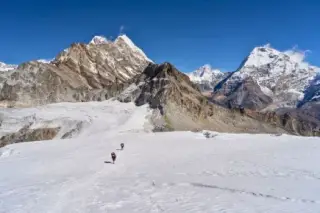
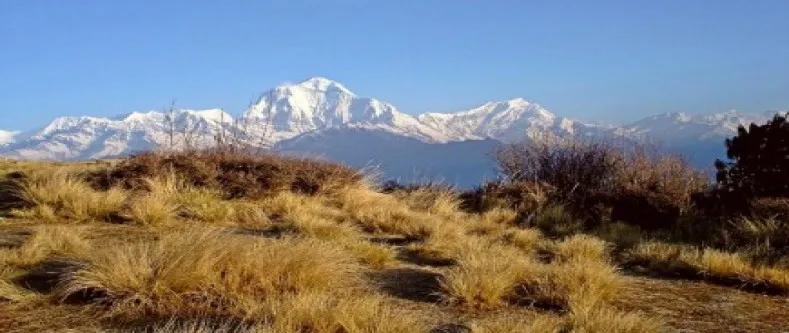
The final climb to Kharka at 3,699 m, the highest point of the trek, takes about 3 to 4 hours of steady ascent through open yak pasture. At Kharka the south face of Machhapuchhre (6,993 m) fills the skyline directly ahead, and Annapurna South (7,219 m) stands to the northwest: this is the visual centrepiece of the itinerary. Clear mornings deliver the full panorama before cloud builds from the valley. Overnight at Kharka.
Sleep at 3,699 mBreakfastLunchDinner
Tonight’s stay
Camping
The descent from Kharka to Takra at 1,450 m is the steepest section of the trek, dropping 2,249 m over about 5 to 6 hours on a trail that can be slippery after rain. Trekking poles and grip-soled boots earn their keep here. Takra is a Gurung village in a warmer, greener valley; the temperature change from Kharka is dramatic. Overnight in Takra at a community homestay.
Sleep at 1,450 mBreakfastLunchDinner
Tonight’s stay
Camping
A mostly flat and easy stage follows the lower valley path through terraced fields and small villages to Lwanghale at 1,460 m. About 4 hours of walking through working farmland with views back up to the ridge crossed yesterday. This is one of the most social days of the trek, passing through active Gurung settlements with children and livestock on the trail. Overnight in Lwanghale at a homestay.
Sleep at 1,460 mBreakfastLunchDinner
Tonight’s stay
Camping
The final walking stage descends to Mardi Pool at 1,000 m, the confluence and pool area that marks the traditional end of the trail. About 3 to 4 hours through lower subtropical forest. A vehicle from Pokhara collects the group here for the drive back to Lakeside. Overnight in Pokhara.
Sleep at 1,000 mBreakfastLunchDinner
Tonight’s stay
Camping
A rest day in Pokhara after the trek. Options include a boat trip on Phewa Lake with the Machhapuchhre reflection, the World Peace Pagoda viewpoint, the International Mountain Museum, or simply a rest at a lakeside cafe. Overnight in Pokhara.
Sleep at 827 mBreakfast
Tonight’s stay
Hotel
An early morning drive or short flight returns you to Kathmandu, around 5 to 6 hours by private vehicle on the Prithvi Highway. The afternoon is free for last-minute shopping in Thamel, Patan Durbar Square or a spa. A farewell dinner is hosted by Swotah in the evening. Overnight in Kathmandu.
Sleep at 1,400 mBreakfast
Tonight’s stay
Hotel
Your Machhapuchhre Model Trek ends today. A Swotah representative transfers you to Tribhuvan International Airport in time for your onward flight. If you want to extend your stay with extra sightseeing, a white-water rafting day on the Trisuli or a Chitwan National Park extension, let us know and we will arrange it.
BreakfastLunch
What’s included
What's included
Every cost on the trail is broken out below — no hidden fees, no surprises at the trailhead.
Included
10 items
Airport transfers.
Standard/Deluxe rooms in Kathmandu on twin/double sharing with breakfast.
Guided sightseeing tour in Kathmandu, along with ticket fees.
Accommodation during trek (or camping in case of need).
All meals (Breakfast, lunch, dinner) during the trek.
Authorized English-speaking guide along with required Porters (3:1) for the trek.
Equipment clothing for porters, including their insurance.
All applicable government taxes.
All expenses for all staff –meals, accommodation, salary, equipment, insurance, transportation.
Medical kit (carried by your trek leader).
Not included
5 items
International flights; Nepalese visa fee.
Travel and rescue insurance.
Personal expenses (phone calls, laundry, bar bills, battery recharge, extra porters, bottle or boiled water, shower, etc.).
Tips for guide(s), porter(s) and driver(s).
Emergency evacuation cost.
How Hard Is the Machhapuchhre Model Trek?
The Machhapuchhre Model Trek is graded easy to moderate. Daily walks run 4 to 6 hours on well-graded trail, the maximum altitude is 3,699 m at Kharka, and there is no technical terrain or river crossing risk. It suits first-time trekkers and families with a basic level of fitness.
▲Easy to moderate. 4-6 hr days, max 3,699 m (Kharka, day 6). Well-graded trail, no technical terrain. Suits first-timers and families.
Overall Rating
2
Easy
out of 10 · physical effort scale
Max altitude3,699 m
Trekking days10 days
Trip Details
Planning your Machhapuchhre Model Trek
Everything you need to plan the trek, topic by topic. Tap any one to open it.
The Machhapuchhre Model Trek is graded easy to moderate, making it one of the mo…
The Machhapuchhre Model Trek is graded easy to moderate, making it one of the more accessible routes in the Annapurna region. Daily stages run 4 to 6 hours on well-marked trail, the elevation gain is gradual, and the maximum altitude of 3,699 m at Kharka on day six is well below the threshold where acute mountain sickness becomes a serious risk for a healthy trekker who ascends at a sensible pace.
The descent from Kharka to Takra (1,450 m) on day seven is the steepest section of the route and takes most walkers 5 to 6 hours on slippery trail after rain, so trekking poles and grip-soled boots are worth having. The lower valley stages around Ribhan and Chichimle Kharka involve little elevation change and suit families or trekkers recovering from a longer trip. No technical skill, rope work or glacier crossing is required anywhere on the route.
Spring (March to May) and autumn (October to November) are the two reliable wind…
Spring (March to May) and autumn (October to November) are the two reliable windows for the Machhapuchhre Model Trek. Spring brings rhododendron in bloom on the mid-elevation ridges and warmer lower-valley temperatures, with clear morning mountain views before afternoon cloud builds. Autumn delivers the clearest skies of the year after the monsoon, crisp air and the sharpest views of Annapurna South and Machhapuchhre.
The summer monsoon (June to September) brings heavy rain, leeches on low trail sections and a real risk of trail damage and slips, so most trekkers avoid it; the upper pasture at Kharka can be muddy and exposed. Winter (December to February) is cold, especially at Kharka and Khumai, with possible snow above 2,500 m, but the route stays walkable for prepared trekkers on clear days. The season cards above show monthly temperature and precipitation ranges.
The Machhapuchhre Model Trek enters the Annapurna Conservation Area, so it requi…
The Machhapuchhre Model Trek enters the Annapurna Conservation Area, so it requires two permits: the Annapurna Conservation Area Permit (ACAP) at NPR 3,000 per non-SAARC trekker, and the Trekkers' Information Management System card (TIMS) at NPR 2,000 per trekker. Both are issued at the Nepal Tourism Board office in Kathmandu or Pokhara and need a passport copy and a passport-size photo.
There is no restricted-area permit for this route, and the trek does not require a minimum group size, though a licensed guide is strongly recommended both for safety and because the trail passes through five village development committees where local knowledge is genuinely useful. Swotah arranges both permits on your behalf once you provide a passport copy and confirm current fees, which can change annually.
Accommodation on the Machhapuchhre Model Trek is the distinguishing feature of t…
Accommodation on the Machhapuchhre Model Trek is the distinguishing feature of the route: the itinerary is designed around community homestays in Gurung farming families where available, with small lodges at stops that have them. Rooms are simple, clean and usually shared-bathroom, with blankets provided, though bringing a sleeping bag liner is sensible for the colder nights at Khumai (3,245 m) and Kharka (3,699 m).
Pokhara and Kathmandu offer a wide range of hotels at the start and end. The homestay model means a small number of beds per village, so Swotah books accommodation ahead for peak-season dates. Staying in the homestays rather than outside guesthouses is the point of the trek: it keeps income inside the community and gives you a direct look at Gurung daily life.
Food on the Machhapuchhre Model Trek comes largely from community kitchens: dal…
Food on the Machhapuchhre Model Trek comes largely from community kitchens: dal bhat (lentil soup, rice, vegetable curry) is the everyday staple, supplemented by seasonal vegetables, maize-flour dishes and, at some homestays, buckwheat pancakes or local pickles. Three meals a day are included in the trek cost. The menu is more limited than on a popular commercial circuit, and that is part of the point: you eat what the village eats.
For water, boiled or purified water is available at lodges and homestays along the route. Carry a reusable bottle and purification tablets or a filter as backup, especially on the upper trail above Khumai. Tap water along the route is not reliably safe to drink untreated. Aim for 2 to 3 litres a day; the moderate altitude and exercise level make hydration straightforward compared to the high-altitude routes in the range.
The Machhapuchhre Model Trek starts and finishes in Pokhara, Nepal's second city…
The Machhapuchhre Model Trek starts and finishes in Pokhara, Nepal's second city, 200 km west of Kathmandu. Pokhara is reached by a 25-minute flight from Kathmandu, or by tourist bus (roughly 6 to 7 hours) or private vehicle (around 5 hours) on the Prithvi Highway. Swotah handles the Kathmandu-to-Pokhara leg and the overnight hotel in Pokhara on day two.
From Pokhara the trailhead is reached by private vehicle in about 1 to 2 hours depending on the starting point. The return leg from Mardi Pool to Pokhara on day ten is also by private vehicle. Pokhara's Lakeside district has good hotels, restaurants and gear shops for any last-minute kit needs before you start walking.
The Machhapuchhre Model Trek was designed specifically to route trekking income…
The Machhapuchhre Model Trek was designed specifically to route trekking income into Gurung farming communities in the five village development committees north of Pokhara, rather than into the established tea-house economy of the Annapurna Circuit. Gurung people are one of Nepal's principal hill peoples, with a strong tradition of military service (many in the Gurkhas) and a distinct culture, language and architecture that survives most intact in the smaller villages above the Pokhara Valley.
Staying in the homestays, eating the family food and buying local handicrafts is how the model is supposed to work. Your guide will brief you on basic Gurung customs, including footwear at thresholds, where to sit in a kitchen and how to ask before photographing. The trek moves through working farms, so keeping to marked paths through fields and respecting crop boundaries is part of responsible trekking on this route.
Machhapuchhre (6,993 m), the Fish Tail peak, is the most recognisable summit in…
Machhapuchhre (6,993 m), the Fish Tail peak, is the most recognisable summit in the Pokhara skyline and a constant presence on the upper days of this trek. Its name comes from its twin-summited profile, which resembles a fish tail when seen from the south. The peak is considered sacred to the Hindu god Shiva, and the government of Nepal has kept it closed to all climbing expeditions since the early 1960s, making it one of the few significant Himalayan peaks that has never been summited.
At 3,699 m on day six, the Kharka high point puts you roughly level with the base of the south face, and the views of both the Fish Tail and Annapurna South (7,219 m) directly behind it are the visual centrepiece of the trek. Annapurna South is the southernmost major peak of the Annapurna massif and consistently underrated as a photographic subject; this route sees it from an angle that the main circuit misses.
A licensed guide is strongly recommended on the Machhapuchhre Model Trek for saf…
A licensed guide is strongly recommended on the Machhapuchhre Model Trek for safety, navigation and the community-homestay logistics. Swotah's guides hold Ministry of Tourism licences and know the five village committees on the route, including which homestays have beds available and how to handle any last-minute changes. The guide also acts as interpreter in communities where English is limited.
A porter takes a 20 to 25 kg load, capped at that weight as a fair-load standard, and is worth booking on a trek of this length even though daily stages are not extreme. Swotah provides a free duffel bag for the porter, so you walk with a light daypack. Porters from the local Gurung villages are employed where possible, which keeps wages inside the communities the trek is designed to support.
Mobile coverage on the Machhapuchhre Model Trek is reasonable in the lower villa…
Mobile coverage on the Machhapuchhre Model Trek is reasonable in the lower villages but patchy on the upper trail above Khumai. Nepal Telecom (NTC) gives the best signal on this route; Swotah includes a tourist SIM. Wi-Fi is available at some homestays and lodges in the lower valley, typically for a small fee, but do not count on it above Chichimle Kharka.
Charging costs a few rupees per device and rises at altitude. A power bank handles two to three days between top-ups and is the practical solution for the upper three nights of the trek. Camera batteries drain faster in the cold at Khumai and Kharka, so carry a spare or keep batteries warm in a jacket pocket overnight. The lower valley and Pokhara have reliable power and fast charging.
Responsible trekking on the Machhapuchhre Model Trek means taking the community…
Responsible trekking on the Machhapuchhre Model Trek means taking the community model seriously. Carry a reusable bottle and treat your own water. Pack out all non-organic waste, because the villages have no collection system. Buy food and handicrafts from local producers. Ask before photographing people, particularly inside homes or at religious sites. Respect the conservation area's rules on fires and wildlife.
Tipping is customary: a common guideline is 10 to 15% of the trek cost, split among the guide, porter and driver at the end of the trip. Tips go directly to the seasonal workers who make up the backbone of Nepal's trekking economy. Booking with a registered operator like Swotah also guarantees the ACAP and TIMS permits are properly arranged, staff insurance is in place and porter loads are capped at the fair-load standard.
What to pack
What to pack
The full kit list. Anything we loan (sleeping bag, down jacket) is called out — bring everything else.
✓Duffel bag (carried by porter)
✓Daypack (20-25 L)
✓Dry bag or rain cover
✓Packing cubes
Frequently Asked
Questions & Answers
Everything trekkers ask before booking. Don't see yours? Tap Enquire — we usually reply within a few hours.
Trekking in this area is done in every year but spring seasons (March to June) and autumn seasons (September to December) are the best time to do this trek.
For nights in cities, we use standard/superior standard/deluxe rooms whereas, during the trek we use lodges/tea houses/guesthouses/home stay/camping for our clients, whatever is available and accessible. We also arrange sleeping bags for our clients, on their request.
Machhapuchhre model trek is a newly opened trek that means it’s completely off the beaten trek perfect for those who enjoy less crowded routes and look for short and easy yet rewarding trekking experience in Annapurna region. Trekking in a near proximity of Annapurna and Machhapuchhre with the ease of relaxed and short trekking trail, this trip fits perfectly for those who want to see best of Annapurna in a short time period.
We customize the trip according to your preference but if you need to change plan during the trek consult the guide.
To confirm your booking, a deposit of 15% of total trip amount is required if you are booking at least a year in advance before trip departure date. If booking is made between 100-364 days before the trip departure, you'll need to pay 20% to confirm the trip. If payment is made between 99-60 days, 25% of the total trip amount will need to be paid and if booked between 59-30 days, 50% of the total trip amount needs to be paid and finally, if you are booking 29 days prior to trip departure, then 100% payment should be made. The payments can be easily made by the bank transfer. The due balance is payable on arrival in Kathmandu with cash (preferably USD/EURO) or card on POS/credit card machine. Please note that non refundable fee is 10% or $200 whichever is greater.
Yes, our representative will be there to greet you at the airport. Upon arrival, you will be transferred to your hotel by a private car/jeep.
We believe in operating small intimate group to provide personal attention and services to our guests. Small groups can enjoy the trek hassle free and enjoy the customized trip according to their need and suitability. We do not incorporate more than 14 People in a group, unless we get special requests from our clients.
If you need extra day to complete the trekking, you'll need to inform the guide in advance and the guide will let the company know. Adding a day to trekking can result in many changes in other arrangements such as transportation, guides' schedule, flight details, hotel bookings and all, so we really don't recommend this to our clients unless there's an emergency cases. But it's true that those changes could be made but it will cost extra. The best way to do it is to inform the agent company about it.
All our Guides are trekking experts holding license from Nepal Tourism Board, Nepal Government. They are the most valuable assets of the company. Guides know the trekking route like the back of their hand and use their expertise in ensuring your safety in the mountains.
You have to carry your personal bags with water bottle and medicines remaining bags will be carried by porters to make you easy to trek. The weight limit for porters is 15 KG.
During Camping, our expert Camping cooks prepare a wide range of delicious meals empowering you with enough strength for your strenuous climbing. All the cooking materials will be carried by our porters.
Yes, you will get purified, filtered water in many tea houses. You can also get a hot water during camping.
We use private car for sightseeing inside the Kathmandu Valley and transfer to Pokhara can be arranged either on a car or jeep or in deluxe bus with A/C depending on the size of the group. We also do pick up and drop from the starting and ending point of trek on private car or Jeep depending on the number of travelers.
Usually, we have to walk about 7-9 hours a day. But it shouldn't be taken as certain thing. Because number of hours of walk really depend on clients' speed. So it's really relative.
While trekking in higher lands you need to pay for charging the electronics upon request to the owner. The best idea always is to bring your power bank with you. It's easier and cheaper.
While trekking in Machhapuchhre you can make local and international calls from telephone provided by the guesthouse owner after paying the price directly.
Yes, there is going to be a small orientation/briefing program before we embark on our adventure by the tour manager, leader/guide.
No, you cannot use the credit card during the climbing. you have to exchange the money in Nepali Rupees before you start the trip. You can use credit card only in Kathmandu and Pokhara.
Yes, Nepal can proudly boast as one of the safest countries in South Asia for women, you will find people very friendly and respectful especially towards women.
We make sure to take security measures during climbing to make your expedition successful. We hire experienced and authorized guides/Sherpa's to safeguard your life in the mountains. We strongly recommend that you follow the guide’s instruction with utmost care.
Before coming to Nepal make sure that you are covered by insurance policy for the altitude of 5500 meters. In the case of an emergency like altitude sickness, dehydration or any medical conditions ask your tour leader/guide to contact us as soon as possible so that we can manage/arrange helicopter for the rescue. Then you will be transferred to hospital for the treatment.
Before coming to Nepal make sure you are covered for diphtheria & TB, hepatitis A, hepatitis B, malaria, typhoid, polio and tetanus. Make sure you are in best shape to complete the trekking without any complication.
Nepal is a safe country for anyone who wants to explore on their own although professional guidance is highly recommended by our team for the safety in remote mountainous lands.
Trekking is a tiresome activity that requires a lot of physical movement so pack your active wears and trekking pants for at lower altitudes. Weather at high altitude is unpredictable so carry a lightweight waterproof jacket along with thick down jacket, pant, and thermal inner wear t to escape the severe cold. Needless to say that, Good shoes are very important for trekking in rough and snowy terrain, so invest on good quality shoes or rent it from us at a minimum price. As you are trekking in remote village try to wear modest clothes to quickly gel up with the local people without hesitation.
Why Travel with Swotah
Why Book the Machhapuchhre Model Trek with Swotah
Most Nepal operators look the same from the outside. Here's what actually makes the difference.
Born in Nepal
100% locally owned since 2016. Trek profits stay with the mountain families and village schools along your route.
Guaranteed Departures
Every date on our calendar runs — no minimum group size. You never pay to be cancelled.
Certified Guides
Government-licensed, WFR-certified, English-speaking. Most were born within two valleys of the trail.
Small Groups
Small groups, never more than 8 trekkers. You get a real experience, not a convoy.
Gear Included
Sleeping bag and down jacket loaned at no extra charge — both rated to –20°C.
Flexible Payment
Deposit from 10% to confirm, balance before departure or in cash on arrival. Reschedule up to 30 days prior.
24/7 Support
Kathmandu office and dedicated WhatsApp emergency line. We answer at 2am if needed.
Hall of Fame
TripAdvisor Travelers' Choice 2023, 2024 and 2025. Hundreds of verified five-star reviews.
Get a free personalised travel brief for the Machhapuchhre Model Trek.
Tell us your travel dates and group size. Our team in Kathmandu will put together a tailored itinerary, honest costs, and practical tips — completely free, no commitment.