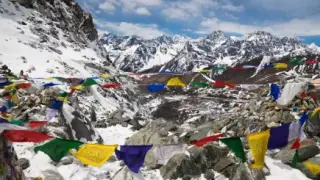
A 14-day east-Nepal ridge trek through 29 rhododendron species with a Kanchenjunga-to-Makalu panorama, ending with a Tumlingtar mountain flight.
Duration
14 Days
Max Altitude
3,124 m / 10,249 ft
Difficulty
Easy
Group Size
Max 14 trekkers
Region
Kanchenjunga Treks, Nepal
Best Season
Spring · Autumn
Accommodation
Teahouses & guesthouses
Meals
All meals on trek
Transport
Jeep KTM-Basantapur; fly Tumlingtar-KTM
Dates & Prices
Choose your date
All dates are guaranteed departures — we never cancel for low numbers. Book online or send a quick enquiry.
YearMonth
8 departures · 2026
Sep
22
Sep 22, 2026 — Oct 5, 2026
Guaranteed departure — from 2 trekkers
Available
USD1,675
per person
Sep
23
Sep 23, 2026 — Oct 6, 2026
Guaranteed departure — from 2 trekkers
Available
USD1,575
per person
Oct
9
Oct 9, 2026 — Oct 22, 2026
Guaranteed departure — from 2 trekkers
Available
USD1,675
per person
Oct
10
Oct 10, 2026 — Oct 23, 2026
Guaranteed departure — from 2 trekkers
Available
USD1,575
per person
Oct
24
Oct 24, 2026 — Nov 6, 2026
Guaranteed departure — from 2 trekkers
Available
USD1,675
per person
Can’t find a suitable date? We run private departures on any date with as few as 2 trekkers.
Trip Overview
About the Milke Danda Trekking
The Milke Danda Trekking is a 14-day ridge walk through far-east Nepal along the Milke Danda crest, a 3,124 m forested spine that separates the Arun and Tamur river valleys in Taplejung and Sankhuwasabha districts. The ridge carries 29 of Nepal's 32 rhododendron species and sits directly between two of the world's five tallest mountains: Kanchenjunga at 8,586 m to the north-east and Makalu at 8,463 m to the north-west across the Arun valley.
The route starts with a long drive from Kathmandu to Basantapur (2,200 m) through Dharan and the Koshi hills, then climbs the ridge through dense rhododendron forest via Chauki (2,700 m) and Ghupha Pokhari (2,930 m) to the ridge crest at 3,124 m on day five. Days six through nine follow the crest south, passing the pilgrimage site at Jaljala and descending to Chainpur, the historic bazaar-town headquarters of Sankhuwasabha district. The final walking days drop to Phapung and then to Tumlingtar (450 m), where a STOL flight returns you to Kathmandu.
This trek requires TIMS only, no restricted-area permit, though the trail is remote with basic teahouses and camping on the upper ridge and a guide is strongly recommended. The sections below cover difficulty, permits, accommodation, the rhododendron season, and what to pack.
Last updated June 2026
Trip Highlights
Highlights
1
29 of Nepal's 32 rhododendron species along a single ridge
2
Panorama from Kanchenjunga (8,586 m) to Makalu (8,463 m)
3
East-Nepal ridge trek; TIMS only, no restricted-area permit
4
Mountain flight from Tumlingtar airstrip to Kathmandu
5
Chainpur historic bazaar: Sankhuwasabha district HQ
6
Himalayan monal habitat on the open upper ridge sections
Day by Day
Milke Danda Trekking Itinerary: 14 Days
Tap any day to expand — altitudes, walking times, meals, and overnight details for every stage of the journey.
A Swotah representative meets you at Tribhuvan International Airport and transfers you to your hotel in Kathmandu. Your guide meets you at dinner to brief you on the trek logistics, the TIMS card paperwork, and the drive plan for the next day. Rest well: the road to Basantapur is long. Overnight in Kathmandu.
Sleep at 1,400 mDinner
Tonight’s stay
Hotel
A guided half-day visits two or three of the Kathmandu Valley UNESCO sites, chosen to fit your interests and the time available. While you are out, the TIMS card is processed and any remaining gear can be hired or purchased in Thamel. The afternoon is free. Overnight in Kathmandu.
Sleep at 1,400 mBreakfast
Tonight’s stay
Hotel
The drive east from Kathmandu to Basantapur covers roughly 400 km on the Koshi Highway via Itahari and Dharan and takes 14 to 15 hours including a lunch stop, making this the longest travel day of the trip. The road climbs from the Terai plains at Dharan (1,071 m) up through forested ridges to Basantapur (2,200 m), a small hill town on the edge of the Milke Danda range. Overnight in Basantapur guesthouse.
Sleep at 2,200 mBreakfastLunch
Tonight’s stay
Guesthouse
5 to 6 hours. The trek starts from Basantapur, climbing north-east through rhododendron and oak forest on a wide ridge trail. Views of the Koshi hills open behind you as you gain altitude. Tamur Koshi and the Arun valley are visible to the north from clearings. Chauki (2,700 m) is a small settlement with a basic teahouse; nights are cool. Overnight in Chauki.
Sleep at 2,700 mBreakfastLunchDinner
Tonight’s stay
Teahouse
5 to 6 hours. The trail continues north-east along the broadening ridge through denser rhododendron forest, passing the settlement at Manglebare and the small twin lakes at Lamo Pokhari before reaching Ghupha Pokhari (2,930 m), a lake-side camping spot below the ridge crest. The treeline is closing in, and Kanchenjunga is visible on the north-eastern horizon on clear afternoons. Camp at Ghupha Pokhari.
Sleep at 2,930 mBreakfastLunchDinner
Tonight’s stay
Camping
3 to 4 hours. A steady climb through the upper rhododendron zone reaches the Milke Danda crest at 3,124 m, the highest point of the trek. From the ridge top, the panorama covers Kanchenjunga (8,586 m) to the north-east, Makalu (8,463 m) to the north-west across the Arun valley, and on a clear day, Everest (8,849 m) further north-west. 29 rhododendron species line the path in bloom March through April. Camp on the Milke Danda crest.
Sleep at 3,124 mBreakfastLunchDinner
Tonight’s stay
Camping
A full day on the ridge. After breakfast, the morning walk follows the crest north through the rhododendron forest to a high viewpoint, where the Himalayan monal can be spotted on the open slopes. Kanchenjunga dominates the north-east horizon; Makalu and Chamlang (7,319 m) rise to the north-west across the Arun valley. The afternoon is for rest, photography, or shorter ridge walks. Camp overnight on the crest.
Sleep at 3,124 mBreakfastLunchDinner
Tonight’s stay
Camping
5 to 6 hours. The route descends south-east from the crest into the upper Sankhuwasabha forests toward Bhalukhop. The trail drops through rhododendron and mixed forest; altitude falls steadily and the air warms. Bhalukhop is a camp-stop on the descent ridge with wide views back toward the crest. Camp at Bhalukhop. Note: exact altitude is approximate.
Sleep at 2,600 mBreakfastLunchDinner
Tonight’s stay
Camping
4 to 5 hours. The trail continues south-east along the descending ridge to Jaljala, a small site used for local pilgrimage. The forest here includes bamboo groves and tall rhododendron. Looking north-east, Kanchenjunga remains on the horizon; Makalu is visible to the north-west across the Arun. Camp at or near Jaljala. Note: altitude is approximate.
Sleep at 2,300 mBreakfastLunchDinner
Tonight’s stay
Camping
5 to 6 hours. A long descent through forested spurs leads down to Chainpur, the headquarters of Sankhuwasabha district, set on a ridge spur at around 1,270 m. Chainpur has a stone-paved market, metalwork and handloom craft stalls, and the most comfortable accommodation since Basantapur. The bazaar is worth a walk in the evening. Overnight in Chainpur.
Sleep at 1,270 mBreakfastLunchDinner
Tonight’s stay
Camping
4 to 5 hours. The trail drops from Chainpur through mixed lower-hill forest and terraced farmland toward the Arun valley floor. Rai and Limbu villages line the route. Phapung is a small settlement at around 900 m with basic accommodation. The day is easier than the ridge days; the afternoon is free. Overnight in Phapung.
Sleep at 900 mBreakfastLunchDinner
Tonight’s stay
Camping
3 to 4 hours. A gentle final descent through terraced fields and river-bank trail leads to Tumlingtar (450 m) on the west bank of the Arun. Tumlingtar has the district's STOL-certified airstrip, used by Twin Otter and similar mountain-service aircraft. Settle in at the guesthouse, sort your luggage for the 20-kg baggage limit on the flight, and rest. Overnight in Tumlingtar.
Sleep at 450 mBreakfastLunchDinner
Tonight’s stay
Guesthouse
A 35 to 45 minute mountain flight from Tumlingtar airstrip returns to Kathmandu, with Everest and the east Himalayan chain on the left side of the aircraft. Mountain flights are weather-dependent; Swotah confirms the schedule the evening before. After landing at Tribhuvan Airport, transfer to your hotel. The rest of the day is free: Thamel for shopping, a farewell dinner, or rest. Overnight in Kathmandu.
Sleep at 1,400 mBreakfast
Tonight’s stay
Hotel
Your Milke Danda trek ends today. A Swotah representative transfers you to the airport for your international or domestic onward flight at the scheduled time. If you want to extend your stay in Nepal or add a cultural tour, the Swotah team can arrange it. Safe travels.
Breakfast
What’s included
What's included
Every cost on the trail is broken out below — no hidden fees, no surprises at the trailhead.
Included
10 items
Airport transfers with an escort by Private Vehicle
Standard/Deluxe rooms in Kathmandu on twin/double sharing with breakfast
Guided sightseeing tour in Kathmandu, along with ticket fees
Private Transportation to the starting point of the trek and back to Kathmandu
Accommodation during trek (or camping in case of need)
All meals (Breakfast, lunch, dinner) during the trek.
Authorized English-speaking guide along with required Porters (3:1) for the trek
All applicable government tax
All expenses for all staff –meals, accommodation, salary, equipment, insurance, transportation
Medical kit (carried by your trek leader)
Not included
5 items
International flights; Nepalese visa fee
Travel and rescue insurance
Personal expenses (phone calls, laundry, bar bills, battery recharge, extra porters, bottle or boiled water, shower, etc.)
Tips for guide(s), porter(s) and driver(s)
Emergency evacuation cost
How Hard Is the Milke Danda Trekking?
The Milke Danda trek is graded moderate. The maximum altitude is 3,124 m, which keeps altitude sickness risk low, but several days are long on remote trail with no evacuation road and basic camping above 2,700 m.
▲Moderate. Max 3,124 m. 5-7 hr days on remote ridge. Camping above 2,700 m; teahouses lower. Good trail fitness needed.
Overall Rating
2
Easy
out of 10 · physical effort scale
Max altitude3,124 m
Trekking days11 days
Trip Details
Planning your Milke Danda Trekking
Everything you need to plan the trek, topic by topic. Tap any one to open it.
The Milke Danda trek is graded moderate, not strenuous. The maximum altitude is…
The Milke Danda trek is graded moderate, not strenuous. The maximum altitude is 3,124 m at the ridge crest on day five, well below the threshold where acute mountain sickness becomes a serious risk, though headaches at night are possible for anyone who gains altitude quickly from the drive to Basantapur at 2,200 m. The itinerary climbs steadily across three days before reaching the crest, which keeps the altitude gain manageable.
The real demands are remoteness and stamina rather than altitude. Walking days run five to seven hours over forest trail and ridge path, and the upper ridge above Ghupha Pokhari has no emergency road. Some days have sustained ascent through dense forest where the path is narrow. Any trekker who can comfortably walk five hours a day over hilly terrain is physically ready for this route. Good trail shoes or boots are more important than high-altitude gear.
March to May is the peak season for the Milke Danda trek because the rhododendro…
March to May is the peak season for the Milke Danda trek because the rhododendron forest is in full bloom, with the 29 species on the ridge flowering in sequence from the lower slopes in February through the ridge top in April. Temperatures at 3,124 m in March and April are cold at night (around 0 to 5 C) but clear and walkable by day, and the views of Kanchenjunga and Makalu are at their sharpest before the pre-monsoon haze builds.
Autumn (October and November) offers stable, dry weather after the monsoon and clear mountain views, and is the second-best window. The summer monsoon (June to September) brings heavy rain and leeches on the lower trail, though the upper ridge is drier. December to February is cold on the crest with potential frost and snow above 2,700 m, and is suitable only for trekkers with four-season gear.
The Milke Danda trek requires only a TIMS card (Trekkers' Information Management…
The Milke Danda trek requires only a TIMS card (Trekkers' Information Management System), issued by the Nepal Tourism Board or a registered trekking agency. There is no restricted-area permit and no conservation area permit for this route. Swotah arranges the TIMS card once you provide a passport copy; no additional permit paperwork is needed.
TIMS costs approximately NPR 2,000 for independent trekkers and NPR 1,000 for those trekking with a registered agency, though rates are revised by the NTB periodically and Swotah confirms the current fee before departure. Carry the TIMS card throughout the trek, as checkposts on the trail do register trekkers passing through.
Accommodation on the Milke Danda trek is a mix. Basantapur at the start has smal…
Accommodation on the Milke Danda trek is a mix. Basantapur at the start has small guesthouses, as does Chainpur (the Sankhuwasabha district headquarters), which has the most comfortable beds on the trek. The lower ridge sections at Chauki have basic teahouses. Above Ghupha Pokhari and on the remote crest, accommodation shifts to camping: tents, sleeping mats, and cooking by the trek crew.
A three-season sleeping bag (rated to -5 C) is sufficient for most of the trek; the ridge crest at 3,124 m can drop to around 0 C at night in October and below freezing in winter. Tumlingtar at trek end has simple guesthouses before the morning flight to Kathmandu. Kathmandu offers comfortable hotels at the start and end of the trip.
Food on the lower Milke Danda trail is standard teahouse fare: dal bhat, noodles…
Food on the lower Milke Danda trail is standard teahouse fare: dal bhat, noodles, fried rice, omelettes, and local vegetables. Dal bhat is the best value on a long day because teahouses refill it once. On the camping stretch above Ghupha Pokhari, the trek crew cooks meals at camp: a wider range of dishes including soups, pasta and rice plates. Swotah includes three meals daily on the trek.
Water on the ridge is from streams and springs; do not drink untreated. Carry a reusable bottle and either purification tablets, a filter, or a UV pen, and plan for two to three litres a day. At teahouses, boiled water is available for a small fee. East Nepal has no significant altitude-related dehydration risk below 3,200 m, but staying well-hydrated still reduces fatigue and headache.
The Milke Danda trek starts with a long private jeep drive from Kathmandu to Bas…
The Milke Danda trek starts with a long private jeep drive from Kathmandu to Basantapur (2,200 m) via Dharan in the eastern Terai, covering roughly 400 km and taking 14 to 15 hours including a lunch stop. This is the longest drive day on any Swotah east Nepal trek, and the final section beyond Dharan on mountain road is slow. An early departure from Kathmandu is standard to reach Basantapur before dark.
The return is by a short mountain flight from Tumlingtar airstrip (450 m, STOL-certified) to Kathmandu, usually 35 to 45 minutes on a Twin Otter or similar. Tumlingtar flights are weather-dependent and mountain flights can be delayed or rescheduled; Swotah builds a buffer into the post-trek day in Kathmandu before any international departure. Private jeep handles both Kathmandu transfer legs.
The Milke Danda ridge holds 29 of Nepal's 32 rhododendron species in one continu…
The Milke Danda ridge holds 29 of Nepal's 32 rhododendron species in one continuous forest corridor, making it one of the highest-density rhododendron areas in the Himalaya. The flowering sequence runs from February (Rhododendron arboreum at lower elevations) through late April (R. campanulatum and R. wightii near the 3,124 m crest), and in a good year the ridge path runs through tree-canopy rhododendrons with red, pink, white and yellow blooms for most of the upper route.
The forest also supports oak, magnolia, and bamboo at the lower altitudes, with Nepal's national bird, the Himalayan monal (Lophophorus impejanus), present on the open sections of the crest. Botanical trekkers and birdwatchers treat this ridge as one of east Nepal's main destinations. The best window for rhododendron colour is the last two weeks of March and the first two weeks of April.
Kanchenjunga, at 8,586 m the world's third-highest mountain, is the dominant pea…
Kanchenjunga, at 8,586 m the world's third-highest mountain, is the dominant peak on the north-east horizon from the Milke Danda ridge, visible on clear mornings from the crest at 3,124 m and from Ghupha Pokhari. Makalu at 8,463 m (fifth highest) rises to the north-west across the Arun valley, and on very clear days Everest (8,849 m) is identifiable further north-west. Four of the world's five tallest mountains are within the arc: Everest, Kanchenjunga, Lhotse and Makalu.
Chamlang (7,319 m) and Baruntse (7,129 m) fill out the Makalu massif to the north-west across the Arun. The best views come in the hour after sunrise when residual moisture has cleared and before valley haze builds. Views are widest from the open sections of the crest on days five and six.
Chainpur is the administrative headquarters of Sankhuwasabha district and one of…
Chainpur is the administrative headquarters of Sankhuwasabha district and one of the most intact historic hill bazaars in east Nepal. The town sits on a ridge spur at around 1,270 m and has a compact stone-paved market with metalwork and handloom craft traditions that predate the main trekking era. Most trekkers pass through on day nine after descending from Jaljala, and an evening walk through the bazaar is worth the time.
Sankhuwasabha district borders the Makalu-Barun National Park to the north, and the lower Arun valley below Chainpur drains south through some of Nepal's least-visited gorge country. The district has a mixed Rai, Limbu and Brahmin population. Chainpur is the last reliable resupply point before the final descent to Phapung and Tumlingtar.
A guide is strongly recommended for the Milke Danda trek: the upper ridge is rem…
A guide is strongly recommended for the Milke Danda trek: the upper ridge is remote, the trail is not always well-signed, and there is no evacuation road above Chauki. Swotah's guides hold Nepal Tourism Board trekking licences and know the ridge route and camping points. One porter carries 20 to 25 kg maximum, covering the duffel while you walk with a daypack.
Responsible trekking on the Milke Danda ridge means carrying out all non-biodegradable waste from the camping stretch, using a reusable bottle rather than single-use plastic, and respecting the local Rai and Limbu communities along the lower trail. Tipping is customary but not mandatory: a common guideline is 10 to 15 percent of the trip cost, split between guide, porter and driver. All tips go directly to the crew.
What to pack
What to pack
The full kit list. Anything we loan (sleeping bag, down jacket) is called out — bring everything else.
✓Duffel bag (carried by porter on camping stretch)
✓Daypack (25-30 L)
✓Dry bag or rain cover
✓Packing cubes
Frequently Asked
Questions & Answers
Everything trekkers ask before booking. Don't see yours? Tap Enquire — we usually reply within a few hours.
Yes, our representative will be there to greet you at the airport. Upon arrival, you will be transferred to your hotel by a private car/jeep.
Yes, there is going to be a small orientation/briefing program before we embark on our adventure by the tour manager, leader/guide.
For nights in cities, we use standard/superior standard/deluxe rooms whereas, during the trek we use lodges/tea houses/guesthouses/home stay/camping for our clients, whatever is available and accessible. We also arrange sleeping bags for our clients, on their request.
We believe in operating small intimate group to provide personal attention and services to our guests. Small groups can enjoy the trek hassle free and enjoy the customized trip according to their need and suitability. We do not incorporate more than 14 People in a group, unless we get special requests from our clients.
Milke Danda trekking is a remote, off the beaten destination as this trek takes you towards the dense forest of florid flowers and the Himalayas in the background. Mainly this trip is for naturalist, Botanist and flower lovers as throughout the trek you can observe the varieties of flowers including rhododendrons. During this trek also you can explore local culture, lifestyle and great Himalayan beauty
Spring season (March to June) and autumn season (September to December) are the best time to do this trek.
To confirm your booking, a deposit of 15% of total trip amount is required if you are booking at least a year in advance before trip departure date. If booking is made between 100-364 days before the trip departure, you'll need to pay 20% to confirm the trip. If payment is made between 99-60 days, 25% of the total trip amount will need to be paid and if booked between 59-30 days, 50% of the total trip amount needs to be paid and finally, if you are booking 29 days prior to trip departure, then 100% payment should be made. The payments can be easily made by the bank transfer. The due balance is payable on arrival in Kathmandu with cash (preferably USD/EURO) or card on POS/credit card machine. Please note that non refundable fee is 10% or $200 whichever is greater.
No, you cannot use the credit card during the climbing. you have to exchange the money in Nepali Rupees before you start the trip. You can use credit card only in Kathmandu and Pokhara.
We customize the trip according to your preference but if you need to change plan during the trek consult the guide.
If you need extra day to complete the trekking, you'll need to inform the guide in advance and the guide will let the company know. Adding a day to trekking can result in many changes in other arrangements such as transportation, guides' schedule, flight details, hotel bookings and all, so we really don't recommend this to our clients unless there's an emergency cases. But it's true that those changes could be made but it will cost extra. The best way to do it is to inform the agent company about it.
We use private car for sightseeing inside the Kathmandu Valley and transfer to Basantapur can be arranged either on a car or jeep or in deluxe bus with A/C depending on the size of the group. We also do pick up and drop from the starting and ending point of trek on private car or Jeep depending on the number of travelers.
You have to carry your personal bags with water bottle and medicines remaining bags will be carried by porters to make you easy to trek. The weight limit for porters is 15 KG.
Nepal is a safe country for anyone who wants to explore on their own although professional guidance is highly recommended by our team for the safety in remote mountainous lands.
During Camping, our expert Camping cooks prepare a wide range of delicious meals empowering you with enough strength for your strenuous climbing. All the cooking materials will be carried by our porters.
Yes, you will get purified, filtered water in many tea houses. You can also get a hot water during camping.
All our Guides are trekking experts holding license from Nepal Tourism Board, Nepal Government. They are the most valuable assets of the company. Guides know the trekking route like the back of their hand and use their expertise in ensuring your safety in the mountains.
While trekking in higher lands you need to pay for charging the electronics upon request to the owner. The best idea always is to bring your power bank with you. It's easier and cheaper.
While trekking in Milke Danda you can make local and international calls from telephone provided by the guesthouse owner after paying the price directly.
Usually, we have to walk about 7-9 hours a day. But it shouldn't be taken as certain thing. Because number of hours of walk really depend on clients' speed. So it's really relative.
Trekking is a tiresome activity that requires a lot of physical movement so pack your active wears and trekking pants for at lower altitudes. Weather at high altitude is unpredictable so carry a lightweight waterproof jacket along with thick down jacket, pant, and thermal inner wear t to escape the severe cold. Needless to say that, Good shoes are very important for trekking in rough and snowy terrain, so invest on good quality shoes or rent it from us at a minimum price. As you are trekking in remote village try to wear modest clothes to quickly gel up with the local people without hesitation.
Yes, Nepal can proudly boast as one of the safest countries in South Asia for women, you will find people very friendly and respectful especially towards women.
We make sure to take security measures during climbing to make your expedition successful. We hire experienced and authorized guides/Sherpa's to safeguard your life in the mountains. We strongly recommend that you follow the guide’s instruction with utmost care.
Before coming to Nepal make sure that you are covered by insurance policy for the altitude of 5500 meters. In the case of an emergency like altitude sickness, dehydration or any medical conditions ask your tour leader/guide to contact us as soon as possible so that we can manage/arrange helicopter for the rescue. Then you will be transferred to hospital for the treatment.
Before coming to Nepal make sure you are covered for diphtheria & TB, hepatitis A, hepatitis B, malaria, typhoid, polio and tetanus. Make sure you are in best shape to complete the trekking without any complication.
Why Travel with Swotah
Why Book the Milke Danda Trekking with Swotah
Most Nepal operators look the same from the outside. Here's what actually makes the difference.
Born in Nepal
100% locally owned since 2016. Trek profits stay with the mountain families and village schools along your route.
Guaranteed Departures
Every date on our calendar runs — no minimum group size. You never pay to be cancelled.
Certified Guides
Government-licensed, WFR-certified, English-speaking. Most were born within two valleys of the trail.
Small Groups
Small groups, never more than 8 trekkers. You get a real experience, not a convoy.
Gear Included
Sleeping bag and down jacket loaned at no extra charge — both rated to –20°C.
Flexible Payment
Deposit from 10% to confirm, balance before departure or in cash on arrival. Reschedule up to 30 days prior.
24/7 Support
Kathmandu office and dedicated WhatsApp emergency line. We answer at 2am if needed.
Hall of Fame
TripAdvisor Travelers' Choice 2023, 2024 and 2025. Hundreds of verified five-star reviews.
Get a free personalised travel brief for the Milke Danda Trekking.
Tell us your travel dates and group size. Our team in Kathmandu will put together a tailored itinerary, honest costs, and practical tips — completely free, no commitment.