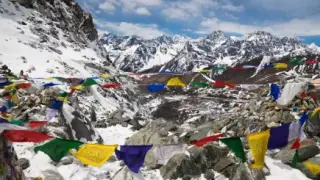
A 6-day Kathmandu Valley yoga retreat with daily Hatha and Vinyasa practice, pranayama, guided meditation, UNESCO heritage sightseeing and a Himalayan sunrise from Nagarkot.
Duration
6 Days
Max Altitude
2,175 m / 7,136 ft
Difficulty
Easy
Group Size
Max 14 trekkers
Region
Kathmandu Valley Treks, Nepal
Best Season
Spring · Autumn
Accommodation
Retreat centre & hotels in KTM
Meals
Sattvic vegetarian meals at retreat
Transport
Private vehicle throughout
Dates & Prices
Choose your date
All dates are guaranteed departures — we never cancel for low numbers. Book online or send a quick enquiry.
YearMonth
7 departures · 2026
Oct
8
Oct 8, 2026 — Oct 13, 2026
Guaranteed departure — from 2 trekkers
Available
USD1,200
per person
Oct
23
Oct 23, 2026 — Oct 28, 2026
Guaranteed departure — from 2 trekkers
Available
USD1,100
per person
Nov
2
Nov 2, 2026 — Nov 7, 2026
Guaranteed departure — from 2 trekkers
Available
USD1,100
per person
Nov
6
Nov 6, 2026 — Nov 11, 2026
Guaranteed departure — from 2 trekkers
Available
USD1,200
per person
Nov
20
Nov 20, 2026 — Nov 25, 2026
Guaranteed departure — from 2 trekkers
Available
USD1,100
per person
Can’t find a suitable date? We run private departures on any date with as few as 2 trekkers.
Trip Overview
About the Nepal Yoga Retreat
Nepal Yoga Retreat is a 6-day program in the Kathmandu Valley that combines daily Hatha and Vinyasa yoga practice with guided cultural immersion at some of Nepal's most significant heritage sites. The retreat centre sits in the quiet hills near Chhaling, east of Kathmandu, giving participants a mountain backdrop for morning and evening sessions while keeping the valley's UNESCO World Heritage Sites within easy reach.
Each day opens with a structured yoga session rooted in the Himalayan tradition, covering asana alignment, pranayama (breathing exercises) and guided meditation. The practice is led by certified yoga teachers trained in the Iyengar, Ashtanga and Sivananda lineages. Meals at the retreat are fully vegetarian and follow a Sattvic diet: simple, seasonal food designed to support clear practice. Between sessions the program visits Pashupatinath Temple, Boudhanath Stupa, Swayambhunath, Changu Narayan, Bhaktapur Durbar Square and Patan Durbar Square, giving context to the yogic and Buddhist traditions that have shaped the valley for over a thousand years.
The centrepiece excursion is an early-morning drive to Nagarkot at 2,175 m, the highest point of the retreat, for a Himalayan sunrise that reveals the Langtang range and on clear mornings a long arc of peaks from Ganesh Himal to Everest. Altitude-conscious pranayama practice at Nagarkot connects breathwork theory to direct experience. The sections below cover retreat style, the best season, accommodation and what to bring.
Last updated June 2026
Trip Highlights
Highlights
1
Daily Hatha and Vinyasa yoga in the Himalayan tradition
2
Himalayan sunrise from Nagarkot at 2,175 m with Langtang views
3
Six UNESCO World Heritage Sites across the Kathmandu Valley
4
Vegetarian Sattvic meals and Ayurvedic massage at the retreat centre
5
Pranayama, chakra alignment and guided meditation each evening
6
Medieval Newar cities of Bhaktapur and Patan Durbar Square
Day by Day
Nepal Yoga Retreat Itinerary: 6 Days
Tap any day to expand — altitudes, walking times, meals, and overnight details for every stage of the journey.
A Swotah representative meets you at Tribhuvan International Airport and transfers you to your hotel in Kathmandu. The afternoon is free to settle in before a guided walk to Pashupatinath Temple, the foremost Shaivite temple in Nepal and one of the four most important pilgrimage sites for followers of Shiva in South Asia. From there the evening moves to Boudhanath, one of the largest Buddhist stupas in the world at 36 m height, and Swayambhunath, the hilltop stupa complex with city views. The day closes with a traditional Nepali dinner and a briefing on the retreat schedule. Overnight at the Kathmandu hotel.
Sleep at 1,400 mDinner
Tonight’s stay
Hotel
The morning visits the Kathmandu Valley's UNESCO World Heritage Sites: the old royal Durbar Squares, Pashupatinath's riverside ghats and the open courtyard of Boudhanath. After lunch in Kathmandu you transfer by private vehicle to the retreat centre near Chhaling in the eastern hills, about 30 minutes from the city centre. The first yoga session introduces the daily schedule: asana, pranayama and a short evening meditation grounded in the Patanjali Yoga Sutras. Vegetarian Sattvic dinner at the retreat. Overnight at the retreat centre.
Sleep at 1,500 mBreakfastDinner
Tonight’s stay
Retreat home
The day begins with Jala-neti nasal cleansing at 6:00, followed by the first full morning yoga session covering standing and balancing asana sequences from the Iyengar lineage. After a Sattvic breakfast the group takes a gentle 1.5 to 2-hour hike to Changu Narayan Temple (1,541 m), a 5th-century Vishnu shrine that holds the oldest stone inscription in Nepal (464 CE) and is considered the finest example of early Newari pagoda architecture. Lunch at a local restaurant near the temple before walking back to the retreat centre. Evening session: pranayama (nadi shodhana and kapalabhati) and guided meditation. Organic vegetarian dinner and a discussion on chakra theory. Overnight at the retreat centre.
Sleep at 1,500 mBreakfastLunchDinner
Tonight’s stay
Retreat home
A 4:30 departure by private vehicle climbs to Nagarkot at 2,175 m, the highest point of the retreat, where dawn reveals the Langtang range and on clear mornings a continuous arc of peaks stretching toward Everest. Altitude-conscious pranayama practice (slow Anulom Vilom) at the viewpoint makes direct use of the elevation. After sunrise the group returns to the retreat centre for breakfast and the morning yoga session. The afternoon excursion visits Bhaktapur, a medieval Newar city whose Durbar Square has been maintained since the 15th century and where vehicular traffic is restricted inside the old city. The Nyatapola Temple (five tiers, 30 m), the 55-Window Palace and the pottery workshop quarter are the highlights. Evening yoga, meditation and dinner at the retreat centre. Overnight at the retreat centre.
Sleep at 2,175 mBreakfastDinner
Tonight’s stay
Retreat home
Morning yoga and pranayama at the retreat centre, followed by a Sattvic breakfast. The day trip covers Patan (Lalitpur), an ancient Newar city on the southern edge of the Kathmandu Valley whose Durbar Square holds more than 55 carved stone and wood temples concentrated within a few city blocks. The Patan Museum, housed in a restored 17th-century royal palace, is considered one of the best craft and metalwork museums in South Asia. The Hiranya Varna Mahavihara (Golden Temple), a working Buddhist monastery dating to the 12th century, is a short walk from the square. The group returns to the retreat centre for the final evening yoga and meditation session, a gratitude circle and the closing dinner. Overnight at the retreat centre.
Sleep at 1,500 mBreakfastDinner
Tonight’s stay
Retreat home
A final morning yoga session at the retreat centre, followed by breakfast, before check-out. A Swotah representative transfers you to Tribhuvan International Airport. Check-in is recommended 3 hours before international departure. If you have an afternoon or late flight, additional sightseeing or a rest stop in Kathmandu can be arranged.
Breakfast
What’s included
What's included
Every cost on the trail is broken out below — no hidden fees, no surprises at the trailhead.
Included
13 items
Airport transfers
Daily morning and evening yoga sessions
Daily evening breathing and meditation sessions
Vegetarian, organic meals at the retreat centre (breakfast, lunch, and dinner) exclude meals taken outside of the centre.
Unlimited herbal teas and filtered water
One-hour Ayurvedic oil massage
Shirodhara- Ayurveda technique for head treatment.
Steam bath or sauna
Standard accommodation in modern-styled rooms with a western bathroom/toilet and hot water shower in the retreat centre on a twin-sharing basis
A sunrise trip to Nagarkot
Visit the Bhaktapur UNESCO World Heritage site
Day trip to Kathmandu to visit world heritage sites such as Patan, Pashupatinath Temple, and Boudhanath Stupa
3 nights’ accommodation in Kathmandu in a deluxe hotel
Not included
8 items
Lunch and dinner in Kathmandu;
Entrance fee(s) during sightseeing
International flights; Nepalese visa fee
Optional trips and sightseeing if extended
Beverages, laundry, phone calls, etc.
Tips for guides (It’s encouraged to tip)
Any kind of hot and cold drinks, which are separate from the meal
Any other expenses which are not mentioned in the ‘Price Includes’ section
How Hard Is the Nepal Yoga Retreat?
Nepal Yoga Retreat is an easy, low-altitude program. The highest point is Nagarkot at 2,175 m, reached by vehicle. The yoga sessions are suitable for beginners and experienced practitioners, and the cultural excursions involve gentle walking on level ground.
▲Easy. Max altitude 2,175 m (Nagarkot, by vehicle). Gentle yoga and walking. Suitable for all levels, including beginners.
Overall Rating
2
Easy
out of 10 · physical effort scale
Max altitude2,175 m
Trekking days6 days
Trip Details
Planning your Nepal Yoga Retreat
Everything you need to plan the trek, topic by topic. Tap any one to open it.
Nepal Yoga Retreat follows a Hatha and Vinyasa format rooted in the Himalayan tr…
Nepal Yoga Retreat follows a Hatha and Vinyasa format rooted in the Himalayan tradition. Morning sessions (roughly 6:30 to 8:00) open with Jala-neti cleansing, then move through asana sequences drawn from the Iyengar, Ashtanga and Sivananda lineages. Evening sessions (roughly 17:00 to 19:00) focus on pranayama, chakra alignment and guided meditation, closing with a short philosophy discussion. The framework comes from Patanjali's Yoga Sutras, which the teachers reference during the sessions.
The program suits complete beginners and practitioners with several years of experience equally well. There is no minimum level. The cultural excursions on Days 1, 3 and 4 involve one to two hours of gentle walking at each site. The Changu Narayan hike on Day 2 is a gentle 1.5 to 2-hour uphill walk on a well-defined trail at around 1,500 m, the only day with sustained physical effort outside the yoga room.
Spring (March to May) and autumn (September to November) are the best seasons fo…
Spring (March to May) and autumn (September to November) are the best seasons for this retreat. Temperatures in the Kathmandu Valley sit between 15 and 28 degrees Celsius, skies are mostly clear, and the Nagarkot sunrise excursion on Day 3 has the best chance of a wide Himalayan panorama, including Langtang and Ganesh Himal. Autumn also brings Nepal's main festival calendar: Dashain and Tihar add cultural colour to the valley sightseeing days.
Winter (December to February) is cool and clear. Kathmandu mornings can drop to around 3 degrees Celsius, and Nagarkot at 2,175 m is noticeably cold before dawn, so pack a proper warm layer. The monsoon (June to August) is warm and wet; mountain views are hazy and the Changu Narayan trail can be slippery, but the valley is lush and fewer participants join, making for a quieter retreat. The season cards show the month-by-month picture.
Most nationalities enter Nepal on a tourist visa issued on arrival at Tribhuvan…
Most nationalities enter Nepal on a tourist visa issued on arrival at Tribhuvan International Airport in Kathmandu. Visas are available for 15, 30 or 90 days; bring a passport valid for at least six months, one passport-size photo and the fee in US dollars. Swotah confirms current visa rules before your trip.
This retreat does not require a trekking permit or TIMS card. Sightseeing at the UNESCO heritage sites in the Kathmandu Valley carries entry fees: Changu Narayan, Bhaktapur Durbar Square, Patan Durbar Square, Pashupatinath, Boudhanath and Swayambhunath each charge a monument conservation fee, which Swotah includes or itemises clearly. No mountain or national park permits are needed.
Participants stay at a retreat centre in the quiet hills near Chhaling, a short…
Participants stay at a retreat centre in the quiet hills near Chhaling, a short drive east of central Kathmandu. Rooms are private, with en-suite western bathrooms, hot water and mountain views from the terrace. The setting keeps vehicle noise to a minimum and supports early morning practice. On the first night, before the retreat begins, guests stay in a deluxe hotel in Kathmandu city.
The retreat centre uses twin-sharing as the default arrangement. Single-occupancy upgrades are available on request. The centre provides yoga mats, blocks and blankets; you do not need to bring your own equipment.
All meals at the retreat centre are fully vegetarian and follow a Sattvic approa…
All meals at the retreat centre are fully vegetarian and follow a Sattvic approach: freshly cooked, seasonal, lightly spiced, with no meat, fish, garlic or onion during the program. Breakfast, lunch and dinner are included from Day 1 dinner through to Day 5 breakfast. Unlimited herbal teas and filtered water are available throughout the day. The Ayurvedic oil massage and shirodhara (a warm-oil head treatment) on one afternoon complement the dietary approach.
On Day 1 in Kathmandu city, a traditional dinner is included at a cultural restaurant. On sightseeing days, lunches in Kathmandu cafes are at your own cost, giving flexibility to explore local food at your own pace. Tell Swotah in advance about any specific dietary requirements.
Kathmandu is the start and finish point for this retreat. Tribhuvan Internationa…
Kathmandu is the start and finish point for this retreat. Tribhuvan International Airport is served by direct flights from Delhi, Dubai, Doha, Singapore, Bangkok and several other hubs. A Swotah representative meets you on arrival and transfers you to your hotel. All movement during the retreat, including the drive to the retreat centre, daily sightseeing, and the Nagarkot excursion, is by private vehicle.
The retreat centre is about 30 to 45 minutes by vehicle from central Kathmandu, so sightseeing days are easy day trips with a driver. All road transfers are in comfortable private cars or vans. No domestic flights are needed.
Day 1 combines arrival in Kathmandu with sightseeing at Pashupatinath, one of th…
Day 1 combines arrival in Kathmandu with sightseeing at Pashupatinath, one of the most important Shaivite temples in Asia, Boudhanath Stupa (one of the largest stupas in the world at 36 m height) and Swayambhunath, the hilltop complex known as the Monkey Temple. Day 2 opens the retreat program with a Jala-neti introduction, yoga and a 1.5 to 2-hour hike to Changu Narayan Temple, a 5th-century Vishnu shrine that is the oldest surviving pagoda-style temple in the valley.
Day 3 begins before dawn with a drive to Nagarkot at 2,175 m for a Himalayan sunrise, followed by a visit to Bhaktapur, a medieval Newar city where car traffic is restricted and the Durbar Square has been continuously maintained since the 15th century. Days 2, 3 and 4 all include double yoga sessions, pranayama and meditation. Day 4 finishes in Patan, an ancient Newar city whose Durbar Square holds more than 55 temples and the Patan Museum, considered one of the best craft museums in South Asia. Day 5 is a full retreat day for practice and rest before departure on the morning of Day 5.
Yoga sessions are led by teachers certified under the Nepal Yoga Teacher Trainin…
Yoga sessions are led by teachers certified under the Nepal Yoga Teacher Training programme and trained in the Iyengar, Ashtanga and Sivananda lineages, which share their roots in the Himalayan tradition codified by Swami Sivananda of Rishikesh. The teachers hold current certificates issued by Yoga Alliance and the Government of Nepal Ministry of Tourism. Swotah's retreat coordinator handles logistics, and a licensed English-speaking guide accompanies all cultural excursions.
The maximum group size is 14 participants, keeping the yoga sessions small enough for the teacher to give individual alignment cues. If you want a specific teacher or a lineage not listed, contact Swotah and they will see what is available for your dates.
The retreat centre near Chhaling has Wi-Fi, power sockets (mostly 5-pin round-pi…
The retreat centre near Chhaling has Wi-Fi, power sockets (mostly 5-pin round-pin type C/D) and hot water throughout. Nepal Telecom and Ncell both give 4G coverage in the area; Swotah provides a local tourist SIM on arrival at Tribhuvan airport. Kathmandu city has reliable mobile data and the hotel on the first night has fast Wi-Fi.
Carry a universal travel adaptor. Altitude at the retreat centre is around 1,400 to 1,500 m, low enough that acclimatisation is not a concern, though the Nagarkot excursion at 2,175 m is early morning; the altitude-conscious pranayama practice that morning is designed specifically to make the most of that elevation and the thin, clear air.
Responsible participation keeps the valley's heritage sites and the retreat cent…
Responsible participation keeps the valley's heritage sites and the retreat centre's community healthy over time. At UNESCO-listed temples, dress modestly (shoulders and knees covered), remove shoes when entering shrine spaces, and ask permission before photographing worshippers. At the retreat centre, follow the teacher's guidance on silence periods, and avoid single-use plastics where possible.
Tipping is customary and appreciated. A common guideline is 10 to 15% of the total trip cost distributed among the yoga teachers, guide, driver and retreat centre staff. Tips go directly to the people who run the program. Booking with Swotah, a Government of Nepal registered operator, ensures that entry fees, staff insurance and permits are handled correctly.
What to pack
What to pack
The full kit list. Anything we loan (sleeping bag, down jacket) is called out — bring everything else.
✓Main bag or duffel
✓Small daypack for sightseeing (15-20L)
✓Packing cubes
✓Small padlock
Frequently Asked
Questions & Answers
Everything trekkers ask before booking. Don't see yours? Tap Enquire — we usually reply within a few hours.
This trip can be done every season but February to June and October to December are the best time to perform this hike.
We customize the trip according to your preference but if you need to change plan during the hike, consult the guide.
We use private transportation for sightseeing. While visiting to Nagarkot and Changu Narayan we use private transportation according to the comfort and ease that you require. We do pick up and drop from starting point till the end.
This trip is popular for a short retreat trip which give you a fresh breath of air and to do Ayurveda treatment and massage with an experience the Ashram stay under the guidance of coveted Guruji.
We believe in operating small intimate group to provide personal attention and services to our guests. Small groups can enjoy the trip hassle free and enjoy the customized trip according to their need and suitability. We do not incorporate more than 14 People in a group, unless we get special requests from our clients.
To confirm your booking, a deposit of 15% of total trip amount is required if you are booking at least a year in advance before trip departure date. If booking is made between 100-364 days before the trip departure, you'll need to pay 20% to confirm the trip. If payment is made between 99-60 days, 25% of the total trip amount will need to be paid and if booked between 59-30 days, 50% of the total trip amount needs to be paid and finally, if you are booking 29 days prior to trip departure, then 100% payment should be made. The payments can be easily made by the bank transfer. The due balance is payable on arrival in Kathmandu with cash (preferably USD/EURO) or card on POS/credit card machine. Please note that non refundable fee is 10% or $200 whichever is greater.
Yes, you can use the credit card. But make sure you withdraw few amount in case of emergency.
If you need extra day to complete the trip you will need to inform the guide in advance and the guide will let the company know. Adding a day to trip can result in many changes in other arrangements such as transportation, guide’s schedule, flight details, hotel bookings and all. So, we really do not recommend this to our clients unless there is an emergency case. But it is true that those changes could be made but it will cost extra. The best way to do it is to inform the agent company about it.
You have to carry your personal bags with water bottle by yourself and medicines will be carried by your guide in case of need.
We contact the retreat owner for reservation of the room before we go.
Yes, there is going to be a small orientation/briefing program before we embark on our adventure by the tour manager, leader/guide.
Yes, our representative will be there to greet you at the airport. Upon arrival, you will be transferred to your hotel by a private car/jeep.
For nights in cities, we use standard/superior standard/deluxe rooms whereas we use retreat home for your good health during the trip.
Since this trip is near to Kathmandu Valley, you can get wide range of delicious eastern as well as western foods like Pasta, Pizza, Noodles, Bread, Soup, Rice and Vegetables, delicious MoMo, etc.
There are plenty of water stations and mini markets and shops where you can easily get bottled water. We recommend that you bring water purifier tablets with you in case you need it for yourself. You have to buy it for yourself.
Nepal is a safe country for anyone who wants to explore on their own although professional guidance is highly recommended by our team for the safety.
You can charge your electronics in the retreat home where you stay and spend your nights by paying minimum amount.
Yes, you will get telephone service which is available in the hotel you will be staying at. In case of emergency, you can also ask your guide for his/her help.
For the Yoga trip you have to do a lot of physical movement so pack your active wears and hiking pants for easy hike. Needless to say that, good shoe is very important for any hike. As Kathmandu is not very much cold place, you will not have to carry heavy clothes. Carry a light weight jacket along with the pant to hike. But make sure you bring at least one warm jacket in case of sudden weather change.
All our guides are reliable and holding license from Nepal Tourism Board, Nepal Government. They are the most valuable assets of the company. Guides know the route like the back of their hand and use their expertise in ensuring your safety.
Usually, we have to walk about 4-6 hours a day. But it should not be taken as certain thing because the hour of walk depends on client’s speed. So it is really relative.
Yes, Nepal can proudly boast as one of the safest country in South Asia for women. You will find people very friendly and respectful towards foreigners especially towards women. People here in Kathmandu are well taught about respecting any female person around them.
Before coming to Nepal, make sure you are covered for diphtheria & TB, hepatitis A, hepatitis B, malaria, typhoid, polio and tetanus. Make sure you are in best shape to complete the hiking without any complication.
Yes, of course. Your security is our first priority. In any kind of emergency, ask your guide to contact us immediately so that we can manage vehicle for you ASAP and you will be directly transfer to hospital for the treatment.
We make sure to take security measures during hike to make your trip delightful. We hire experienced and license holding guides to safeguard your life. We suggest you to follow the guide’s instruction carefully and take responsibility for personal belongings. Always keep your valued belongings near you and lock the door from inside during the night.
Why Travel with Swotah
Why Book the Nepal Yoga Retreat with Swotah
Most Nepal operators look the same from the outside. Here's what actually makes the difference.
Born in Nepal
100% locally owned since 2016. Trek profits stay with the mountain families and village schools along your route.
Guaranteed Departures
Every date on our calendar runs — no minimum group size. You never pay to be cancelled.
Certified Guides
Government-licensed, WFR-certified, English-speaking. Most were born within two valleys of the trail.
Small Groups
Small groups, never more than 8 trekkers. You get a real experience, not a convoy.
Gear Included
Sleeping bag and down jacket loaned at no extra charge — both rated to –20°C.
Flexible Payment
Deposit from 10% to confirm, balance before departure or in cash on arrival. Reschedule up to 30 days prior.
24/7 Support
Kathmandu office and dedicated WhatsApp emergency line. We answer at 2am if needed.
Hall of Fame
TripAdvisor Travelers' Choice 2023, 2024 and 2025. Hundreds of verified five-star reviews.
Get a free personalised travel brief for the Nepal Yoga Retreat.
Tell us your travel dates and group size. Our team in Kathmandu will put together a tailored itinerary, honest costs, and practical tips — completely free, no commitment.