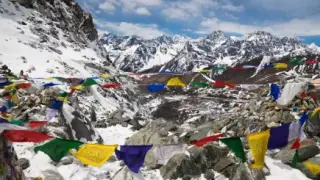
A 5-day astrophotography and stargazing trek to Namche Bazaar (3,440 m) inside Sagarmatha National Park, one of the highest and darkest night-sky sites on earth.
Duration
5 Days
Max Altitude
3,440 m / 11,286 ft
Difficulty
Easy
Group Size
Max 14 trekkers
Region
Everest Tour Packages, Nepal
Best Season
Spring · Autumn
Accommodation
Teahouses in Phakding and Namche; hotel in Kathmandu.
Meals
3 meals daily on trek; dal bhat, noodles, eggs. Treat water.
Transport
Kathmandu-Lukla by mountain flight (both ways).
Dates & Prices
Choose your date
All dates are guaranteed departures — we never cancel for low numbers. Book online or send a quick enquiry.
YearMonth
8 departures · 2026
Oct
1
Oct 1, 2026 — Oct 5, 2026
Guaranteed departure — from 2 trekkers
Available
USD1,300
per person
Oct
5
Oct 5, 2026 — Oct 9, 2026
Guaranteed departure — from 2 trekkers
Available
USD1,300
per person
Oct
15
Oct 15, 2026 — Oct 19, 2026
Guaranteed departure — from 2 trekkers
Available
USD1,300
per person
Oct
16
Oct 16, 2026 — Oct 20, 2026
Guaranteed departure — from 2 trekkers
Available
USD1,300
per person
Nov
6
Nov 6, 2026 — Nov 10, 2026
Guaranteed departure — from 2 trekkers
Available
USD1,400
per person
Can’t find a suitable date? We run private departures on any date with as few as 2 trekkers.
Trip Overview
About the Stargazing Trek Sagarmatha National Park
The Stargazing Trek inside Sagarmatha National Park is a 5-day guided astronomy trek to Namche Bazaar (3,440 m), the main trading hub of the Khumbu region and a UNESCO World Heritage Site entry point, carrying telescopes and astrophotography gear into one of the world's least light-polluted high-altitude corridors. The route follows the classic Everest trail from Lukla (2,840 m) up the Dudh Koshi gorge, reaching Namche where the combination of thin, dry air, a dark mountain sky and Sherpa expertise produces conditions that reveal the Milky Way core and 1,500 or more stars unaided.
Sagarmatha National Park, established in 1976 and inscribed as a UNESCO World Heritage Site in 1979, covers 1,148 sq km of the high Khumbu including Everest, Lhotse and Ama Dablam, and the park's remoteness from city lights makes it exceptional for dark-sky observation. On the clearest nights the Andromeda Galaxy, the Magellanic Clouds and even Uranus are visible without optical aid. The trek is not a technical altitude challenge: the highest night is spent at Namche at 3,440 m, and the guides focus attention on the sky rather than on peak-bagging.
This trip is suitable for all ages with a reasonable level of fitness, and no prior astronomy knowledge is required. Children with strong legs for the trail and anyone curious about the night sky from a genuinely dark high-altitude site will find it rewarding. The sections below cover permits, best dark-sky timing, altitude, weather, what to expect at night and what to bring.
Last updated June 2026
Trip Highlights
Highlights
1
Two guided night-sky sessions with telescopes at Namche Bazaar (3,440 m)
2
Milky Way core, Andromeda Galaxy and 1,500+ stars visible unaided in the Khumbu dark sky
3
Trek through Sagarmatha National Park, a UNESCO World Heritage Site
4
Classic Everest trail through the Dudh Koshi gorge with views of Ama Dablam and Everest
5
Astrophotography guidance included, from phone shooting to DSLR long-exposure technique
6
Suitable for all ages; no prior astronomy or high-altitude experience required
Day by Day
Stargazing Trek Sagarmatha National Park Itinerary: 5 Days
Tap any day to expand — altitudes, walking times, meals, and overnight details for every stage of the journey.
The trek begins at Tenzing-Hillary Airport in Lukla at 2,840 m, one of the world's highest and most storied mountain airstrips. After the Khumbu Pasang Lhamu Rural Municipality permit check at the Lukla checkpoint, the trail drops steadily through pine forest and Sherpa villages along the Dudh Koshi river gorge to Phakding at 2,610 m, a 3 to 4 hour walk with several suspension bridges crossing above the turquoise river. The descent and short distance make this an easy opening day. Overnight in Phakding at 2,610 m.
Sleep at 2,840 m
Tonight’s stay
Teahouse
From Phakding (2,610 m) the trail climbs north through Monjo, where the Sagarmatha National Park permit is checked, crosses the Hillary Suspension Bridge at 3,420 m with the first Everest sighting, then tackles the 600 m climb to Namche Bazaar in 5 to 6 hours total. Namche is the main trading hub of the Khumbu at 3,440 m, with bakeries, gear shops and mountain air. After dinner the guide checks sky conditions from the lodge terrace. Overnight at Namche at 3,440 m.
Sleep at 2,610 m
Tonight’s stay
Teahouse
The acclimatisation day stays at 3,440 m to let the body adjust. The morning visits the Sagarmatha National Park Visitor Centre at 3,530 m for views of Everest (8,849 m), Lhotse (8,516 m) and Ama Dablam (6,812 m). After rest, the astronomy assistant sets up 80 mm and 100 mm refractor telescopes above the village. At nightfall the guide runs a narrated naked-eye sky tour with a green-laser pointer, then opens the telescope queue for 90 to 120 minutes of deep-sky and planetary observation. Overnight at Namche at 3,440 m.
Sleep at 3,440 m
The trail retraces from Namche Bazaar (3,440 m) south through the Dudh Koshi gorge to Lukla (2,840 m), a 5 to 6 hour largely downhill walk. Morning views of Thamserku (6,623 m) and Kusum Kanguru (6,367 m) are clear across the gorge. At Lukla the guide checks the flight status and the group reviews astrophotography results from the Namche sessions. Overnight in Lukla at 2,840 m.
Sleep at 2,840 m
Tonight’s stay
Teahouse
An early-morning flight from Tenzing-Hillary Airport at Lukla (2,840 m) returns to Tribhuvan International Airport in Kathmandu (1,400 m) in about 35 minutes, with clear-weather views of the Himalayan chain during the descent. Swotah transfers you to your Kathmandu hotel on arrival. The afternoon is free for Thamel, souvenir shopping or reviewing the astrophotography shots from Namche. Departure transfers are arranged for the evening or the following morning depending on your onward flight. Overnight in Kathmandu at 1,400 m.
What’s included
What's included
Every cost on the trail is broken out below — no hidden fees, no surprises at the trailhead.
Included
6 items
Professional stargazing guide
Accommodations during the trek
Round trip flights Kathmandu-Lukla-Kathmandu
Necessary permits
Group telescopes for nightly sessions
Insurance for guides and porter
Not included
4 items
Personal equipment (clothing, boots, personal telescope/binoculars, etc.)
Personal travel insurance
Meals during the trek
Tips for guides
How Hard Is the Stargazing Trek Sagarmatha National Park?
The Stargazing Trek is a moderate short trek. The altitude tops out at Namche Bazaar (3,440 m), with a steady climb from Lukla (2,840 m) over two walking days. Daily walking is 5 to 6 hours. The night sessions at Namche are the centrepiece.
▲Moderate. 5-6 hr days, max 3,440 m (Namche Bazaar). Steady uphill on day 2; no technical terrain. Good base fitness needed; altitude awareness advised.
Overall Rating
2
Easy
out of 10 · physical effort scale
Max altitude3,440 m
Trekking days4 days
Trip Details
Planning your Stargazing Trek Sagarmatha National Park
Everything you need to plan the trek, topic by topic. Tap any one to open it.
The Stargazing Trek reaches Namche Bazaar at 3,440 m, which sits well below the…
The Stargazing Trek reaches Namche Bazaar at 3,440 m, which sits well below the threshold for serious altitude complications but high enough that a minority of trekkers develop a mild headache on their first night, particularly those who ascend from Phakding (2,610 m) to Namche in a single day. The acclimatisation day at Namche (day 3) addresses this directly and is also the first full night-sky session with telescopes.
Walking days run 5 to 6 hours over well-established Khumbu trail, with the Namche hill on day 2 being the stiffest section, a sharp 600 m climb from the Dudh Koshi suspension bridges. There is no technical terrain and no crampon use. Anyone who can walk 4 to 5 hours over hilly ground with a daypack is physically ready. Children aged 10 and above complete this trek regularly with adult company.
October and November are the prime months for this trek: the post-monsoon skies…
October and November are the prime months for this trek: the post-monsoon skies clear sharply after September, humidity drops, and the combination of stable high pressure and dry air above 3,000 m produces the best transparency for naked-eye and telescope viewing. March and April also deliver reliably clear dark skies before the pre-monsoon haze builds in May.
Within any month, the trip is timed around the new-moon window, the five to seven nights centred on the new moon when there is no lunar interference. Swotah schedules departures to coincide with these windows; check departure dates when booking. The monsoon months (June to August) bring persistent cloud, high humidity and frequent rain, which ruins visibility and is not suitable for this trip. December and January have cold, clear nights but sub-zero temperatures at Namche demand a warmer sleeping bag and extra layers. Clear skies are never guaranteed in the mountains regardless of season, so a buffer night at Namche (or a flexible departure) is worth considering for dedicated astrophotographers.
Two permits are required to enter the Sagarmatha National Park area from Lukla.…
Two permits are required to enter the Sagarmatha National Park area from Lukla. The Sagarmatha National Park entry permit costs NPR 3,000 per person (about USD 23 for foreign nationals) and is collected at the park checkpoint in Monjo on day 1 of the trek. The Khumbu Pasang Lhamu Rural Municipality permit costs NPR 2,000 per person (about USD 15) and is issued at the checkpoint in Lukla before the trail begins.
The old TIMS card is no longer required inside the Khumbu region. Swotah arranges both permits on arrival in Kathmandu once you provide a passport copy, so there is nothing to apply for independently. Fees are current as of 2025 but can be revised by the Nepali government; Swotah will confirm the applicable rates at the time of booking.
Phakding (2,610 m) and Namche Bazaar (3,440 m) both have well-established teahou…
Phakding (2,610 m) and Namche Bazaar (3,440 m) both have well-established teahouse lodges that are more comfortable than those on more remote Nepal treks. Phakding has simple but clean lodges with en-suite or shared bathrooms. Namche has a range of options including lodges with hot showers, Wi-Fi and an attached dining room, and the town has bakeries and coffee shops from years of Everest trekker traffic.
The night stargazing session on days 2 and 3 takes place from the lodge terrace or a dark spot above the village, so guests return to their beds rather than camping. A warm sleeping bag rated to at least -10 C is still important: Namche's nights drop well below freezing in October, November, December and January, and even in March and April temperatures fall to around 0 to -5 C at night. Kathmandu accommodation at the start is a comfortable mid-range hotel.
Three meals are included each day on the trek. Teahouse menus in Phakding and Na…
Three meals are included each day on the trek. Teahouse menus in Phakding and Namche feature dal bhat (the Nepali rice-and-lentil staple, always refillable), noodle soups, Tibetan bread, eggs, oatmeal, momos and pancakes. Namche has more variety than most Khumbu stops, with bakeries, pizza and decent coffee.
Aim for 3 to 4 litres of water per day at altitude to prevent dehydration, which worsens any altitude symptoms. Do not drink untreated water; lodges sell boiled water, and purification tablets, a filter straw or a UV pen all work. Carry a 1-litre reusable bottle and refill it at lodges rather than buying single-use plastic bottles, which add waste in the national park. Alcohol slows acclimatisation and should be skipped on the first night at Namche.
Lukla's Tenzing-Hillary Airport sits at 2,840 m in the Solukhumbu district, abou…
Lukla's Tenzing-Hillary Airport sits at 2,840 m in the Solukhumbu district, about 140 km east of Kathmandu as the crow flies, and is the gateway to the Khumbu. Flights from Tribhuvan International Airport in Kathmandu take about 35 minutes on Twin Otter or similar mountain aircraft and operate under visual flight rules only, so early morning departures before cloud builds are standard.
In peak season (April, May, October, November) some operators fly from Manthali Airport at Ramechhap (about 130 km east of Kathmandu by road), which is closer to Lukla and reduces fuel load; Swotah will advise if this applies to your dates. Delays and cancellations due to weather at Lukla are common, so the itinerary builds in the Kathmandu return as a full day with flexibility. Swotah books all domestic flights as part of the package.
Namche Bazaar at 3,440 m gives a dark-sky quality that urban and even most rural…
Namche Bazaar at 3,440 m gives a dark-sky quality that urban and even most rural sites cannot match. Light pollution, measured by the Bortle scale, runs at Class 2 to 3 in the Khumbu, meaning the Milky Way core casts a detectable shadow on snow, zodiacal light is visible on dark nights, and the sky background is fully dark to the naked eye. The thin, dry air at altitude further reduces atmospheric scattering, making star colours and deep-sky objects clearer than at sea level.
On a new-moon night Swotah guides set up 80 mm and 100 mm refractor telescopes for planetary and deep-sky viewing, and can assist with long-exposure astrophotography using a camera with a manual mode. Visible targets on a clear autumn night include the Andromeda Galaxy (M31) at naked-eye magnitude, the Orion Nebula (M42) through binoculars or a telescope, the Pleiades star cluster, Jupiter and Saturn (when in opposition), and on the clearest nights Uranus with optical aid. The Southern Cross and Magellanic Clouds are visible from the Khumbu's latitude of 28 N.
Sagarmatha National Park covers 1,148 sq km of the high Khumbu in north-eastern…
Sagarmatha National Park covers 1,148 sq km of the high Khumbu in north-eastern Nepal, gazetted in 1976 and inscribed as a UNESCO World Heritage Site in 1979. It contains three of the world's 14 eight-thousanders: Everest at 8,849 m, Lhotse at 8,516 m and Cho Oyu at 8,188 m, along with Ama Dablam at 6,812 m and dozens of smaller peaks. The park protects snow leopard, red panda, Himalayan tahr and more than 110 bird species including the Himalayan monal, Nepal's national bird.
The park's remoteness from Kathmandu (roughly 140 km northeast) and the absence of road access from Lukla upward keep vehicle emissions and artificial lighting out of the upper valleys, which is why the night sky quality remains exceptional. Trekkers pay the park entry permit at Monjo, where rangers also check gear lists and enforce the park's no-wood-burning rule. Carry certified sleeping bag and jacket ratings rather than relying on lodge bonfires at altitude.
Swotah provides a licensed trekking guide and an astronomy-trained assistant for…
Swotah provides a licensed trekking guide and an astronomy-trained assistant for this trip. The trekking guide holds a Ministry of Tourism licence and Wilderness First Aid training. The astronomy assistant has completed a practical astrophotography and telescope-handling course and carries a clinometer, star charts, a green-laser pointer for sky tours and at least one 80 mm refractor telescope for the group.
A porter is included to carry telescope cases and group gear, keeping trekkers' daypacks light for the trail. Telescope time is divided across the group each clear night, and the guide runs a narrated sky tour before the telescope queue, identifying constellations, naming the Sherpa star lore for the major groupings, and pointing out satellites and the International Space Station when passes occur during the session.
A full-frame or crop-sensor DSLR or mirrorless camera with a 24 mm or wider lens…
A full-frame or crop-sensor DSLR or mirrorless camera with a 24 mm or wider lens at f/2.8 or faster captures Milky Way frames from Namche in 15 to 25 seconds at ISO 1600 to 6400, depending on conditions. A sturdy tripod is essential; ball heads with a friction lock work best on uneven rock ground. Remote shutter releases prevent camera shake on exposures above the camera's self-timer limit.
Phone cameras with a dedicated night or astrophotography mode (Pixel, iPhone 15 Pro and similar) also produce good wide-field Milky Way shots from the Khumbu sky, though they cannot match a dedicated camera for resolution. Batteries drain fast in cold Namche nights; carry two spares per camera and warm them in an inner pocket between uses. The guide identifies the best composition angles for the Milky Way core above the Khumbu peaks each night based on the sky position at that date.
Sagarmatha National Park has strict waste management rules that Swotah enforces…
Sagarmatha National Park has strict waste management rules that Swotah enforces on this trip: no single-use plastic inside the park, all solid waste carried out or deposited at designated Namche bins, and no wood burning in lodges above 3,000 m. The 2011 Sagarmatha Pollution Control Committee (SPCC) permit scheme requires trekking groups to carry their waste management documentation, which Swotah provides.
For the night-sky sessions, keep white-light torches off or covered with a red filter once the telescope session starts; even a phone screen at full brightness temporarily ruins dark adaptation for the whole group. The guides use only red-light headlamps and a green laser for sky tours. Tip your guide and porter at the end of the trip: a common guideline is 10 to 15% of the trek cost, paid directly in cash to the staff. Tips represent a significant share of seasonal income in the Khumbu.
What to pack
What to pack
The full kit list. Anything we loan (sleeping bag, down jacket) is called out — bring everything else.
✓Duffel bag (porter-carried)
✓Daypack (25-30 L)
✓Dry bag or rain cover
✓Packing cubes
Frequently Asked
Questions & Answers
Everything trekkers ask before booking. Don't see yours? Tap Enquire — we usually reply within a few hours.
October and November are the best months: the post-monsoon sky clears sharply, humidity drops, and the Khumbu reaches its peak dark-sky quality. March and April are the second-best window, with clear spring skies before pre-monsoon haze builds. Within any month, Swotah schedules departures around the new-moon window (the 5 to 7 nights centred on the new moon) when there is no moonlight to wash out faint stars. Check departure dates on the booking page to confirm which lunar phase your dates fall in.
Namche Bazaar sits at 3,440 m in a bowl surrounded by high ridges, far from any city lights. The absence of road access from Lukla upward means no vehicle traffic and no generator sprawl above the village. Light pollution at this altitude rates Class 2 to 3 on the Bortle scale, where the Milky Way core is bright enough to cast a shadow on snow and the sky background is fully dark to the naked eye. The thinner, drier air at altitude reduces atmospheric scattering, making star colours and deep-sky detail sharper than at sea level.
Two permits are required. The Sagarmatha National Park entry permit costs NPR 3,000 per person (about USD 23 for foreign nationals) and is collected at the Monjo checkpoint on the first walking day. The Khumbu Pasang Lhamu Rural Municipality permit costs NPR 2,000 per person (about USD 15) and is issued at Lukla. The old TIMS card is no longer required inside the Khumbu. Swotah arranges both permits in Kathmandu before the Lukla flight; you provide a passport copy and photos at the time of booking.
Tenzing-Hillary Airport in Lukla sits at 2,840 m and uses a 527 m sloped runway with a cliff at one end and a mountain face at the other. Flights from Kathmandu take about 35 minutes on small mountain aircraft and operate under visual flight rules, so they run in clear weather only. Weather cancellations and delays are common, especially in the monsoon and in unsettled early-spring conditions. Swotah books early-morning flights where delays are least likely and builds flexibility into the Kathmandu return day. In peak season (April, May, October, November) some flights operate from Manthali/Ramechhap airport instead.
No prior astronomy knowledge is needed. The guide runs a narrated sky tour each night, identifying constellations, major stars and visible planets by name and with a green-laser pointer, and the telescope is set up ready to observe. For astrophotography, the guide advises on camera settings for your specific gear. For trekking, anyone who can walk 5 to 6 hours over hilly terrain with a daypack and has no serious cardiovascular condition is suitable. Children aged 10 and above complete this trek regularly with adult company.
Book at least 4 to 6 weeks in advance to secure a departure on your preferred new-moon window. Domestic flights between Kathmandu and Lukla sell out quickly in peak season (October, November, March, April); Swotah books these as soon as your deposit is confirmed. For October and November departures, booking 2 to 3 months ahead is safer.
The package includes: accommodation in Kathmandu (1 night) and on the trek (teahouse lodges), all meals on the trek (breakfast, lunch and dinner), Lukla domestic flights (return), Sagarmatha National Park permit and Khumbu municipality permit, a licensed trekking guide, an astronomy assistant, a porter for group gear and telescope equipment, telescopes and star charts. International flights to and from Kathmandu and travel insurance are not included.
This trek runs with a minimum of 2 and a maximum of 10 participants per departure. Smaller groups give more telescope time per person and make it easier to find a dark, unobstructed spot above Namche for the viewing sessions. Private departures for solo or couple travel are available at a supplement; contact Swotah for current pricing.
Yes, and it is encouraged. Swotah provides telescopes and tripods as group equipment, but guests are welcome to bring their own DSLR or mirrorless cameras, wide-angle lenses, personal tripods and intervalometers. The porter carries up to 20 to 25 kg of group gear; personal camera bags are carried by the trekker in a daypack. If you bring specialist equipment such as a star tracker mount, let Swotah know at booking so the porter's load is allocated appropriately.
On a new-moon autumn night at Namche (3,440 m) the naked eye can pick out the Milky Way core, the Andromeda Galaxy (M31) as a faint smudge, the Pleiades, the Hyades, major double stars and, depending on the season, bright planets such as Jupiter, Saturn and Mars. Through the 80 mm or 100 mm refractor telescope the Orion Nebula (M42), the Beehive Cluster (M44), and Saturn's rings and Jupiter's moons are accessible. Uranus is visible with binoculars or the telescope on the clearest nights. The guide tailors the session to what is highest and best-placed at the time of year.
Mountain weather can bring unexpected cloud even in the best months, and clear skies are not guaranteed on any specific night. The itinerary includes two nights at Namche (days 2 and 3) to provide a built-in second chance if the first night is cloudy. For guests with flexible schedules, Swotah recommends adding one buffer night at Namche at the time of booking; this adds one extra teahouse night to the cost. Partial cloud can sometimes produce stunning skies between gaps, so the guide will call a late-night check even after a cloudy evening start.
Namche Bazaar at 3,440 m drops to -5 to -15 C on clear autumn and winter nights, and clear nights are the coldest because there is no cloud insulation. Standing still outside for 60 to 90 minutes of sky observation is significantly colder than walking the trail. Bring a down jacket rated to at least -10 C, insulated trousers or fleece-lined hiking trousers, warm gloves and a hat covering the ears. Keeping feet warm is the biggest challenge; insulated boots or adding a second pair of socks inside your trekking boots works well. Hot tea is available from the lodge kitchen throughout the evening.
Namche Bazaar at 3,440 m is below the threshold for serious acute mountain sickness (AMS) for most people, but a minority develop a mild headache or poor sleep on the first night, particularly if they ascended quickly from Phakding (2,610 m). The itinerary includes a full acclimatisation day at Namche on day 3, which is standard Khumbu practice. Symptoms of AMS include headache, nausea, dizziness and fatigue. Drink 3 to 4 litres of water per day, avoid alcohol on the first Namche night, walk slowly on the Namche hill section, and tell the guide immediately if symptoms worsen. Descent to Phakding resolves mild AMS quickly; the guide carries a pulse oximeter to monitor oxygen saturation.
Swotah requires comprehensive travel insurance for all participants before departure. For this trip the policy must cover trekking at altitudes up to 4,000 m, emergency medical evacuation by helicopter (minimum USD 100,000), trip cancellation and curtailment, and personal baggage. Standard travel policies often exclude trekking above 2,500 m or 3,000 m; check the policy wording carefully. Helicopter evacuation from the Khumbu to Kathmandu is the primary emergency option; rescue helicopters operate from Namche and can reach Kathmandu in about 45 minutes. Proof of insurance is required at final booking confirmation.
Why Travel with Swotah
Why Book the Stargazing Trek Sagarmatha National Park with Swotah
Most Nepal operators look the same from the outside. Here's what actually makes the difference.
Born in Nepal
100% locally owned since 2016. Trek profits stay with the mountain families and village schools along your route.
Guaranteed Departures
Every date on our calendar runs — no minimum group size. You never pay to be cancelled.
Certified Guides
Government-licensed, WFR-certified, English-speaking. Most were born within two valleys of the trail.
Small Groups
Small groups, never more than 8 trekkers. You get a real experience, not a convoy.
Gear Included
Sleeping bag and down jacket loaned at no extra charge — both rated to –20°C.
Flexible Payment
Deposit from 10% to confirm, balance before departure or in cash on arrival. Reschedule up to 30 days prior.
24/7 Support
Kathmandu office and dedicated WhatsApp emergency line. We answer at 2am if needed.
Hall of Fame
TripAdvisor Travelers' Choice 2023, 2024 and 2025. Hundreds of verified five-star reviews.
Get a free personalised travel brief for the Stargazing Trek Sagarmatha National Park.
Tell us your travel dates and group size. Our team in Kathmandu will put together a tailored itinerary, honest costs, and practical tips — completely free, no commitment.