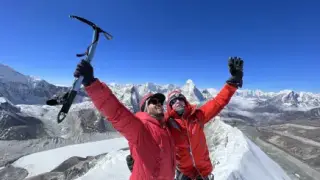
A 19-day trek into the restricted Nar and Phu valleys over the Kang La (5,320 m) and Thorong La (5,416 m), through medieval Tibetan villages to Muktinath.
Duration
19 Days
Max Altitude
5,416 m / 17,769 ft
Difficulty
Hard
Group Size
Max 8 trekkers
Region
Annapurna Trekking Packages, Nepal
Best Season
Spring · Autumn
Accommodation
Teahouse & gompa stay
Meals
All meals on trek
Transport
Drive, jeep & flight
Dates & Prices
Choose your date
All dates are guaranteed departures — we never cancel for low numbers. Book online or send a quick enquiry.
YearMonth
1 departure · 2026
Nov
6
Nov 6, 2026 — Nov 24, 2026
Guaranteed departure — from 2 trekkers
Available
USD2,150
per person
Can’t find a suitable date? We run private departures on any date with as few as 2 trekkers.
Trip Overview
About the Nar Phu Valley Trek
The Nar Phu Valley Trek is a 19-day trek into a restricted Tibetan-Buddhist corner of the Annapurna region, crossing two high passes, the Kang La at 5,320 m and the Thorong La at 5,416 m. Nar and Phu are two medieval villages tucked in a hidden valley north of Koto, near the Tibet border, opened to trekkers only in 2002 and still among the quietest trails in Nepal.
The route leaves the main Annapurna Circuit at Koto and climbs through narrow canyons, juniper forest and yak pastures to Phu (4,050 m) and Nar (4,120 m), where gompas, chortens and stone houses have changed little in centuries. From Nar the trail crosses the Kang La back to the circuit at Ngawal, continues through Manang, then crosses the Thorong La to the pilgrimage temple of Muktinath at 3,710 m before dropping to Jomsom and Pokhara.
This is a demanding, remote trek. The two passes and altitudes above 4,000 m make acute mountain sickness the main risk, and the restricted valley has only basic lodges. Anyone with a respiratory condition should consult a doctor first, and the route is not suited to very young children. The sections below cover the restricted-area permit, difficulty, the two passes, seasons and what to pack.
Last updated October 2026
Trip Highlights
Highlights
1
Trek the restricted Nar and Phu valleys, opened to trekkers only in 2002
2
Cross two high passes: the Kang La (5,320 m) and the Thorong La (5,416 m)
3
Medieval Tibetan-Buddhist villages of Phu and Nar, with ancient gompas
4
Views of Himlung Himal (7,126 m), Gangapurna and the Annapurna massif
5
Finish at the pilgrimage temple of Muktinath (3,710 m)
6
Wild canyons, yak pastures and one of Nepal's quietest trails
Day by Day
Nar Phu Valley Trek Itinerary: 19 Days
Tap any day to expand — altitudes, walking times, meals, and overnight details for every stage of the journey.
A Swotah representative meets you at Tribhuvan International Airport and drives you to your hotel. Your guide briefs you on the trek and the restricted-area permits and checks your gear. The rest of the day is free to rest. Overnight in Kathmandu.
Sleep at 1,350 mDinner
Tonight’s stay
Hotel
A guided day around the Kathmandu Valley's UNESCO World Heritage Sites, with time to finish the Nar Phu restricted-area paperwork and pick up any last kit in Thamel. Overnight in Kathmandu.
Sleep at 1,350 mBreakfast
Tonight’s stay
Hotel
A long jeep drive heads west to Besisahar and up the rough Marsyangdi valley road to Jagat (1,330 m), around 8 to 9 hours. The lower valley is green and subtropical, with terraced farms and waterfalls. The walking begins at Jagat. Overnight in Jagat.
Sleep at 1,330 mBreakfastLunchDinner
Tonight’s stay
Guesthouse
The trail follows the Marsyangdi upstream through the village of Tal and a series of waterfalls and suspension bridges, the valley narrowing as pine replaces subtropical forest. Dharapani (1,860 m) is the junction with the Manaslu trail. About 6 to 7 hours. Overnight in Dharapani.
Sleep at 1,860 mBreakfastLunchDinner
Tonight’s stay
Teahouse
The route climbs through Bagarchhap and Timang, with views of Annapurna II and Lamjung Himal, to Koto (2,600 m) near Chame. Koto is the checkpoint where the restricted Nar Phu valley branches north off the main circuit. About 5 to 6 hours. Overnight in Koto.
Sleep at 2,600 mBreakfastLunchDinner
Tonight’s stay
Teahouse
The trail leaves the circuit and enters the restricted Nar Phu valley, climbing a narrow gorge of the Phu Khola past caves, waterfalls and forest. The walls close in before the valley opens to Meta (3,560 m), the first Tibetan-style settlement. A long 7 to 8 hour day. Overnight in Meta.
Sleep at 3,560 mBreakfastLunchDinner
Tonight’s stay
Teahouse
The route continues up the high valley past Kyang and the ruins of old Khampa settlements, through dramatic eroded canyons, to the medieval stone village of Phu (4,050 m) below its hilltop gompa. About 6 to 7 hours. Overnight in Phu.
Sleep at 4,050 mBreakfastLunchDinner
Tonight’s stay
Teahouse
A day to explore Phu and acclimatise, visiting the Tashi Lhakhang gompa, one of the oldest in the region, and the stone houses, chortens and yak pastures of this remote village near the Tibetan border. The rest helps your body adjust before the higher days. Overnight in Phu.
Sleep at 4,050 mBreakfastLunchDinner
Tonight’s stay
Teahouse
The trail descends the valley and crosses toward Nar, with a night at the gompa-run lodge at Nar Phedi (3,500 m), a working nunnery where guests can join the evening prayers. About 6 to 7 hours. Overnight at Nar Phedi.
Sleep at 3,500 mBreakfastLunchDinner
Tonight’s stay
Teahouse
A shorter climb past a line of painted chortens reaches Nar (4,120 m), a Tibetan village of barley fields, mani walls and flat-roofed stone houses set against Pisang Peak. The afternoon is free to explore. About 3 to 4 hours. Overnight in Nar.
Sleep at 4,120 mBreakfastLunchDinner
Tonight’s stay
Teahouse
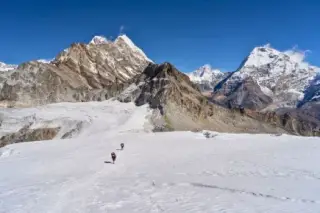
An early start climbs to the Kang La at 5,320 m, the pass that links Nar back to the Annapurna Circuit, with a wide view of the Annapurna massif and Tilicho Peak from the top. A long descent leads down to Ngawal (3,615 m), an old village on the high circuit route. About 7 to 8 hours. Overnight in Ngawal.
Sleep at 5,320 mBreakfastLunchDinner
Tonight’s stay
Teahouse
The trail rejoins the main circuit and descends through Braga, with its cliffside gompa, to Manang (3,519 m), the largest village on the route and the main acclimatisation stop, beneath Gangapurna and its glacial lake. About 4 to 5 hours. Overnight in Manang.
Sleep at 3,519 mBreakfastLunchDinner
Tonight’s stay
Teahouse
The route climbs gradually toward the Thorong La, crossing high grazing pastures where yaks and blue sheep graze, to Yak Kharka (4,110 m). The landscape grows open and barren with height. About 5 to 6 hours. Overnight in Yak Kharka.
Sleep at 4,110 mBreakfastLunchDinner
Tonight’s stay
Teahouse
A shorter day climbs past Thorong Phedi to High Camp (4,600 m), the last shelter before the pass, crossing a couple of landslide gullies on the way. The afternoon is for rest and an early night. About 4 to 5 hours. Overnight at High Camp.
Sleep at 4,600 mBreakfastLunchDinner
Tonight’s stay
Teahouse
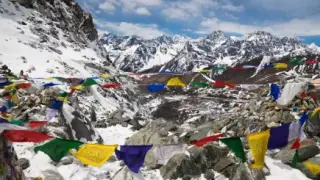
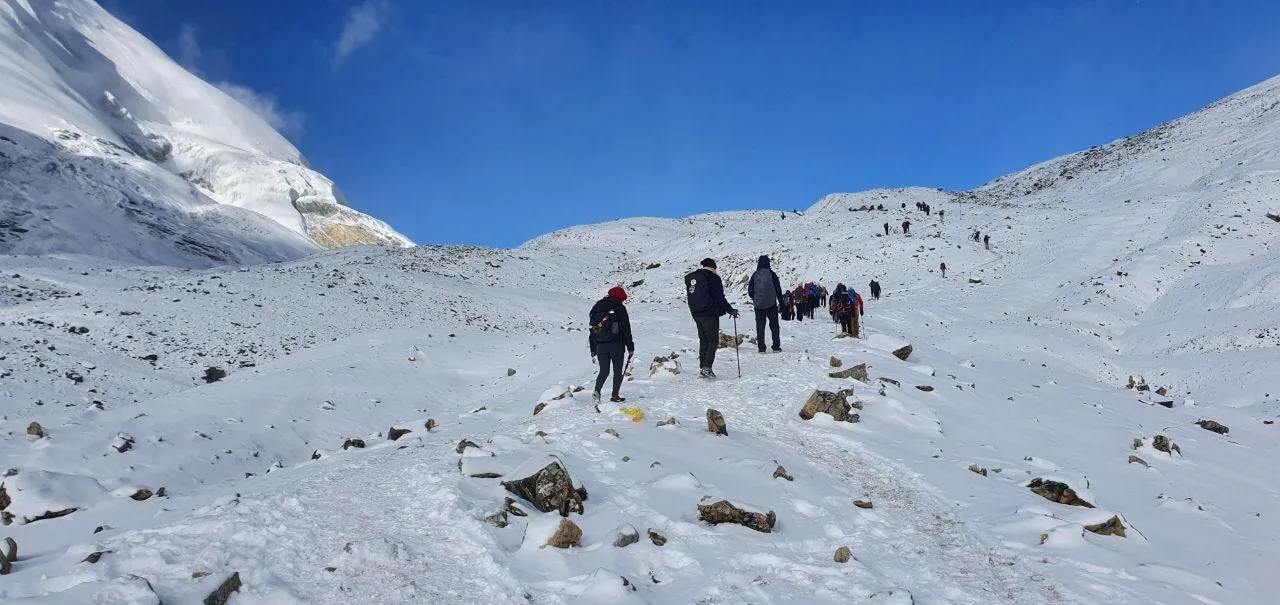
The big day starts before dawn for the steady climb to the Thorong La at 5,416 m, the high point of the trek and one of the world's highest trekking passes, hung with prayer flags. From the top the trail drops a long way to the pilgrimage temple of Muktinath (3,710 m). About 7 to 8 hours. Overnight in Muktinath.
Sleep at 5,416 mBreakfastLunchDinner
Tonight’s stay
Guesthouse
After visiting the Muktinath temple, the trail descends into the Kali Gandaki, the deepest gorge in the world, through the medieval village of Kagbeni to the windy town of Jomsom (2,743 m). About 5 to 6 hours. Overnight in Jomsom.
Sleep at 2,743 mBreakfastLunchDinner
Tonight’s stay
Guesthouse
A short, scenic mountain flight (or a jeep drive) carries you from Jomsom down to Pokhara (850 m), where the trek ends by the lakeside. Jomsom flights run in the calm morning hours and are weather-dependent. The afternoon is free in Pokhara. Overnight in Pokhara.
Sleep at 850 mBreakfast
Tonight’s stay
Hotel
A morning drive returns to Kathmandu on the Prithvi Highway, about 200 km and 6 to 8 hours through the hills, with stops for lunch. A 25-minute flight is available as an upgrade. The rest of the day is free. Overnight in Kathmandu.
Sleep at 1,350 mBreakfast
Tonight’s stay
Hotel
Your trek ends today. A Swotah representative transfers you to the airport for your onward flight. If you would like to extend your stay or add another trip, we are glad to help arrange it.
Breakfast
What’s included
What's included
Every cost on the trail is broken out below — no hidden fees, no surprises at the trailhead.
Included
12 items
Airport transfers;
Standard/deluxe rooms in Kathmandu and Pokhara on twin/double sharing with breakfast;
Guided sightseeing tour in Kathmandu;
Accommodation during the trek;
Breakfast, lunch and dinner with one drink along during the trek;
Authorized English-speaking guide along with required porters (15kg per porter) for the trek;
Jomsom-Pokhara airfare with domestic airport departure tax;
Kathmandu to Jagat transfer by private transportation;
All applicable government taxes;
All expenses for all staff: meals, accommodation, salary, equipment, insurance, transportation;
All necessary paperwork and Nar Phu special trekking permit (National Park Permit, Annapurna Conservation Area permit fees (ACAP), Trekkers' Information Management System fees (TIMS);
Medical kit (carried by your trek leader);
Not included
8 items
International flights and Nepalese visa fees;
Excess baggage charge(s) for the domestic flight;
Extra night accommodation in Kathmandu and Pokhara because of early arrival, late departure, or early return from the mountain due to any reason other than the scheduled itinerary;
Lunch and evening meals in Kathmandu and Pokhara;
International flights;
Travel and rescue insurance;
Personal expenses (phone calls, laundry, bar bills, battery recharge, extra porters, bottle or boiled water, shower, etc.);
Tips for guide(s), porter(s) and driver(s);
How Hard Is the Nar Phu Valley Trek?
This is a strenuous, remote trek. There is no technical climbing, but it crosses two passes (Kang La 5,320 m and Thorong La 5,416 m) with basic lodges in between, so altitude and self-sufficiency are the real demands.
▲Strenuous and remote. 5-8 hr days, two passes, max altitude 5,416 m. Good fitness essential; respiratory conditions need medical clearance. Not suited to very young children.
Overall Rating
6
Hard
out of 10 · physical effort scale
Max altitude5,416 m
Trekking days16 days
Trip Details
Planning your Nar Phu Valley Trek
Everything you need to plan the trek, topic by topic. Tap any one to open it.
The Nar Phu Valley Trek is graded strenuous, with two high passes and several ni…
The Nar Phu Valley Trek is graded strenuous, with two high passes and several nights above 4,000 m. The Kang La (5,320 m) links Nar to the main circuit, and the Thorong La (5,416 m) is the trek's high point, so acute mountain sickness (AMS) is the main risk and the itinerary allows time to acclimatise around Phu and Manang (3,519 m).
Days run 5 to 8 hours over rough, remote trail, and both pass days start early for a stable morning crossing. No technical climbing is needed, but the valley is isolated, so self-sufficiency and fitness matter more than on a teahouse circuit. Anyone with a respiratory or heart condition should consult a doctor before booking, and the route is not advised for very young children. Drink 3 to 4 litres of water a day, and tell the guide early about any headache or nausea.
Autumn (late September to November) and spring (March to May) are the two season…
Autumn (late September to November) and spring (March to May) are the two seasons for the Nar Phu Valley Trek, because both passes need stable, snow-free weather. Autumn brings the clearest skies after the monsoon and is the most reliable time to cross the Kang La and Thorong La. Spring is warmer lower down with rhododendron in bloom, though the high valley stays cold.
Winter (December to February) brings heavy snow that can close both passes, so it suits only experienced, well-equipped trekkers. The summer monsoon (June to August) brings rain and landslides to the approach, although Nar Phu sits in a partial rain shadow behind the Annapurnas. The season cards above show the month-by-month picture.
Nar Phu is a restricted area, so it needs a special permit on top of the standar…
Nar Phu is a restricted area, so it needs a special permit on top of the standard Annapurna permit, and by law you must travel through a registered agency in a group of at least two trekkers with a licensed guide. The Nar Phu Restricted Area Permit costs around USD 100 per person per week in the high season (September to November) and about USD 75 per week the rest of the year.
You also need the Annapurna Conservation Area Permit (ACAP), issued by the National Trust for Nature Conservation, at NPR 3,000 for non-SAARC nationals and NPR 1,000 for SAARC nationals. Swotah arranges all the paperwork once you send a passport copy and photos, so bring a passport valid for at least six months. Permit rules and fees are set by the government and can change, so we confirm current rates before departure.
Accommodation on the Nar Phu Valley Trek is simpler than on the main Annapurna C…
Accommodation on the Nar Phu Valley Trek is simpler than on the main Annapurna Circuit, because the restricted valley sees few trekkers. Phu and Nar have a handful of basic teahouses, and one classic night is spent at the gompa-run lodge at Nar Phedi. Expect twin rooms, shared bathrooms and limited heating in the high villages.
On the circuit side, Manang, Yak Kharka and Muktinath have better-equipped lodges with more menu choice and hot showers. Kathmandu and Pokhara offer comfortable hotels. A four-season sleeping bag is important for the cold nights in Nar, Phu and the high camps before the Thorong La.
Food on the Nar Phu Valley Trek is teahouse cooking, and dal bhat (lentil soup,…
Food on the Nar Phu Valley Trek is teahouse cooking, and dal bhat (lentil soup, rice and vegetable curry) is the staple because lodges refill it and it carries you through long days. In the restricted valley the menu narrows to dal bhat, Tibetan bread, noodles and potatoes, while the circuit side adds momos, pancakes and Thakali sets.
Swotah includes three meals a day on the trek. For water, aim for 3 to 4 litres a day to help prevent altitude sickness, and treat it rather than drinking untreated stream water: boiled water is sold at lodges, and purification tablets, a filter or a UV pen all work. Carry a reusable bottle, and expect fewer resupply points than on a standard circuit.
The Nar Phu Valley Trek starts with a drive from Kathmandu to Jagat (1,330 m) in…
The Nar Phu Valley Trek starts with a drive from Kathmandu to Jagat (1,330 m) in the Marsyangdi valley, then follows the Annapurna Circuit trail to Koto, where the restricted valley branches north. The approach uses the same road head as the main circuit.
The trek finishes on the far side at Jomsom (2,743 m), from where you drive or take a short flight to Pokhara, then continue to Kathmandu by tourist coach or domestic flight. Swotah runs the road legs by private jeep or coach. Mountain roads here are slow and exposed to monsoon landslides, so the schedule allows realistic drive times.
Nar and Phu are two villages in a hidden valley north of Koto, near the Tibet bo…
Nar and Phu are two villages in a hidden valley north of Koto, near the Tibet border, opened to foreign trekkers only in 2002. Their Tibetan-Buddhist culture survives in gompas, chortens, mani walls and stone houses, and the people herd yaks and grow barley much as they have for centuries.
The trail between them crosses narrow canyons, juniper forest and high grazing pastures, with views of Himlung Himal (7,126 m), Gangapurna and the Annapurna massif. The Kang La (5,320 m) connects Nar back to the main circuit at Ngawal. Because the valley is restricted and remote, you see far fewer trekkers here than on the standard Annapurna routes, which is the main reason people choose it.
A licensed guide is mandatory on the Nar Phu Valley Trek, both because Nepal req…
A licensed guide is mandatory on the Nar Phu Valley Trek, both because Nepal requires one as of 2023 and because the restricted-area permit is issued only to guided groups of at least two. Swotah's guides hold Ministry of Tourism licences, have Nepal Mountaineering Association training, and know the Kang La and Thorong La crossings.
A porter is optional but makes the high, remote days safer and lighter. One porter carries 20 to 25 kg, and we cap loads at that weight because porters face the same altitude as trekkers. Swotah provides a free duffel for the porter, and you walk with a 25 to 30 L daypack holding water, snacks, documents and a warm layer.
Mobile coverage is patchy on the Nar Phu Valley Trek, more so than on the main c…
Mobile coverage is patchy on the Nar Phu Valley Trek, more so than on the main circuit, because the restricted valley is remote. Nepal Telecom (NTC) gives the best chance of a signal at altitude, and Ncell works lower down; both sell tourist SIMs with 4G for about USD 1 to 6, and Swotah provides a SIM, though expect dead spots around Phu and the passes.
Wi-Fi exists at some lodges on the circuit side for a small charge but is rare in Nar and Phu. You can charge a phone or camera at lodges for a few rupees per device, with cost and reliability falling the higher and more remote you go, so a power bank or solar charger is worth carrying.
Responsible trekking matters more in Nar Phu than on busier trails, because the…
Responsible trekking matters more in Nar Phu than on busier trails, because the restricted valley is fragile and rarely visited. Carry a reusable bottle and treat your own water, pack out all waste, ask before photographing people or gompa interiors, and follow your guide's lead at chortens and mani walls.
Tipping is customary though not mandatory: a common guideline is around 15% of the trip cost, shared among the guide, porter and driver who work the season. Tips go directly to the workforce that makes the trek run. Booking with a registered operator like Swotah also means the restricted-area permit, staff insurance and fair porter loads are handled properly.
What to pack
What to pack
The full kit list. Anything we loan (sleeping bag, down jacket) is called out — bring everything else.
✓Duffel bag (carried by porter)
✓Daypack (25-30L)
✓Dry bag or rain cover
✓Packing cubes
Frequently Asked
Questions & Answers
Everything trekkers ask before booking. Don't see yours? Tap Enquire — we usually reply within a few hours.
Although it’s not very famous among the trekkers but this trek boasts different Himalayan views, landscapes, rustic villages, and beautiful lake city making this perfect holidays for the adventure junkies.
Spring season (March to June) and autumn season (September to December) are the best time to do this trek, in winters it’s difficult to trek in snow and harsh cold.
Trekking is a tiresome activity that requires a lot of physical movement so pack your active wears and trekking pants for at lower altitudes. Weather at high altitude is unpredictable, so carry a light weight waterproof jacket along with thick down jacket, pant and thermal innerwear to escape the severe cold. Needless to say that, Good shoes are very important for trekking in rough and snowy terrain, so invest in good quality shoes or rent it from us at a minimum price. As you are trekking in remote village try to wear modest clothes too quickly gel up with the local people without hesitation.
Before coming to Nepal make sure you are covered for diphtheria & TB, hepatitis A, hepatitis B, malaria, typhoid, polio and tetanus. Make sure you are in best shape to complete the trekking without any complication.
To confirm your booking, a deposit of 15% of total trip amount is required if you are booking at least a year in advance before trip departure date. If booking is made between 100-364 days before the trip departure, you'll need to pay 20% to confirm the trip. If payment is made between 99-60 days, 25% of the total trip amount will need to be paid and if booked between 59-30 days, 50% of the total trip amount needs to be paid and finally, if you are booking 29 days prior to trip departure, then 100% payment should be made. The payments can be easily made by the bank transfer. The due balance is payable on arrival in Kathmandu with cash (preferably USD/EURO) or card on POS/credit card machine. Please note that non refundable fee is 10% or $200 whichever is greater.
We believe in operating small intimate group to provide personal attention and services to our guests. Small groups can enjoy the trek hassle free and enjoy the customized trip according to their need and suitability. We do not incorporate more than 14 People in a group, unless we get special requests from our clients.
We customize the trip according to your preference but if you need to change plan during the trek consult the guide.
If you need extra day to complete the trekking, you'll need to inform the guide in advance and the guide will let the company know. Adding a day to trekking can result in many changes in other arrangements such as transportation, guides' schedule, flight details, hotel bookings and all, so we really don't recommend this to our clients unless there's an emergency cases. But it's true that those changes could be made but it will cost extra. The best way to do it is to inform the agent company about it.
You cannot use the credit card during the trek. You have to withdraw the money before you start the trek. You can use credit card only in Kathmandu and Pokhara.
Yes, our representative will be there to greet you at the airport. Upon arrival, you will be transferred to your hotel by a private car/jeep.
Yes, there is going to be a small orientation/briefing program before we embark on our adventure by the tour manager, leader/guide.
For nights in cities, we use standard/superior standard/deluxe rooms whereas, during the trek we use lodges/tea houses/guesthouses/home stay for our clients, whatever is available and accessible. We also arrange sleeping bags for our clients, on their request.
Nar Phu Valley is not very popular trekking region among the trekkers hence this region provides a wide range of delicious western meals like pasta, noodles, pizzas, bread, soup, etc. potatoes grown in this region are very delicious which is loved by all the trekkers. Dal Bhat (Rice, Lentils and Vegetables) are a great way to gain energy for the strenuous trek.
We use private car for sightseeing inside the Kathmandu Valley and to drive towards Jagat. We used car, Minibus or Van depending on the number of people. We also drop and pick up from the starting and ending point of trek on private car or Jeep depending on the number of travellers.
Our Guides are trekking expert with license from Nepal Tourism Board. Guides know the trekking route like back of their hand and use their expertise in ensuring your safety in the mountains.
You have to carry your personal bags with water bottle and medicines remaining bags will be carried by porters to make you easy to trek. The weight limit for porters is 15 KG.
Usually, we have to walk about 7-9 hours a day. But it shouldn't be taken as certain thing. Because number of hours of walk really depend on clients' speed. So it's really relative.
While trekking in higher lands you need to pay for charging the electronics upon request to the owner. The best idea always is to bring your power bank with you. It's easier and cheaper.
While trekking in Nar Phu Valley, you can make local and international calls from telephone provided by the guesthouse owner after paying directly to the property.
We contact the lodge/guesthouse owner for reservation of the room before trekking on a particular day. On other days, porters reach the destination on advance and book the rooms for you. But there are always going to be exceptions but even in those cases, we may have to be flexible about very basic sleeping arrangements. We always try to make sure that we have everything well arranged.
Yes, Nepal can proudly boast as one of the safest countries in South Asia for women, you will find very friendly and respectful people especially towards women. In Nepal, women are referred to as an incarnation of a goddess and are treated with respect and care. Although Nar Phu Valley is one of the least visited trekking areas in Nepal, it is quite safe to travel. Be it for male or Female. In general, locals are very respectful and welcoming.
We make sure to take security measures during trek to make your trip delightful. We hire experienced and license holding guides to safeguard your life in mountains. We suggest you to follow the guide’s instruction carefully and take responsibility for personal belongings. Always keep your valued belongings near you and lock the door from inside during the night.
There are plenty of water stations on each stop on the route. You can easily fill up the bottle from the open taps. We recommend that you bring water purifier tablets with you or at least get it from Kathmandu before you depart for trekking. You can also buy mineral waters but we usually recommend tap water which is pure and it helps us not promoting plastic bottled water.
Before coming to Nepal make sure that you are covered by insurance policy for the altitude of 5500 meters. In the case of an emergency like altitude sickness, dehydration or any medical conditions ask your tour leader/guide to contact us as soon as possible so that we can manage/arrange helicopter for the rescue. Then you will be transferred to hospital for the treatment.
Why Travel with Swotah
Why Book the Nar Phu Valley Trek with Swotah
Most Nepal operators look the same from the outside. Here's what actually makes the difference.
Born in Nepal
100% locally owned since 2016. Trek profits stay with the mountain families and village schools along your route.
Guaranteed Departures
Every date on our calendar runs — no minimum group size. You never pay to be cancelled.
Certified Guides
Government-licensed, WFR-certified, English-speaking. Most were born within two valleys of the trail.
Small Groups
Small groups, never more than 8 trekkers. You get a real experience, not a convoy.
Gear Included
Sleeping bag and down jacket loaned at no extra charge — both rated to –20°C.
Flexible Payment
Deposit from 10% to confirm, balance before departure or in cash on arrival. Reschedule up to 30 days prior.
24/7 Support
Kathmandu office and dedicated WhatsApp emergency line. We answer at 2am if needed.
Hall of Fame
TripAdvisor Travelers' Choice 2023, 2024 and 2025. Hundreds of verified five-star reviews.
Get a free personalised travel brief for the Nar Phu Valley Trek.
Tell us your travel dates and group size. Our team in Kathmandu will put together a tailored itinerary, honest costs, and practical tips — completely free, no commitment.