


Thimphu
Western Bhutan, 2,334 m
The only national capital with no traffic lights, and the seat of the only government that measures progress by Gross National Happiness. Thimphu sits at 2,334 m in a forested valley an hour from Bhutan's single international airport.
Trips Starting from Thimphu
Hand-crafted itineraries that start in Thimphu, from a single sunrise day-trip to multi-week Himalayan expeditions.
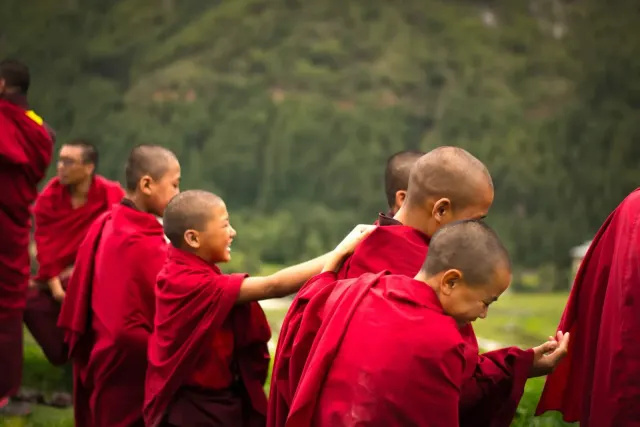
Where Happiness Is Written Into the Constitution
Thimphu became Bhutan's capital in 1955, replacing the dzong at Punakha that had held the role since 1639. It sits at 2,334 m in a long north-south valley with the Wang Chhu running through it, and with a population near 115,000 it is the smallest capital in South Asia. It also has no traffic lights: one set was installed and removed after residents objected, and a policeman directs the main junction by hand.
Bhutan measures national progress through Gross National Happiness rather than GDP. The fourth king introduced the idea in 1972 and it entered the constitution in 2008, resting on four pillars: sustainable development, environmental protection, cultural preservation and good governance. The country is also carbon negative, because 71% forest cover absorbs more than its 770,000 people emit. This is policy, not branding: the forest cover floor is constitutionally mandated.
For visitors Thimphu is the base rather than the destination. Almost everyone flies into Paro, the country's only international airport, and drives an hour to the capital, then uses it for the western circuit through Punakha and beyond. Bhutan charges a Sustainable Development Fee per night and requires a licensed Bhutanese operator, which is deliberate: the policy is low volume and high value, and it is why Bhutan does not feel like Kathmandu. Kathmandu is the most common gateway. See Bhutan for the country as a whole.
Things to do in Thimphu
Standout experiences hand-picked by our local guides.
- 01Tashichho DzongThe fortress-monastery holding the government and the throne room, lit gold at night with the royal palace across the river.
- 02Buddha DordenmaA 51 m gilded Buddha above the city, finished in 2015, with 125,000 smaller Buddhas inside it.
- 03Memorial ChortenA white stupa built in 1974 for the third king. Locals circumambulate it daily, and it is the best place to watch ordinary devotion.
- 04Changangkha LhakhangThimphu's oldest temple, from the 12th century. Bhutanese parents still bring newborns here for blessing.
- 05Centenary Farmers' MarketFriday to Sunday: red rice, dried yak cheese, chillies by the sack, fern shoots.
- 06Motithang Takin PreserveThe takin, Bhutan's national animal and a goat-antelope that looks assembled from spare parts, in forest above the city.
- 07Tiger's Nest, from ParoTaktsang, clinging to a 900 m cliff. An hour from Thimphu by road, then a steep 2 to 3 hour climb.
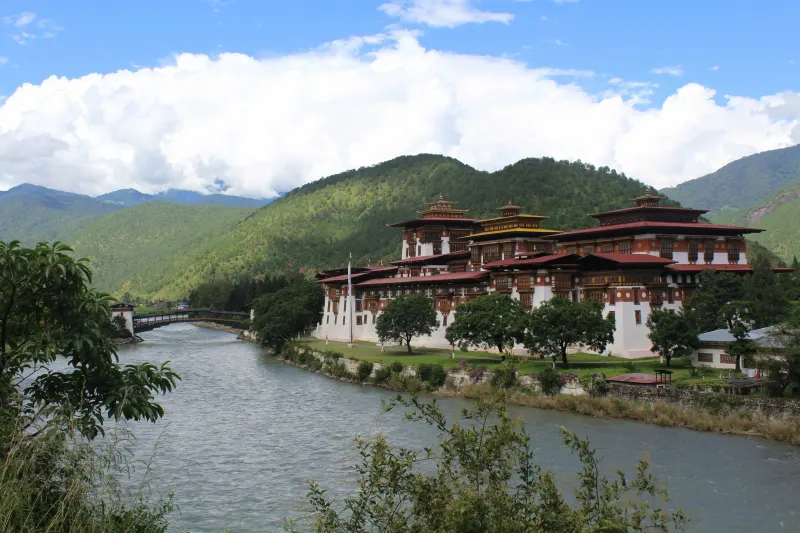
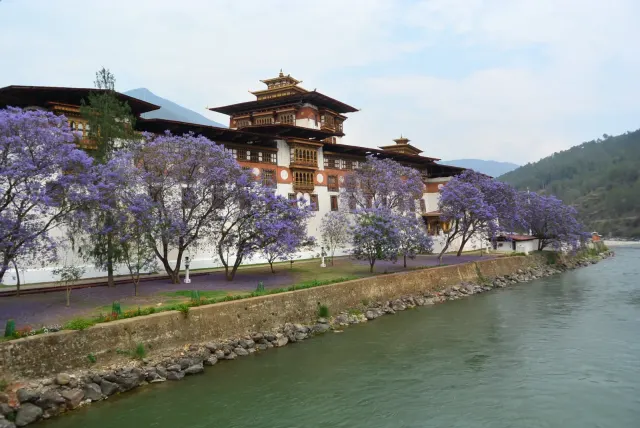
- 08Punakha DzongArguably Bhutan's finest building, at the confluence of two rivers, with jacaranda in flower in May.
Best time to visit Thimphu
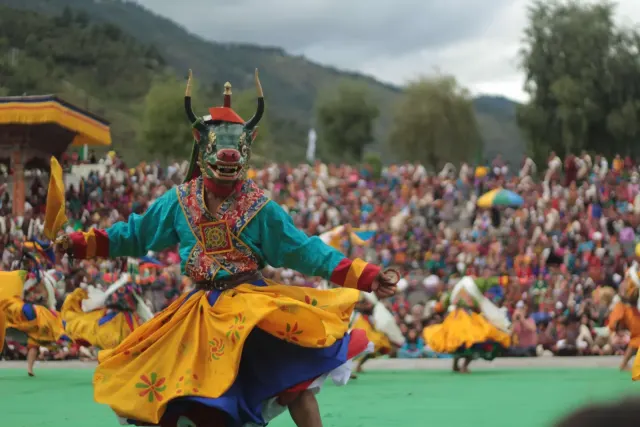
Bhutan's calendar turns on its tsechus, the masked dance festivals. Timing a trip to one is worth more than optimising for weather, though spring and autumn give you both.
- ★ BEST SEASONSpringMarch – MayRhododendron and jacaranda, with Paro Tsechu usually falling in March or April. The most comfortable walking weather for Tiger's Nest.8°C – 22°C
- MONSOONSummerJune – AugustMonsoon. Green valleys and almost no visitors, but cloud hides the mountains and the Tiger's Nest climb gets slippery.15°C – 25°C
- ★ BEST SEASONAutumnSeptember – NovemberThe prime window. Clear skies, and Thimphu Tsechu usually in September or October, which is the biggest festival of the capital's year. Book early; hotel space is genuinely limited.5°C – 20°C
- GOODWinterDecember – FebruaryCold nights, bright dry days and excellent visibility. Punakha is warmer than Thimphu and the government moves there for the season, which tells you something.-2°C – 15°C