
 2017
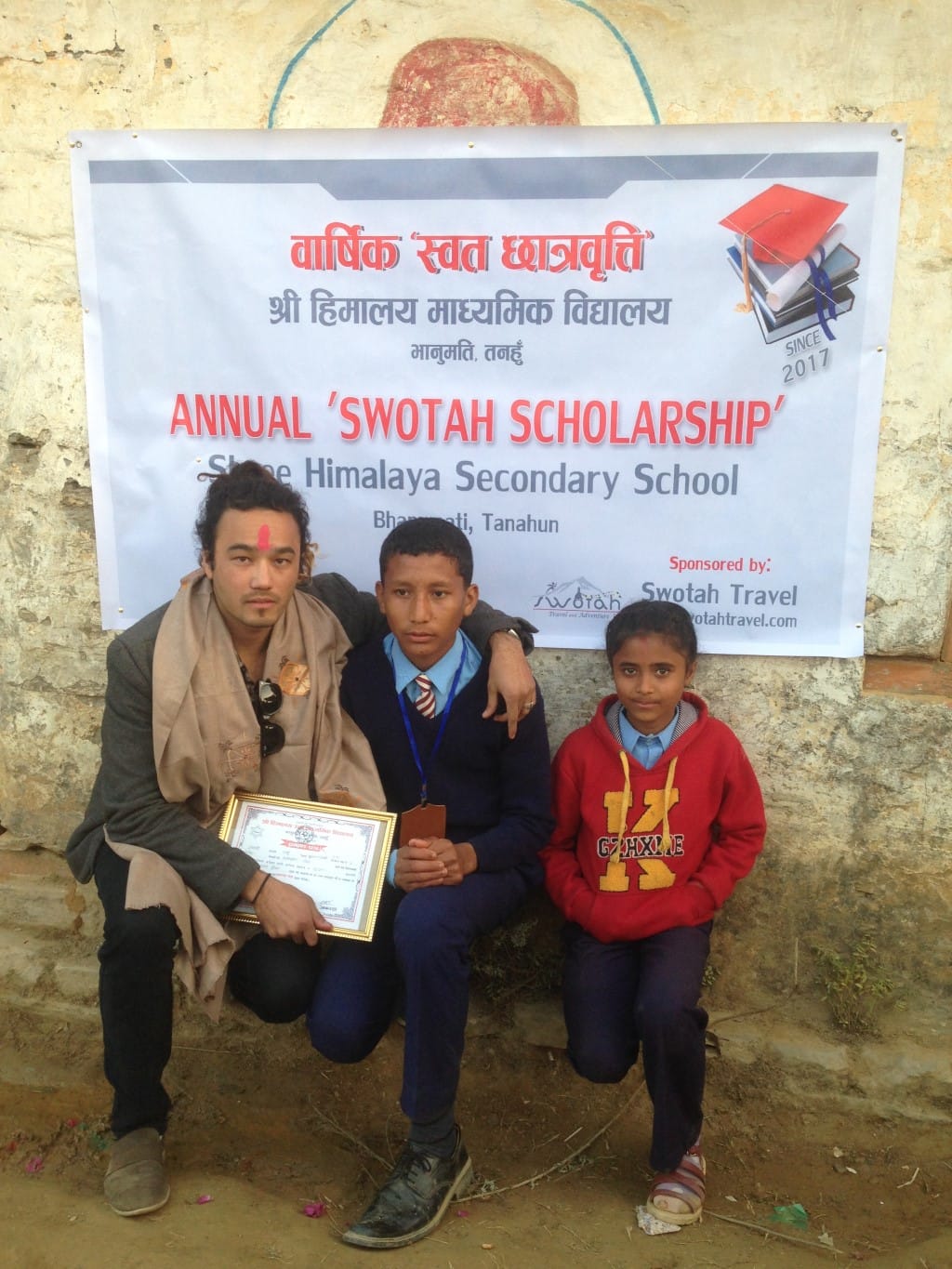
2017The first scholarships
Five students across two schools in remote Tanahun District: Himalaya School and Shree Sahid Krishna School.


Nepal flood, August 2026
The Bhotekoshi destroyed 18 schools in Rasuwa, Nuwakot and Dhading on 26 August 2026 and damaged 20 more. UNICEF counts 17,000+ children affected, around 10,000 of them needing help to carry on learning. Swotah is funding two of those children in full, to the end of +2, out of trip revenue. With help we want that number to be 50 or more: we match sponsors to children who need it, and the sponsor pays the child, the family or the school directly. Nothing goes through us.
August 2026
On 26 August 2026 a surge came down the Bhotekoshi into the Trishuli and hit Rasuwa, Nuwakot and Dhading. Roughly 50,000 people were affected. Casualty counts differ by source and by date: UNICEF reported an estimated 332 dead on 28 August 2026, including at least 14 children, while Nepal Police's confirmed toll, which we keep updated on our Rasuwa flood situation report, is higher and counts differently. This section is only about the schools.
Nepal's education ministry put the damage at 20 schools across Rasuwa, Nuwakot and Dhading in its first count. A separate, earlier tally of the Bhotekoshi corridor alone recorded eight schools hit in Rasuwa and Nuwakot, seven of them in Rasuwa. Four of them:
Around 10,000school-aged children need help to carry on learning, on UNICEF's assessment of 28 August 2026. The immediate needs are temporary learning spaces and replacement supplies, which is emergency work for agencies with logistics behind them, and UNICEF has appealed for USD 17.2m to cover it through early recovery.
The slower problem is the one that outlasts the appeal. A child whose school is gone and whose family has lost its house does not usually drop out in September. They drop out two years later, when the fees restart and there is nothing to pay them with. That gap is small enough for a company our size to do something useful about, and it is the gap everything below this point is aimed at.
Figures from UNICEF's flash appeal of 28 August 2026and Nepal's Ministry of Education, reported by the Kathmandu Post and OnlineKhabar. Counts moved daily in the first week; every number above carries the date it was reported on. Route and trip status is on current trip status.
What we are starting
Two children is where we are starting, and the commitment runs to the end of their +2, which is grade 12. We are naming a small number deliberately. A pledge to help “as many children as possible” costs nothing to make and cannot be checked. Two children carried the whole way is a number we can fund out of trip revenue in a bad year as well as a good one, and it is a number anyone can hold us to.
Full funding means the total cost of staying in school, not a contribution towards it:
Selection runs through the school and the local ward. We ask them to identify children whose education is at risk for reasons of the flood specifically, and we take their judgement on need.
For every place beyond our own two, Swotah's job is to find the child and check the need. The sponsor pays the money straight into the child's, the parent's or the school's account. None of it passes through us, and nothing is taken out of it. The whole thing is non-profit.
We do not publish children's names, photographs or family circumstances. A sponsor is given what they need to make the payment and a yearly account of what it was spent on, written by us.
You can take a child for a single school year or through to the end of +2, and you can pay all of it at once, once a year or monthly. Whatever you choose, it is written down before the first payment so both sides know what has been agreed.
Two children is what we can carry on our own in a bad year as well as a good one. Fifty is closer to what the flood actually calls for, and we will not reach it out of trip revenue alone. 5 more have already said yes since we put this page up — see who, below. A place funded by someone else buys exactly what ours does: fees, uniform, books, exams and transport, for a year or to the end of +2, paid by the sponsor directly to the child. Fund one, or part of one, using the first form below.
Since the pledge went up
It is not hypothetical: since this page went up, 4 sponsors or sponsor couples, all from the United States, have written in to say they will sponsor a total of 5 children. Each is now being matched to a school through the same process described above.
Reached out after reading about the flood, and has committed to sponsor a child's schooling. Matching to a school is in progress.
Reached out after reading about the flood, and has committed to sponsor a child's schooling. Matching to a school is in progress.
Reached out after reading about the flood, and has committed to sponsor two children's schooling, together with his wife. Matching to a school is in progress.
Reached out after reading about the flood, and has committed to sponsor a child's schooling. Matching to a school is in progress.
Committed means a sponsor has told us, in writing, that they will fund a child's schooling and we have taken down the details needed to match them. It becomes an active sponsorship once we have paired them with a verified child through a school, at which point this section is updated to say so. If you would like to be the next name added here, however we describe you, use the form below.
Why this page exists
A trekking company earns its living from other people's home ground. The valleys that make the itineraries worth buying are the valleys the staff come from.
Swotah Travel and Adventure has run trips out of Kathmandu since 2009, when Ajay Kumar Shrestha started the company from a small office in Golfutar with three guides. Sixty-plus staff work here now, hired locally rather than per trip. The arrangement that follows from that is simple enough to state in one line: a fixed share of every trip goes back into the schools those communities use.
Our responsible travel policy sets out the operating rules and the company history covers how the business got here. This page is about the money, where it lands, and what changed in August.
How it is funded
Between 5 and 10 per cent of every trip price is committed to schooling before anything else is allocated. It is costed into the itinerary at the point of pricing, which is not the same thing as a donation made at the end of a good year.
Because the share is priced into the trip rather than paid out of profit, the programme ran through 2020, when borders were shut and the company was also holding salaries for 60-plus staff through 18 months of no trips.
For the places Swotah funds, fees, uniforms, books and exam costs go to the school. For a sponsored place, the sponsor pays the child's, the parent's or the school's account themselves. We match and we check; we do not hold or take a share of anyone's money.
The Millennium Homestay Trek works the other way round. Ten Newari communities host the trek and take the accommodation and food revenue directly, so the trip is the transfer rather than a levy on it.
The record
Nine programmes since 2017, starting with five students at two schools in remote Tanahun District. Each one is written up in full, with names, budgets and photographs, on the corporate social responsibility page.
2017Five students across two schools in remote Tanahun District: Himalaya School and Shree Sahid Krishna School.
 2018
2018USD 600 divided among seven students. A client, Carole, added bags, notebooks and drawing materials worth a further USD 300.
 2019
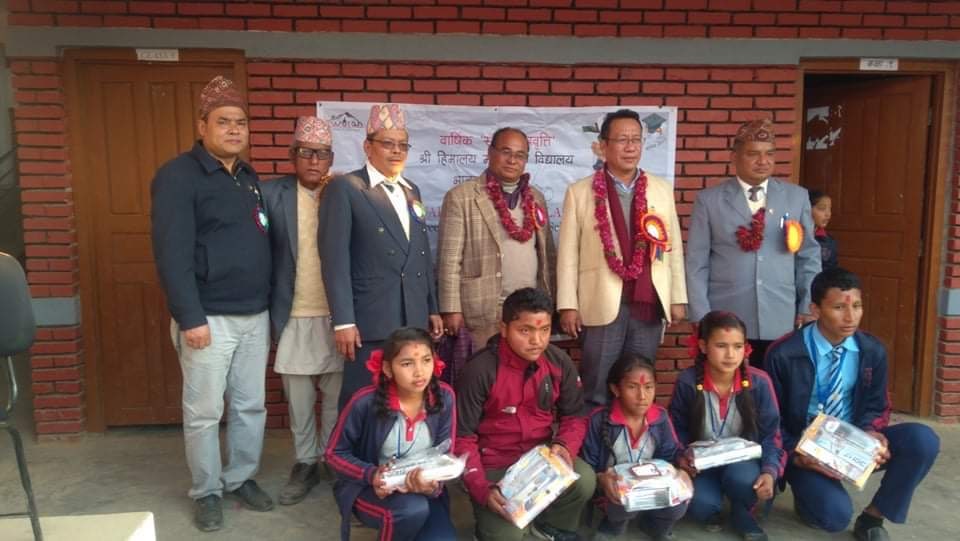
2019A USD 500 round, again for students from remote villages.
 2022
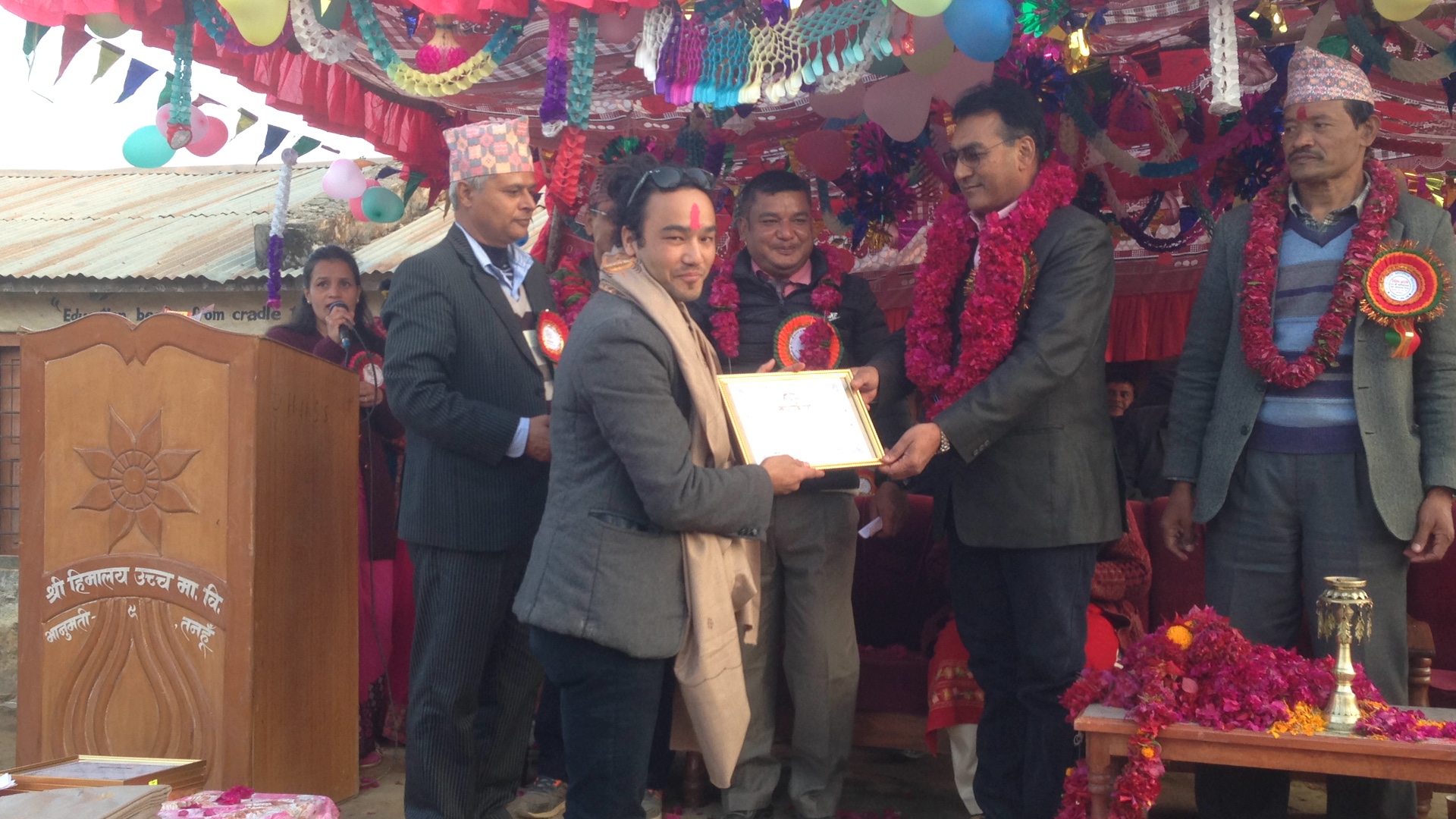
2022USD 500, as trips restarted after the border closures.
 2023
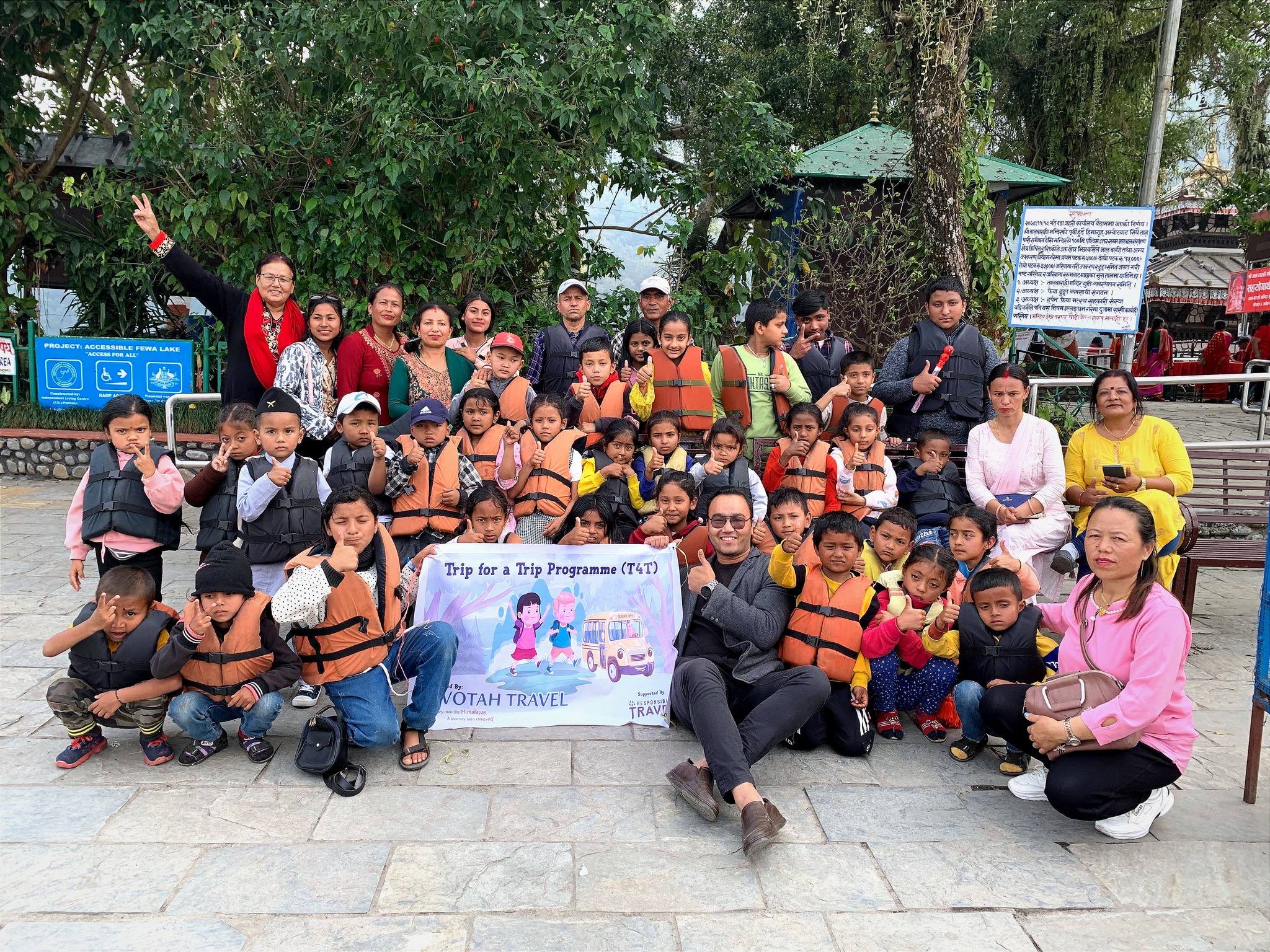
2023With Responsible Travel: community-school children from Shuklagandaki taken to Pokhara, most of them seeing the city for the first time.
 2024
2024Funded by four clients, Dipalie, Jayshree, Punita and Shilpa, who turned a Kailash Mansarovar trip into a giving round.
 2025
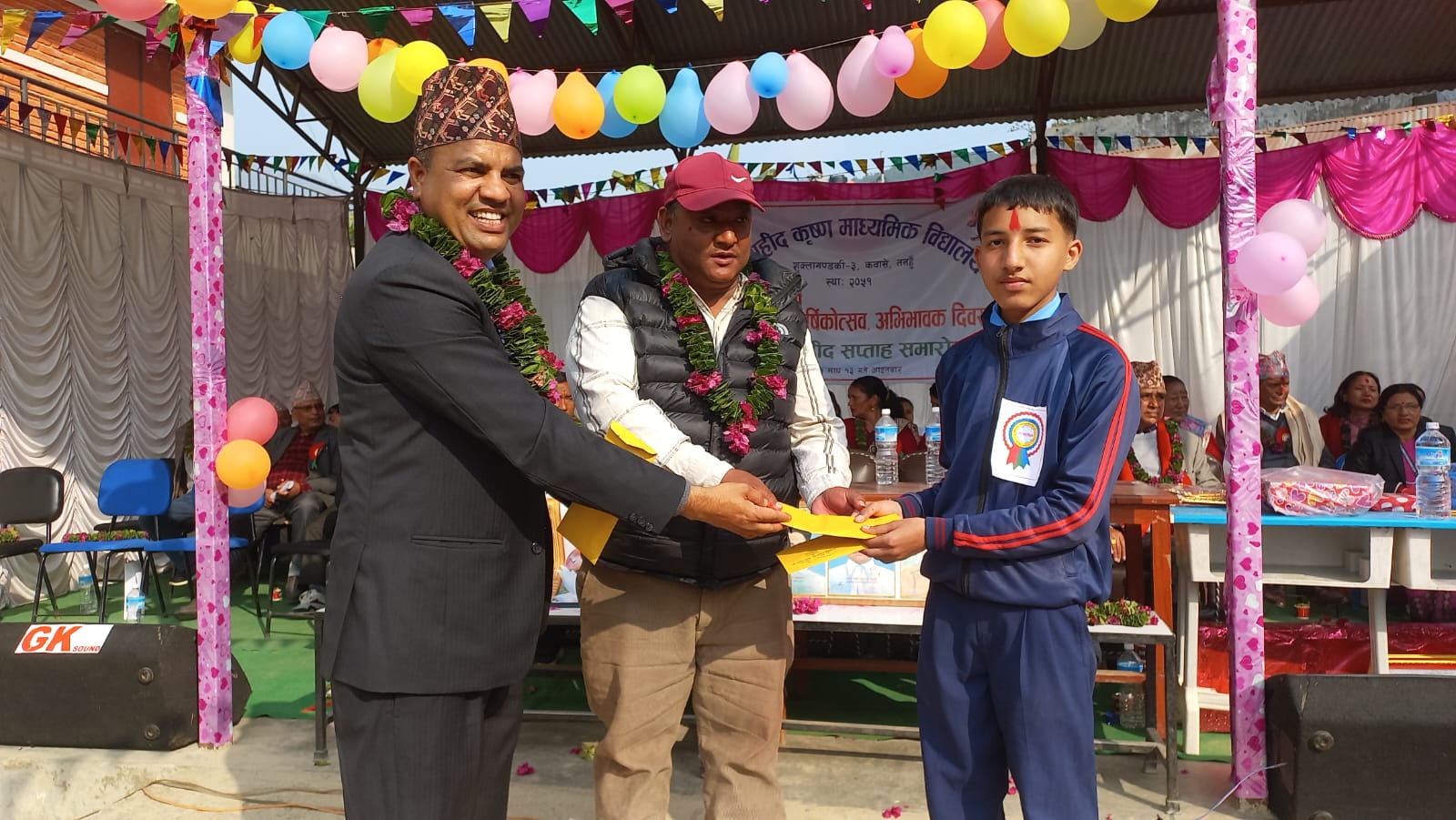
2025Two students at Sahid Krishna Madhyamik Bidhyalaya, Suklagandaki-3, Tanahun, on a USD 500 budget.
 2025
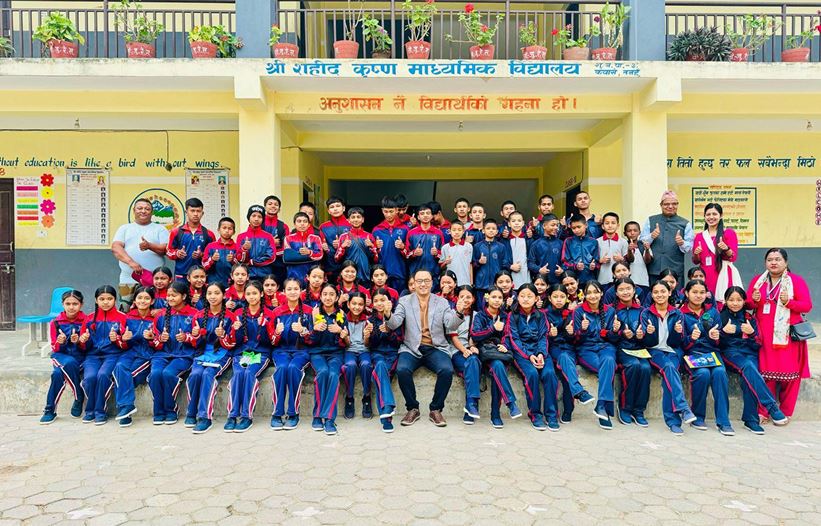
2025On 2 May, 80 students aged 10 to 15 from Shree Diwas Secondary School.
 2026
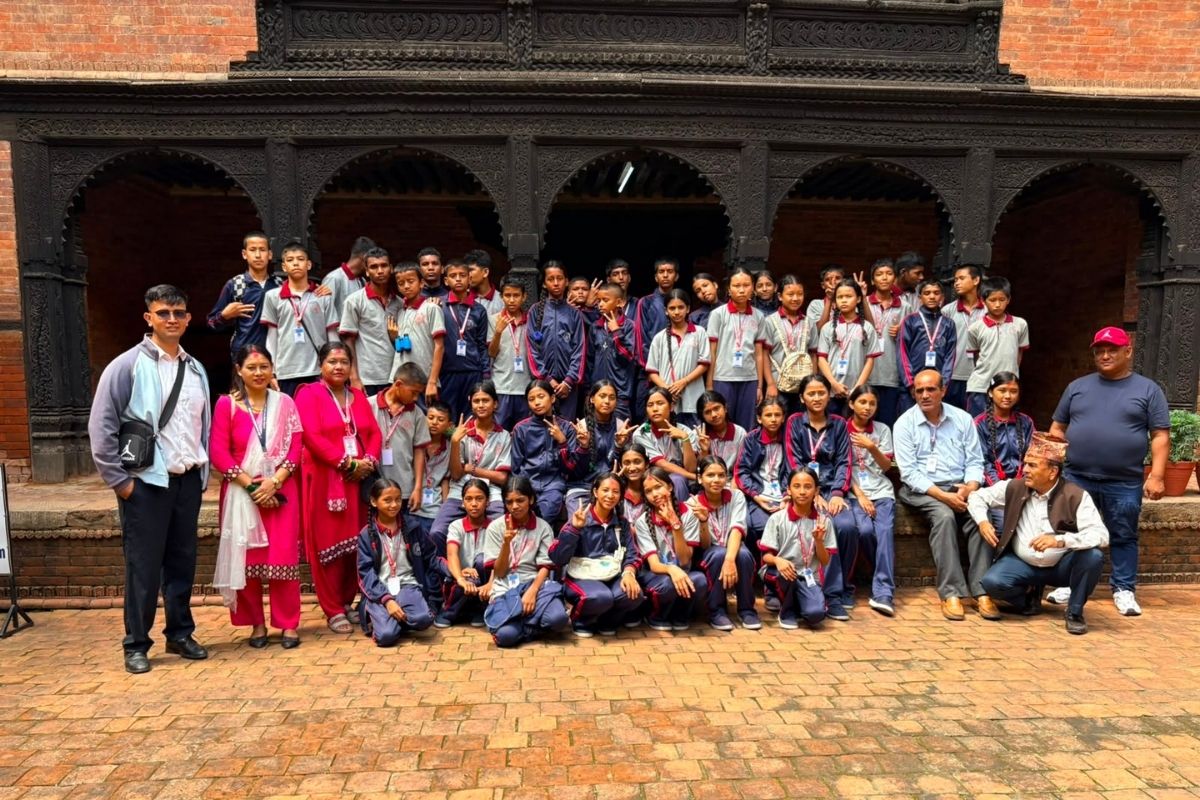
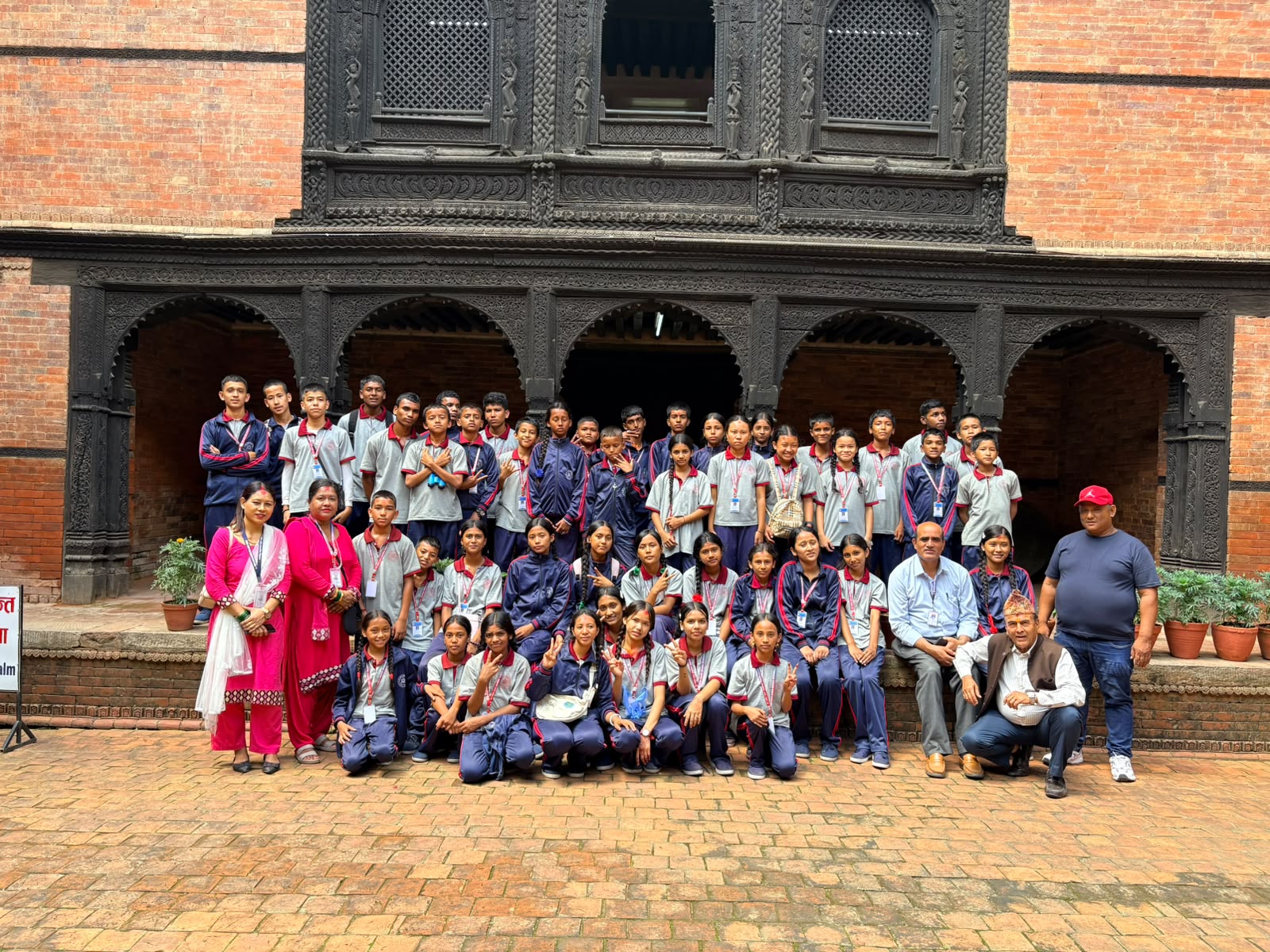
2026The latest run with Responsible Travel, taking community-school students to places of historical and natural significance.
How we operate
Responsible tourism is a set of operating rules that costs the operator money, or it is a line in a brochure. Ours are specific enough to be checked, and the volunteering and giving back page covers the one we get asked about most.
60-plus staff are employed locally rather than hired per trip. Guides and crew come from the valleys the itineraries cross, which is also why the schooling money goes where it goes.
Treks run without single-use plastic, and the Trash Man programme is a collection routine built into operations rather than an annual clean-up event. Crews carry out what the group carries in.
On the Millennium Homestay Trek, ten Newari communities take the accommodation and food revenue themselves. The trip is the transfer rather than a levy collected on top of it.
Paid volunteering places tourists in roles that local people need, and orphanage volunteering causes documented harm. We would rather say so and lose the booking.
Two ways to help
This form is for anyone who wants to sponsor a child, in full or in part, and for companies looking at it as CSR. Tell us roughly what you have in mind and we will come back with a matched child, what a year of school costs for them, and the account the money goes to.
You choose the length, one school year or through to the end of +2, and the rhythm, all at once, yearly or monthly. You pay the child, the parent or the school directly. Swotah takes nothing from it.
There is no minimum and no obligation from the enquiry. If you would rather talk it through first, contact us or email info@swotahtravel.com.
This form is for people who know a child whose schooling is at risk because of the flood: teachers, school staff, ward officials, community organisations and neighbours. Every nomination is passed to the school named below for verification before anything else happens.