


Operations update, 14 October 2026
Nepal travel update: what is running, and what is not
The flood of 26 August 2026 came down one river system, the Bhotekoshi into the Trishuli, and stopped there. Four of our Nepal treks are on hold because they are reached through Rasuwa. Two Tibet tours change shape, because the overland border at Kerung is destroyed and the plateau is now reached by the Kathmandu to Lhasa flight. Every other departure on this page, Bhutan included, runs on its published dates.
Is Nepal safe to travel, and do you have to cancel?
Two questions have filled our inbox since Wednesday. Here are both answers before any of the detail.
Is Nepal safe to travel right now?
Nepal is a country of 77 districts, and the flood damaged parts of three of them along one river. Kathmandu, Pokhara, Chitwan and Lumbini were untouched, and so were the Everest, Annapurna, Manaslu, Mustang and Kanchenjunga trekking regions. Flights, hotels, roads and permits in all of those places are working normally.
The exception is the water itself. Do not walk, camp or drive along the banks of the Bhotekoshi, Trishuli or Narayani while the warning stands.
Do you have to cancel your trip?
Six trips out of our whole programme are affected: four Nepal treks reached through Rasuwa, and two Tibet tours that crossed the border by road. If your booking is not one of those six, nothing about your dates, your route or your price changes.
If it is one of the six, we contact you rather than waiting for you to ask. Nobody is left to work out from a news report whether their trip still exists.
What the flood damaged, in one place
A glacial flood is a surge released when ice, rock or debris dams a river and then gives way. On 26 August 2026 part of an unnamed glacier north of Langtang Lirung broke off, dammed the Lhende Khola on the Tibet border, and let go at about 08:37. The surge ran 72 km down the Bhotekoshi into the Trishuli, through Rasuwa and Nuwakot, and was still carrying debris when it reached Chitwan more than 100 km downstream.
Around 41 bridges and 42 km of road were destroyed, including the Betrawati to Rasuwagadhi highway. That highway is the only overland link between Kathmandu and Tibet, which is why a single river in one district has changed the shape of tours that spend most of their time somewhere else. Six hydropower schemes were hit, and the customs post at Rasuwagadhi is gone.
Everything on this page follows from that one sentence: the damage is severe, and it sits along one corridor. The casualty figures, the rescue effort, the missing-persons helplines and the official relief fund are on our Rasuwa flood report, which is updated separately and carries its own timestamp. This page is about operations only, so it does not repeat numbers that move daily.
A second lake formed behind debris on the Tibet side after the flood. Reports conflict on whether it drained slowly or breached on 28 August, and no second surge on the original scale followed either way; it was reported largely empty by 30 August. A much smaller pond of around 14,000 square metres higher up is being monitored and officials rate its chance of overflowing as low. The alert along the river has not been lifted. Treat the riverbanks as closed and follow the Department of Hydrology and Meteorology rather than this page for the live picture.
Affected trails and unaffected trails
A trail is affected if the flood destroyed the way you get to it, not if it happens to be in the north of the country. On that test, four of our treks are out and the rest of the programme is intact.
We have gone back to driving these legs by default. If you are already booked on a trip that we had moved onto a domestic flight while the road was cut, your consultant will confirm whether your departure reverts to the drive or keeps the flight, and there is no cost change either way for a booking we already adjusted.
Trailhead drives that use the same stretch, Manaslu and the Gorkha side in particular, are back to their normal routing. We are still watching the two-week monitoring window before treating the track as fully settled for a full coach or a loaded jeep.
On hold
4 treks- Langtang Valley TrekTrailhead is Syabrubesi, reached by the road the flood destroyed.
- Langtang Valley Trek, 10 daysSame Syabrubesi approach as the full Langtang trek.
- Langtang Ganja La Pass TrekEnters and exits through the Langtang valley.
- Tamang Heritage TrekThe trail runs through Timure, Briddim and the villages worst hit.
- Rasuwagadhi, Timure and SyabrubesiThe border post, the villages and the road serving them. Recovery work is still going on and the area is closed to visitors.
- Trishuli rafting and the riverside campsThe Kathmandu to Pokhara river sections and the camps along them are off while the corridor stays under a flood warning.
Running normally
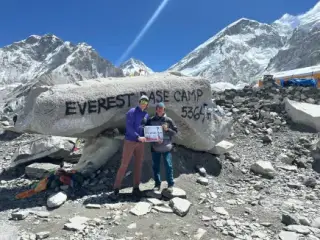
8 areas- Everest regionLukla, Namche, Gokyo and the Base Camp trail took no flood damage. Flights into Lukla are running on their normal weather rules.
- Annapurna regionThe Circuit, Thorong La, Base Camp and Poon Hill are a different watershed entirely and are clear of this.
- Manaslu and TsumThe circuit and the Tsum valley are intact, and the drive in over the Prithvi Highway at Krishnabhir is running again on the temporary bypass. Read the highway note above for the current road conditions.
- Mustang and DolpoNo impact. Jomsom flights and the overland approach through Beni are operating.
- Kanchenjunga and eastern NepalAt the far eastern end of the country, in a different river system altogether. Nothing about these trails changed.
- Helambu and Panch PokhariTagged under Langtang in some listings, but both start at Sundarijal and Chautara in Sindhupalchowk and never enter the flood corridor.
- Kathmandu, Pokhara, LumbiniHotels, flights, restaurants and city sightseeing are all normal.
- Chitwan National ParkThe park, the lodges and the jungle activities are running. Stay off the Narayani riverbank, which is still a search and warning zone.
No reopening date has been published for Langtang by anyone official. Operators are talking about late September at the earliest, but that is an expectation drawn from how long past monsoon damage has taken to clear, not a date from a survey or a district authority, and we will not sell against it.
We will say plainly when Langtang reopens, and we will say it after the surveys rather than before. If you had one of the four booked, ask us about Manaslu or the Helambu valley, both of which sit at a similar length and grade and are running.
Departures running for Nepal, Bhutan and Tibet
Live availability from our booking system, showing the next date for each trip rather than eight dates for the same one. Rebuilt every ten minutes.
Board built 14 October 2026
Nepal
Everest, Annapurna, Manaslu and the rest of the programme, on published dates.
Bhutan
Every Bhutan itinerary flies Kathmandu to Paro. Nothing here changed.
Tibet
All running. Two of the four now fly Kathmandu to Lhasa instead of crossing at Kerung.
A date showing on hold is still listed because the trip exists and will come back. Please do not book one. Write to us instead and we will tell you the day the corridor reopens, or put you on a trek of a similar length that is running now.
Overland to Tibet is closed. Tibet trips now fly to Lhasa.
This is the single biggest operational change on our programme, and it affects travellers who never planned to go anywhere near Rasuwa.
Rasuwagadhi and Kerung (Gyirong) form the one overland crossing open to tourists between Nepal and Tibet. The Nepali customs post was destroyed on 26 August, the approach bridges went with it, and the 42 km of road leading north from Betrawati no longer exists as a road. Nothing crosses there at present, in either direction, and no reopening date has been published by either side. China finished a makeshift road to its own Gyirong port on 2 September; nothing on the Nepali side has been rebuilt.
It is no longer the only crossing out of use. On 31 August China closed the Tatopani point as well, citing landslide risk on the Nepali side, which leaves Korala in Mustang as the only overland crossing between the two countries still working. Korala is a freight route across the far west of the country, not a practical way to start a Tibet tour, so for travel purposes the honest position is that the land border is shut and the flight is the route.
Tibet itself is open, and the Kathmandu to Lhasa flight takes roughly 90 minutes in the air. Every Tibet tour we sell therefore still runs. Two of the four already flew or entered from the far west, and the two that used the Kerung road are being rebuilt around the flight.
Kathmandu → Betrawati → Rasuwagadhi → Kerung, by road
Six to seven hours of driving to the border, a night at Kerung to acclimatise, then east across the plateau. The road, the bridges and the customs post that made this possible were destroyed on 26 August.
Kathmandu → Lhasa, by air
A direct flight over the Himalaya into Lhasa Gonggar, then the itinerary picks up on the plateau. You gain the flight and two days of driving come out, so the day count, the acclimatisation profile and the trip cost all shift. Your consultant sends the revised day-by-day and the cost difference in writing before anything is charged.
What changes on each Tibet trip
Best of Nepal, Bhutan and Tibet
Days 12 and 19 of the published itinerary drive Kathmandu to Kerung and back. Those two driving days are replaced by the Kathmandu to Lhasa flight, and the plateau section is rebuilt around Lhasa, Shigatse and Gyantse. The Nepal and Bhutan halves of the trip are unchanged.
Kailash Mansarovar Overland Tour
Days 6 and 15 use the Kerung road. The trip now flies into Lhasa and picks up the drive west to Saga and Darchen from there, so the Kailash kora itself is untouched. It is a longer route across the plateau, so the day count and the acclimatisation profile both change.
Kailash Mansarovar Helicopter Tour
This one never used the Rasuwa border. It flies Kathmandu to Nepalgunj, on to Simikot, then by helicopter to Hilsa and across into Taklakot, a crossing in Humla in the far west of Nepal. Nothing about it changes.
Mount Kailash Tour with Everest Base Camp
The itinerary begins and ends in Lhasa and has no Nepal overland leg at all, so the closed border does not touch it. You fly in and out of Lhasa exactly as published.
Permits and paperwork on the flight route
A Tibet Travel Permit is issued by the Tibet Tourism Bureau and is required of every foreign visitor regardless of how they arrive. Flying from Kathmandu also means a Chinese group visa arranged through the embassy in Kathmandu, which is a different document from a Chinese visa you may already hold in your passport. We handle both, but the lead time and the document list are not the same as the overland route, so ask us early rather than assuming your existing paperwork carries over.
Give us your dates and we will tell you exactly what the flight route needs and by when. We would rather answer that question three months out than three days out.
If you are already booked with us
What we are doing, without you having to chase it.
Every booking on the six affected trips is being reviewed one at a time. Your consultant contacts you with the position on your specific departure: what changes, what it costs or saves, and what the alternatives are if you would rather move. Nothing is altered on your booking without your agreement in writing.
Bookings on the rest of the programme need no action at all. Your dates, your route, your guide and your price are unchanged, and no supplement is being added to anyone because of the flood.
If you are booked through an agent, they have the same information. If you have not heard from anyone and your trip is inside the next eight weeks, write to us with your booking reference and we will come back to you the same working day.
Questions we are being asked this week
Answers written by the people running the trips, not lifted from a news wire.
Is Nepal safe to travel to right now?
Yes, outside the Rasuwa flood corridor. The 26 August flood was a single-river event on the Bhotekoshi and the upper Trishuli. Kathmandu, Pokhara, Chitwan, Lumbini and the Everest, Annapurna, Manaslu, Mustang and Kanchenjunga trekking regions were not physically affected, and all of them are open and operating. The one instruction that applies country-wide is to stay off the banks of the Bhotekoshi, Trishuli and Narayani while search teams are working and the river is still under a warning.
Do I have to cancel my trip?
Only if your itinerary goes through Rasuwa or crosses into Tibet by road. That is four of our Nepal treks and two of our Tibet tours. Every other departure on our calendar runs on its published dates. If you are booked on one of the six, your Swotah consultant contacts you directly with the options rather than waiting for you to ask.
Which treks are on hold after the Rasuwa flood?
The Langtang Valley Trek, the 10-day Langtang Valley Trek, the Langtang Ganja La Pass Trek and the Tamang Heritage Trek. All four are reached by driving Kathmandu to Syabrubesi up the Trishuli and Bhotekoshi, along the stretch of road and the bridges the flood destroyed. We are not selling or running them until surveyors have been through the corridor and the district authorities say the trails and the lodges are usable.
Is the Prithvi Highway open between Kathmandu, Pokhara and Chitwan?
Yes, again. The highway collapsed at Krishnabhir in Benighat Rorang, Dhading, on 30 August 2026, after the swollen Trishuli ate away the base of the road, and stayed shut for 18 days. Two-way traffic resumed from 6am on 17 September on a new 270-metre gravel track the Department of Roads cut into the hillside above the old road. It is a temporary fix: the department is watching how the track holds up for about two weeks before deciding whether to blacktop it, and is separately planning a permanent bypass, either an 18km detour from Benighat to Fisling or a tunnel or bridge past the unstable slope. Sections between Nagdhunga and Mugling still narrow to one lane in places, so allow closer to four hours than the old three, but you no longer need to fly this leg. We have gone back to driving Kathmandu to Pokhara and Kathmandu to Chitwan transfers by default; if your trip was moved onto a flight while the road was out, your consultant will confirm which way your specific departure runs.
Can you still travel overland from Nepal to Tibet?
No. The Rasuwagadhi and Kerung (Gyirong) crossing is the only overland tourist route between Nepal and Tibet, and the customs post and the bridges serving it were destroyed on 26 August. There is no published reopening date. China then closed the Tatopani point on 31 August over landslide risk, leaving Korala in Mustang as the only overland crossing still working, and Korala is a freight route across the far west rather than a practical start to a Tibet tour. Tibet is still reachable from Kathmandu by air, and every Tibet trip we run either already flies or has been rebuilt around the Kathmandu to Lhasa flight.
What happens to a Tibet tour that was booked as an overland trip?
The trip runs, with the road legs replaced by the Kathmandu to Lhasa flight. Your consultant sends you the revised day-by-day, the change to the permit and visa paperwork, and the cost difference in writing before anything is charged. Nothing is added to your booking until you have agreed to it. The Kailash kora and the Lhasa sightseeing days are not affected by the change.
Are Bhutan departures affected by the Nepal flood?
No. Every Bhutan itinerary we run flies Kathmandu to Paro with Drukair or Bhutan Airlines and never touches the ground route north. Bhutan opened as normal through the whole event, and all of our Bhutan and combined Nepal-Bhutan departures are running on their published dates.
Is it insensitive to travel to Nepal so soon after a disaster?
Tourism is a large part of the Nepali economy, and the districts that depend on it hardest are the ones the flood did not reach. Cancelling a Pokhara or Everest trip takes income away from guides, porters and lodge families 200 km from the damage without helping anyone in Rasuwa. If you want to help Rasuwa directly, the Prime Minister's Disaster Relief Fund is the one account we point people at.
How current are the figures on this page?
The departure board reads live availability from our booking system and rebuilds every ten minutes. The trail statuses are set by hand and reviewed daily. For the casualty count and the rescue effort, use our Rasuwa flood report, which carries its own timestamp, or go straight to Nepal's NDRRMA and the Department of Hydrology and Meteorology.
How this page is maintained: the departure board reads live availability from our own booking system and rebuilds every ten minutes. Trail and trip statuses are set by hand from our operations desk and reviewed daily. Route damage figures are from Nepal Police daily bulletins, the National Disaster Risk Reduction and Management Authority and the Department of Hydrology and Meteorology Flood Forecasting Division, as reported by The Kathmandu Post. Casualty figures are deliberately not repeated here; they live on the Rasuwa flood report with their own timestamp. Border status is current as of 14 October 2026 and will be revised here when the authorities on either side publish a change.