Walk the most iconic trail on Earth through Sherpa villages, ancient monasteries, and glacial valleys to the foot of the world's highest mountain.
Duration
14 Days
Max Altitude
5,545 m / 18,192 ft
Difficulty
Hard
Group Size
Max 8 trekkers
Region
Everest Tour Packages, Nepal
Best Season
Mar–May · Sep–Nov
Accommodation
3★ Hotel + Teahouse
Meals
All meals on trek
Transport
Flight + Private Car
Dates & Prices
Choose your date
All dates are guaranteed departures — we never cancel for low numbers. Book online or send a quick enquiry.
YearMonth
13 departures · 2026
Jul
3
Jul 3, 2026 — Jul 16, 2026
8 seats left
Available
USD1,610
per person
Jul
18
Jul 18, 2026 — Jul 31, 2026
8 seats left
Filling fast
USD1,610
per person
Aug
2
Aug 2, 2026 — Aug 15, 2026
8 seats left
On request
USD1,610
per person
Aug
17
Aug 17, 2026 — Aug 30, 2026
8 seats left
Available
USD1,650
per person
Sep
1
Sep 1, 2026 — Sep 14, 2026
8 seats left
Available
USD1,695
per person
Can’t find a suitable date? We run private departures on any date with as few as 2 trekkers.
Trip Overview
About the Everest Base Camp Trek
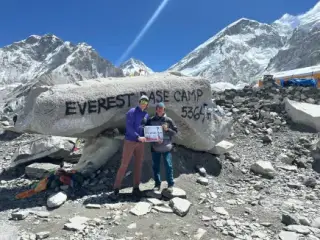
The Everest Base Camp Trek is a 14-day journey into the Khumbu — the high-altitude homeland of the Sherpa people and the base of the world's highest mountain, Mount Everest (8,849 m / 29,032 ft). Starting with a thrilling flight into Lukla's mountain airstrip at 2,860 m, you'll trek through pine forests, cross swaying suspension bridges over roaring glacial rivers, and pass through the legendary market town of Namche Bazaar before climbing steadily toward the ice and rock of the upper Khumbu. The route tops out at Everest Base Camp itself (5,364 m / 17,598 ft) and at Kala Patthar (5,545 m / 18,192 ft) — the finest panoramic viewpoint of Everest on the planet.
This is more than a physical challenge. Along the way you'll meditate at Tengboche Monastery — the largest in the region — watch dawn light paint Ama Dablam gold, hear the deep groan of the Khumbu Icefall shifting in the silence, and share tea with Sherpa families whose culture, warmth and resilience will stay with you long after the trek is done. People of all ages and backgrounds have stood at base camp; with the right preparation, you can too.
Last updated June 2026
Trip Highlights
Highlights
1
Stand at Everest's Foot, 5,364 m Up
2
Closest Unrestricted View of Everest's Summit
3
Land at the World's Most Thrilling Airport
4
Morning Puja at Tengboche, 3,867 m
Day by Day
Full 14-day itinerary
Tap any day to expand — altitudes, walking times, meals, and overnight details for every stage of the journey.
A member of our team will greet you at the Tribhuvan International Airport in Kathmandu and escort you to your hotel in our vehicle. Over your welcome drink, we will give you a rundown of what awaits you: your sightseeing around Kathmandu and your wonderful trek to Everest Base Camp. Dinner will introduce you to the delights of Nepali cuisine, something we hope you will love.
Sleep at 1,400 m
Tonight’s stay
Hotel
Comfortable 3-star hotel in Thamel, the lively traveller hub of Kathmandu. Hot showers, Wi-Fi and a proper bed before the trail.
After breakfast embark on a tour of Kathmandu. This ancient city has 7 UNESCO World Heritage Sites and we will explore some of them to give you a taste of the unique blend of Hinduism and Buddhism that is present in the Kathmandu Valley. The indigenous people of the valley are Newars, who celebrate a unique blend of cultures and religions that is something quite exceptional.
This is a day packed with surprises and wonders. Feel free to ask the guide accompanying you questions about the architecture and culture.
~4.0 h walkingSleep at 1,400 mBreakfast
Tonight’s stay
Hotel
Same Thamel hotel — last warm shower for the next two weeks. Use the afternoon to pick up any last-minute gear from the shops on your doorstep.
Under the new aviation system, we leave Kathmandu around 1am to drive to Manthali Airport, in Ramechhap district; around 4 to 5 hours from Kathmandu. While it certainly is not the most direct way to fly to Lukla Airport, we believe this night time adventure adds something to the excitement of the whole trip! Flights depart Manthali Airport in the early morning, as there are high winds in Lukla in the afternoon, making flying impossible then. Flying into this high altitude airport (2,860 m / 9,383 ft) gives you a birds-eye view of the mountains and puts into perspective just what you have set yourself to achieve! The flight is very short (under 40 minutes) but will leave an indelible impression on you.
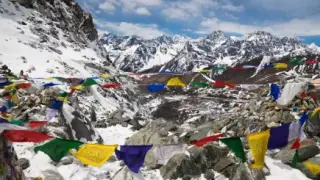
On arrival in Lukla you will meet your porters, should you have elected to hire them. Then start hiking, descending through villages until we reach the village of Phakding, your first overnight stop. During that 4 hour trek, you will see Kusum Kangru mountain, whose name means “Three Snow-White Gods" in Sherpa language, and the Dudh Koshi river which we will cross on the many suspension bridges. Watch out for the Hillary Suspension Bridge, which is 130 m / 426 ft long and 125m / 410 ft high! This is also your introduction to the Buddhist artifacts that you will continue to see on the trek to EBC. Mani walls (prayers carved into stones), prayer flags, chortens and much more will thrill you.
8.0 km~3.5 h walkingSleep at 2,610 mBreakfastLunchDinner
Tonight’s stay
Teahouse
Family-run teahouse beside the Dudh Koshi River. Twin-share rooms with shared bathrooms; simple but warm dal-bhat at dinner.
Whereas yesterday we were going down in altitude slightly, today we rise up considerably in altitude as we make our way through pine forests, across more suspension bridges, and through small Sherpa settlements to reach the town of Monjo. Monjo is the gateway to Sagarmatha National Park and here your permit will be checked under the watchful eye of Mt Thamserku.
As we continue our 5 to 6 hour trek, the trail gets more rocky and finally, at Larja Bridge, we get our first glimpse of Mount Everest!
Finally, we reach the vibrant market town of Namche Bazaar and check into our accommodation. With the rest of the day free its time to explore Namche’s many cafes, pubs and streets. You might want to visit the Sherpa Museum today to learn more about the people who you are going to be living with for the next few days.
We meet again for dinner and discuss the following day’s programme, which is one to help us acclimatize to the high altitude.
11.0 km~6.5 h walkingSleep at 3,440 mBreakfastLunchDinner
Tonight’s stay
Teahouse
Comfortable teahouse in the heart of Namche — bakeries, gear shops and an Irish pub minutes away. Hot showers available at extra cost.
Today we need to acclimatize to the high altitude in order to enjoy the rest of our trek. And the best way to do that is to hike! Indeed, no lazing around in the hotel room or local café for us serious trekkers! Instead, after breakfast we head off to some beautiful and interesting spots.
Our hike takes us to the Hillary Memorial viewpoint where there are stunning views of Mt Khumbila, Ama Dablam and Thamserku. After taking some great photos we hike on to Khumjung village. Here is where Hillary spent a lot of time. In fact, he set up a school in order to educate the young Sherpas, and this school is still operational today.
We can also take time to explore the Khumjung Monastery before heading back to Namche for the night.
5.0 km~4.0 h walkingSleep at 3,440 mBreakfastLunchDinner
Tonight’s stay
Teahouse
Same Namche teahouse — bakeries and gear shops on your doorstep for any last-minute purchases before the high trail.
Having had time to take in a bit of Sherpa culture and gaze at some of the many mountains we see on the Everest Base Camp Trek, today we get to learn something more about Buddhism by visiting the largest monastery in the region.
It takes around 5 to 6 hours to reach Tengboche Monastery, but the hike is definitely worth it. Not only is there the chance to meet with monks, and, depending on the time of day, join in a Buddhist ceremony. And there are many more mountains to see.
Tengboche is located with a stunning panoramic view of mountains such as Nuptse,, Lhotse, Ama Dablam and Thamserku. There is little wonder why a monastery was built here. It is truly a spiritual setting. In this tranquil setting we spend the night.
10.0 km~5.5 h walkingSleep at 3,870 mBreakfastLunchDinner
Tonight’s stay
Teahouse
Teahouse beside Tengboche Monastery. Cold nights at altitude — time to break out the down jacket. Bakery on site for apple pie and hot chocolate.
We may have left the magnificent Tengboche Monastery behind but today we will see yet another monastery, that of Pangboche. Under the watchful eyes of Everest, Ama Dablam and Lhotse, we make our way through forests of rhododendrons, birch and pine, over the Imja River, through the village of Pangboche and into the Imja Valley before arriving at the village of Dingboche.
Since today we hike for only 4 to 5 hours, we reach Dingboche by lunch time. After lunch we can explore the surrounding area, or simply gaze at the magnificent scenery.
12.0 km~5.5 h walkingSleep at 4,410 mBreakfastLunchDinner
Tonight’s stay
Teahouse
Teahouse in the wide Imja Valley with grand views of Ama Dablam from the dining room. Yak-dung stoves keep the common room warm.
We are spending another day and night in this village, surrounded by its protective walls to keep out the winds. But as you now know, acclimatization means being active! We hike to Nagarjun Hill, from where we get impressive views of several mountains including Makalu, Cholatse, Tawache and of course Ama Dablam and Lhotse that seem to be following us on our journey.
We overnight in Dingboche again in preparation for the increase in altitude ahead.
4.0 km~4.5 h walkingSleep at 4,410 mBreakfastLunchDinner
Tonight’s stay
Teahouse
Same Dingboche teahouse for a second night. Rest the afternoon, hydrate hard, and watch the light change on Ama Dablam.
Although the trek today is not long in terms of time, 4 to 5 hours, it is challenging as we climb up in altitude and notice the thinness of the air.
Shortly after leaving Dingboche, we see a stupa worthy of a couple of photos. Then we move on towards the Pheriche Valley through yak pastures. Walking as we are above the valley, Ama Dablam looks stunning as it seems to come up from the valley floor to meet us. Although Lobuche village is not particularly attractive in itself, it can be forgiven for the dramatic mountain views it provides us.
8.0 km~5.5 h walkingSleep at 4,940 mBreakfastLunchDinner
Tonight’s stay
Teahouse
Basic teahouse in a windswept settlement of half a dozen lodges. Rooms are simple and very cold at night — but the dining room is warm and the dal-bhat is hearty.
This is the day we have been waiting for! Today we trek around 3 hours to the village of Gorakshep, the last settlement before Mount Everest. Here we have lunch before we hike for little more than an hour over rough ground, ascending and descending as has become our norm, to reach base camp! There is plenty of time to explore around base camp, take memorial photographs to show the disbelievers at home perhaps! In the distance we may see the camps of expeditions as they prepare to summit this great mountain.
All too soon we have to head back along the trail to Gorakshep where we spend the second night.
13.0 km~7.5 h walkingSleep at 5,170 mBreakfastLunchDinner
Tonight’s stay
Teahouse
Gorakshep — the highest teahouse settlement on Earth. Rooms are spartan, nights are sub-zero, and sleep is fitful. This is a one-night stop on the way back down.
This is quite a long day but a very exciting one! We get up and out before sunrise in order to hike a couple of hours to Kala Patthar. Often referred to as Everest view point, Kala Patthar is literally a rock made of black (kala) stone which provides us with the most stunning views of Everest. Much clearer than even at base camp.
It’s a bit of a climb up to this view point, but well worth the effort. After soaking up the views and atmosphere, we hike back down to Gorakshep for a well-deserved breakfast.
After a bit of a break, hike on for approximately 4 hours to Pheriche where we will spend the late afternoon and evening gossiping about mountains or lost in our own thoughts over what we have seen.
14.0 km~7.5 h walkingSleep at 4,388 mBreakfastLunchDinner
Tonight’s stay
Teahouse
Teahouse in Pheriche, a flat U-shaped valley sheltered from the worst winds. Lower altitude tonight means deeper sleep and a real recovery.
It’s a longish day today, 6-7 hours, and perhaps tinged a little with sadness as we realise we are on the home stretch.
However, on reaching Namche there is time to take one last look around the town, perhaps visit the highest Irish Pub in the world, and finally get to enjoy that well-deserved bottle of beer or glass of wine!
18.0 km~6.5 h walkingSleep at 3,440 mBreakfastLunchDinner
Tonight’s stay
Teahouse
Same Namche teahouse — feels positively luxurious after a week above 4,000 m. Hot shower, bakery breakfast and Wi-Fi all on the menu.
Our final day of the trek sees us making our way back along the trails we came on to Lukla. We cross the now familiar suspension bridges and bid farewell to the mountains that have accompanied us.
Tonight we stay in Lukla for the early morning flight back to Manthali Airport in Ramechhap district where our road transport awaits.
19.0 km~6.5 h walkingSleep at 2,860 mBreakfastLunchDinner
Tonight’s stay
Teahouse
Teahouse in Lukla above the famous airstrip. Tonight is the farewell dinner — a chance to thank your porters, guides and the whole trail family.
The short flight to Manthali Airport gives us another chance to say goodbye to the mountains that have been our home for the past 11 days.
On arrival in Kathmandu, you are free to explore the nightlife in the tourist centre of Thamel and enjoy a dinner with your friends and fellow trekkers.
Sleep at 1,400 mBreakfast
Tonight’s stay
Hotel
Same Thamel hotel as Day 1. Hot shower, laundry service, room service — everything you have been dreaming about for two weeks.
What’s included
What's included
Every cost on the trail is broken out below — no hidden fees, no surprises at the trailhead.
Included
11 items
Airport transfers
Trekking permits (Sagarmatha National Park entry + Khumbu Pasang Lhamu Rural Municipality permit) and all necessary paperwork
All applicable government taxes
Available accommodation during the trek
All meals (breakfast, lunch, dinner) during the trek
Equipment and clothing for porters (1 porter per 2 trekkers) and guides, including their full insurance
Two-way Ramechhap/Kathmandu–Lukla airfare with domestic airport departure tax
Deluxe rooms in a standard hotel in Kathmandu on twin/double sharing with breakfast
Guided sightseeing tour in Kathmandu from a professional guide
Authorized English-speaking guide for the trek and tour, along with porters (1 porter per 2 trekkers) for the trek
All expenses for staff: meals, accommodation, salary, equipment, insurance, transportation
Not included
8 items
Travel and rescue insurance
Entrance fee(s) during sightseeing
International flights; Nepalese visa fee
Tips for guide(s), porter(s) and driver(s)
Lunch and evening meals in Kathmandu
Excess baggage charge(s) for the domestic flight
Personal expenses (phone calls, laundry, bar bills, battery recharge, extra porters, bottle or boiled water, shower, etc.)
Extra night accommodation in Kathmandu and Lukla because of early arrival, late departure, or early return from the mountain due to any reason other than the scheduled itinerary
How hard is this trek?
The Everest Base Camp Trek is rated hard to challenging. Most days involve 5–7 hours on the trail with sustained ascents and descents, and you'll spend the majority of the trek sleeping above 3,500 m. That said, with good preparation and proper acclimatisation days built into the itinerary, trekkers of all ages have reached base camp successfully.
▲Hard to Challenging — 5 to 7 hrs/day, max altitude 5,545 m
Overall Rating
6
Hard
out of 10 · physical effort scale
Walking hours/day~5.6 hrs
Max altitude5,545 m
Trekking days11 days
Total distance~122 km
Effort by Phase
Kathmandu (arrival & sightseeing)
Day 1–2
2
Lukla → Namche (incl. acclimatisation)
Day 3–5
5
Namche → Dingboche (incl. acclimatisation)
Day 6–8
6
Dingboche → Base Camp & Kala Patthar
Day 9–11
9
Descent to Lukla
Day 12–13
6
Fly back to Kathmandu
Day 14
2
Trip Details
Everything you need to know
In-depth guides on accommodation, food, permits, insurance and special considerations — tap any topic to expand.
Make no mistake — the 14-day Everest Base Camp Trek is a hard to challenging trek, and a good level of general fitness is required before you arrive in Nepal. That said, people of all ages and abilities have completed it, including seniors in their 70s and even an 18-month-old toddler carried by her parents.
What makes it hard?
Aside from the relentless ups and downs (those descents are hard on the knees), the altitude is the main factor. With most nights spent above 3,500 m and two acclimatisation days built in — at Namche Bazaar (3,440 m) and Dingboche (4,410 m) — the itinerary is designed to let your body adjust. Still, trekkers regularly feel breathless, fatigued and sore. This is normal at altitude.
How to prepare
Start training several months before departure. Cardio (hiking, running, cycling), leg-strength work and multi-day hiking trips with a loaded pack are all ideal. Practice descents — they're often underestimated. If you have any pre-existing medical conditions, get clearance from your doctor before booking.
Is it beginner friendly?
Yes, if you are physically fit and mentally prepared. Many first-time trekkers reach base camp every season. We also offer shorter, lower-altitude treks for those who want to experience the Khumbu without the full commitment of EBC.
Everest Base Camp is open year-round, but the experience varies dramatically by season.
Spring — March to May (Best)
Clear skies, stable weather and temperatures between 5°C and 20°C make spring the most popular season. Rhododendrons bloom at lower altitudes and the mountains are crisp and vivid. The downside is crowds — accommodation books up fast and trails can be busy. The Sherpa New Year (Gyalpo Losar) is celebrated in spring, a wonderful cultural bonus.
Autumn — September to November (Best)
A close second to spring. The post-monsoon air is crystal clear and temperatures range from 2°C to 12°C. Nepal's two biggest festivals — Dashain and Tihar — fall in autumn, and Mani Rimdu is celebrated at Tengboche Monastery with three days of masked dances open to visitors. Trails are busy but the festive atmosphere is hard to beat.
Monsoon — June to August
Heavy rain, leeches and frequent flight delays at Lukla make this the least recommended season for most trekkers. The upside: empty trails and lush, green landscapes. If you are an experienced trekker who does not mind wet conditions, the solitude can be extraordinary.
Winter — December to February
Temperatures can drop to −17°C at night and many teahouses at higher altitudes close. Trails can be snowbound and tricky to navigate. Winter trekking is possible but only for experienced, well-equipped trekkers accompanied by a guide. The reward: snowcapped peaks in pristine silence.
Shoulder Seasons
Late February and early March, or late November, offer a sweet spot — fewer crowds and often excellent visibility. Worth considering if you want the views without the peak-season price premiums.
Two permits are required for the standard fly-in route to Everest Base Camp (a third, the Gaurishankar Conservation Area permit, is needed only if you trek in overland from Jiri). Both are included in your package if you book with Swotah — we arrange and carry them for you.
Khumbu Pasang Lhamu Rural Municipality Permit
This permit is obtained at Lukla or Monjo (not available in Kathmandu). The fee goes directly to the local Khumbu government for trail upkeep and community development. Cost: NPR 2,000 (approx. USD 15) per person for the full duration of your trek.
Sagarmatha National Park Permit
Required for entry into Sagarmatha National Park, which covers most of the trekking route above Monjo. Can be purchased in Kathmandu or at Monjo. Cost: NPR 3,000 (approx. USD 23) per person.
Gaurishankar Conservation Area Permit
Only required if you are trekking in from Jiri rather than flying to Lukla. Available in Kathmandu only. Cost: NPR 3,000 (approx. USD 23) per person.
Note: A separate TIMS card is not required in the Everest region — here the Khumbu Pasang Lhamu Rural Municipality permit replaces it. All permit fees must be paid in Nepali rupees. Bring two passport-sized photos and a photocopy of your passport.
Accommodation on the EBC Trek is in teahouses — family-run trekking lodges that are unique to Nepal. Standards vary with altitude.
What are teahouses like?
At lower altitudes (Lukla, Phakding, Namche Bazaar) you'll find some very comfortable lodges with en-suite bathrooms, hot showers and reliable Wi-Fi. As you climb higher, the teahouses become more basic. Above Namche, a standard room has two single beds and not much else — no heating in the sleeping room, shared bathrooms, and squat toilets are still common at some stops, though many are upgrading to Western-style facilities.
There is no heating in sleeping rooms, so your sleeping bag is essential. Dining rooms are always heated — they're where the social life of the trek happens, over bowls of dal bhat and mugs of butter tea.
Hot showers
Available at most stops, but charged separately — typically USD 3 per shower. Budget for this as part of your daily expenses.
Booking ahead
During peak season (spring and autumn) accommodation fills up quickly and you may share a room with another trekker. Our guides call ahead to reserve rooms, so you won't be left searching in the dark. In winter, many teahouses at higher altitudes close — a guide is essential for locating what is open.
Food on the Trek
Teahouse menus are surprisingly varied and three hearty meals a day are included in your package. Breakfast and dinner are at the teahouse; lunch is at a smaller trailside stop. The national dish — dal bhat (lentil soup, rice, vegetable curry, pickle) — is the best fuel you can eat at altitude, and you can ask for refills. Vegetarian and vegan options are plentiful. Menus at lower altitudes (Lukla, Namche) are more varied; higher up, simpler carbohydrate-heavy dishes are the norm.
Avoid meat above Namche Bazaar. Refrigeration is unreliable at high altitude and meat is transported slowly. Stick to vegetarian dishes once you leave Namche to keep your stomach happy.
Avoid alcohol on the trek. Alcohol and altitude are a dangerous mix — intoxication happens faster and a hangover can mask the early symptoms of altitude sickness.
Water
You need to drink 3–4 litres per day. Plastic water bottles are no longer sold in the Everest Region (a conservation measure). Your options are:
Boiled water from the teahouse — bring a metal (not plastic) water bottle.
Purification tablets or a LifeStraw filter — fill up from taps or streams and treat it yourself.
Boiled water costs around NPR 100–150 per litre at lower altitudes and rises as you go higher. A combination of boiled water and purification is what most trekkers use. Tap water and stream water — however clear they look — are not safe to drink without treatment.
The EBC Trek starts from Lukla (2,860 m / 9,383 ft), a small town about 370 km from Kathmandu and 62 km from Everest Base Camp on foot.
Flying to Lukla (Standard Route)
Due to congestion at Tribhuvan International Airport, flights to Lukla now depart from Manthali Airport in Ramechhap — about 4–5 hours by road from Kathmandu. Since Lukla's high-altitude runway can only operate in the morning (high winds close it by mid-afternoon), all flights depart Manthali around 6 am. That means leaving Kathmandu around 1 am. We arrange private transport for you — this pre-dawn drive through the mountains has its own sense of adventure.
The flight itself is under 40 minutes and absolutely unforgettable — the runway juts out from the side of a cliff. On landing you will understand exactly what kind of adventure you have signed up for.
Road + Trek Alternative (Jiri Route)
For those who prefer to avoid flying, you can drive from Kathmandu to Jiri (8–9 hours by jeep or public bus) and trek to Lukla from there. This adds roughly a week to the itinerary but lets you see more of the countryside and begin acclimatising gradually from a lower altitude. A Gaurishankar Conservation Area permit is required for this route. Ask us to arrange a Jiri-start itinerary if this interests you.
What to pack
What to pack
The full kit list. Anything we loan (sleeping bag, down jacket) is called out — bring everything else.
✓Duffel bag (60-70L) — porter-carried, lockable
✓Daypack (30-35L) with padded hip belt
✓Rain cover for daypack
✓Dry bags / packing cubes (assorted)
✓Small daysack / summit pack for Kala Patthar
Meet The Team
Our Guides for Everest Base Camp Trek
Experienced local guides who know every trail, village, and viewpoint on this route.
Everything trekkers ask before booking. Don't see yours? Tap Enquire — we usually reply within a few hours.
The Everest Base Camp trek typically starts from Lukla, a small town in the Khumbu region of Nepal. Trekkers usually take a short flight from Kathmandu to Lukla. However, during peak seasons, flights to Lukla are often organized from Ramechhap to reduce congestion at Kathmandu's airport.
The Everest Base Camp trek is challenging but generally safe for well-prepared trekkers. Risks include altitude sickness, weather changes, and physical strain. Proper acclimatization, trekking with experienced guides, and being prepared for varying conditions can help mitigate these risks.
The best seasons for trekking to Everest Base Camp are pre-monsoon (spring) from March to May and post-monsoon (autumn) from late September to November. During these times, the weather is stable, visibility is clear, and the temperatures are moderate, providing the best conditions for trekking.
We customize the trip according to your preference but if you need to change plan during the trek consult the guide.
If you need extra day to complete the trekking, you'll need to inform the guide in advance and the guide will let the company know. Adding a day to trekking can result in many changes in other arrangements such as transportation, guides' schedule, flight details, hotel bookings and all, so we really don't recommend this to our clients unless there's an emergency. But it's true that those changes could be made but it will cost extra. The best way to do it is to inform the agent company about it.
The standard EBC Trek with Swotah is 14 days — two days in Kathmandu (arrival and sightseeing), 11 days on the trail including two acclimatisation days, and a final day to fly back to Kathmandu. The trek itself covers approximately 62 km (38.5 miles) one way from Lukla to Base Camp.
For those with less time, we offer a shorter 5-day Stargazing Trek into the Khumbu as far as Namche Bazaar, which is a wonderful introduction to the region.
Absolutely — with the right preparation and medical clearance, seniors can and do complete the EBC Trek. In 2023, Naba Kumar Mondal, a 72-year-old from Calcutta, trekked to base camp after training for months with swimming, hiking, walking and yoga. His advice: "Elderly people too should exercise — what is the use of living long if one becomes dormant?"
We recommend all trekkers over 60 get a full medical check-up and their doctor's approval before booking. We are happy to adjust the pace and add extra rest days to suit your needs.
Yes — families with children do complete this trek. In autumn 2023, 18-month-old Lucy Brown reached Everest Base Camp with her parents and 65-year-old grandmother. Naturally, young children are carried by their parents or porters for much of the route.
For older children and teenagers, the trek is very feasible with a customised, slower itinerary and extra flexibility. We are happy to discuss your family's specific situation and adjust the plan accordingly — just ask us.
Yes — the Everest Region is currently the only trekking area in Nepal where solo trekking without a registered guide is permitted. This changed in 2023, when Nepal introduced a mandatory guide requirement for all other trekking regions.
That said, having a guide on EBC is strongly recommended. Guides know the trails, can call ahead for accommodation, assist in a medical emergency, and bring deep cultural and geographical knowledge to your experience. If you are going solo, consider at least hiring a porter — they carry your load, have local knowledge, and are good company on the trail.
Yes — several excellent variations exist:
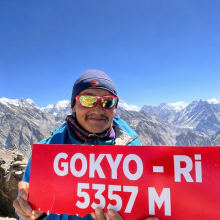
Gokyo Ri + EBC (18 days): Combines the classic EBC route with a detour to the stunning Gokyo Lakes (4,750 m+) and Gokyo Ri (5,137 m), crossing the dramatic Cho La Pass (5,330 m).
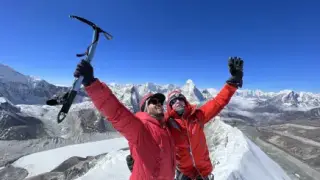
Lobuche Peak Climb (17 days): Adds a one-day technical summit of Lobuche East Peak (6,119 m) with rope and ice axe — a genuine high-altitude climb for those wanting more than a trek.
Jiri to EBC: Starts with a road trip to Jiri and a week of trekking to Lukla — a quieter, more immersive approach that adds extra altitude acclimatisation.
Ask us and we will build an itinerary around what excites you most.
To confirm your booking we ask for a deposit, sized by how far ahead you book:
366+ days before departure — 10%
151–365 days — 15%
91–150 days — 20%
31–90 days — 30%
15–30 days — 50%
0–14 days — 100% (full payment)
The balance is due no later than 15 days before departure (bank transfer preferred), or may be paid in cash (USD preferred) on arrival in Kathmandu for bookings confirmed more than 15 days out. No trip departs without full payment.
Cancellation refunds (of total trip cost, excluding non-refundable permits, flights and insurance): more than 150 days' notice — 90%; 91–150 days — 80%; 31–90 days — 70%; 15–30 days — 50%; 8–14 days — 25%; under 8 days — no refund. You may reschedule up to 30 days before departure, or transfer your booking to another person up to 15 days before, subject to availability.
Pay securely by credit card (4% processing fee) at our online payment page, or by Wise / SWIFT bank transfer in USD.
We run small, intimate groups for personal attention and a more flexible, customised trek — a maximum of 8 trekkers per departure, and often fewer. Prefer your own party? We also run private departures on any date for as few as 2 trekkers.
Yes, our representative will be there to greet you at the airport. Upon arrival, you will be transferred to your hotel by a private car/jeep.
Yes, there is going to be a small orientation/briefing program before we embark on our adventure by the tour manager, leader/guide.
All our Guides are trekking experts holding license from Nepal Tourism Board, Nepal Government. They are the most valuable assets of the company. Guides know the trekking route like the back of their hand and use their expertise in ensuring your safety in the mountains.
We use private car/jeep/van depending on the size of the group for sightseeing inside the Kathmandu Valley and transfer to Lukla on domestic flight.
Our standard EBC package includes: airport transfers, two nights in a Kathmandu hotel, all accommodation in teahouses on the trek, three meals per day on the trek, all required trekking permits, a licensed English-speaking trek leader, a porter (one porter per two trekkers), emergency contact support, and a farewell dinner in Kathmandu.
Not included: international flights, Nepal visa fee, travel insurance (mandatory), personal expenses, hot showers and Wi-Fi on the trek, tips for guides and porters, and any meals or drinks not at teahouses.
For nights in cities, we use standard/superior standard/deluxe rooms whereas, during the trek we use lodges/tea houses/guesthouses/home stay for our clients, and whatever is available and accessible. We also arrange sleeping bags for our clients, on their request.
We contact the lodge/guesthouse owner for reservation of the room before trekking on a particular day. On other days, porters reach the destination on advance and book the rooms for you. But there are always going to be exceptions but even in those cases, we may have to be flexible about very basic sleeping arrangements. We always try to make sure that we have everything well arranged.
You can expect a mix of traditional Nepalese dishes like dal bhat (lentil soup with rice) and international foods such as pasta, noodles, and soups. Breakfast options often include eggs, porridge, and toast. Tea houses and lodges along the trek provide nutritious meals to keep you energized.
Plastic bottled water is no longer sold in the Everest region (a conservation measure), so bring a reusable metal bottle. Refill with boiled water from the teahouses, or treat tap and stream water yourself with purification tablets or a filter such as a LifeStraw — most trekkers use a combination of the two. Never drink untreated tap or stream water, however clear it looks. Aim for 3–4 litres a day to help prevent altitude sickness.
You will typically walk 5 to 7 hours a day, though this varies with the day's terrain and your own pace. Some days start before dawn (such as the Kala Patthar morning), while the two acclimatisation days are shorter.
Whilst trekking in Everest region you can make local and international calls from telephone provided by the guesthouse owner after paying the price directly.
While trekking in higher lands you need to pay for charging the electronics upon request to the owner. The best idea always is to bring your power bank with you. It's easier and cheaper.
Trekking is a tiresome activity that requires a lot of physical movement so pack your active wears and trekking pants for at lower altitudes. Weather at high altitude is unpredictable so carry a light weight waterproof jacket along with thick down jacket, pant and thermal innerwear to escape severe cold. Needless to say that, Good shoes are very important for trekking in rough and snowy terrain, so invest in good-quality shoes, or rent them from us at a minimal price. As you are trekking in remote village try to wear modest clothes to quickly gel up with the local people without hesitation.
You have to carry your personal bags with water bottle and medicines remaining bags will be carried by porters to make you easy to trek. The weight limit for porters is 15 KG.
Yes — Kathmandu's Thamel district has hundreds of gear rental and retail shops. Rental is charged by the day; the most popular items to rent are a sleeping bag and down jacket (each approximately USD 2/day). Items are dry-cleaned between users.
You can also buy gear in Kathmandu. Be aware that most "branded" items in Thamel are replicas — quality varies, but for a single trek they are often perfectly adequate. Approximate prices: fleece jacket USD 15, hiking shirt USD 5, sleeping bag USD 60, headlamp USD 20, day pack (25–35L) from USD 20. Bargaining is expected.
Traveling to Everest Base Camp is considered safe for women, especially when proper precautions are taken. Joining a group or hiring a trusted guide is highly recommended. The trekking routes are well-trodden, and local communities are generally supportive and respectful towards female trekkers.
Yes — most teahouses have Wi-Fi, charged separately at approximately USD 3–10 per session depending on altitude. The best connectivity option is the Everest Link data package, available in Lukla, Namche Bazaar, Dingboche and Gokyo. Packages range from 10 GB to 40 GB (valid one month), starting at USD 25 for 10 GB. Hot spots are available at most settlements along the route and coverage is generally better than teahouse Wi-Fi.
NTC and NCELL SIM cards (available at Kathmandu airport on arrival) work well at lower altitudes but signal weakens above Namche Bazaar.
We make sure to take security measures during trek to make your trip delightful. We hire experienced and license holding guides to safeguard your life in mountains. We suggest you to follow the guide’s instruction carefully and take responsibility for personal belongings. Always keep your valued belongings near you and lock the door from inside during the night.
Before coming to Nepal make sure you are covered for diphtheria & TB, hepatitis A, hepatitis B, malaria, typhoid, polio and tetanus. Make sure you are in best shape to complete the trekking without any complication.
Before coming to Nepal make sure you have travel insurance that covers trekking to at least 6,000 m, including helicopter evacuation. In case of emergency like altitude sickness, dehydration or any medical condition ask your tour leader to contact us ASAP so that we can manage helicopter for the rescue. You then will be transferred to hospital for the treatment.
Altitude sickness (Acute Mountain Sickness / AMS) occurs when your body cannot get enough oxygen at high altitude. It typically affects people who ascend too quickly. Symptoms include headache, nausea, dizziness, poor sleep and shortness of breath.
How to prevent it:
Follow the itinerary — never skip the acclimatisation days at Namche (3,440 m) and Dingboche (4,410 m).
Drink 3–4 litres of water per day.
Avoid alcohol on the trek.
Walk at a slow, steady pace — "Bistari, bistari" (slowly, slowly) is the Sherpa mantra.
If you feel unwell, stop ascending immediately.
What to do if you get worse: Descend. This is the only reliable treatment for serious AMS. High Altitude Pulmonary Edema (HAPE) and High Altitude Cerebral Edema (HACE) are medical emergencies. Our guides are trained in first-aid and altitude response and will advise evacuation if needed. This is why helicopter evacuation insurance is essential.
Travel insurance is mandatory for the EBC Trek — not optional. Your policy must cover:
Trekking up to 6,000 m (or higher, to be safe)
Helicopter evacuation — emergency evacuation from the Khumbu can cost USD 3,000–8,000 and is the only option if you fall seriously ill above Namche
Trip cancellation, medical expenses and personal liability
Do not choose the cheapest policy — read the fine print on altitude and evacuation limits. World Nomads is widely used by trekkers in Nepal and covers the Khumbu region. Purchase insurance before you leave your home country; trekking insurance for foreign visitors is not available in Nepal.
Why Travel with Swotah
Eight reasons to book with us
Most Nepal operators look the same from the outside. Here's what actually makes the difference.
Born in Nepal
100% locally owned since 2016. Trek profits support Sherpa families and village schools directly.
Guaranteed Departures
Every date on our calendar runs — no minimum group size. You never pay to be cancelled.
Certified Guides
NATHM-licensed, WFR-certified, English-speaking. Most were born within two valleys of the trail.
Small Groups
Small groups, typically 6–8 trekkers. You get a real experience, not a convoy.
Gear Included
Sleeping bag and down jacket loaned at no extra charge — both rated to –20°C.
Flexible Payment
Deposit from 10% to confirm, balance before departure or in cash on arrival. Reschedule up to 30 days prior.
24/7 Support
Kathmandu office and dedicated WhatsApp emergency line. We answer at 2am if needed.
Hall of Fame
TripAdvisor Travelers' Choice 2023, 2024 and 2025. Hundreds of verified five-star reviews.
Get a free personalised travel brief for the Everest Base Camp Trek.
Tell us your travel dates and group size. Our team in Kathmandu will put together a tailored itinerary, honest costs, and practical tips — completely free, no commitment.