


Why Combine Nepal, Bhutan, and Tibet in One Tour?
Why not?
The end!
But seriously, why not combine Nepal, Bhutan, and Tibet into one unforgettable journey? These are three of Asia's most fascinating, romantic, and culturally rich destinations, each offering a unique blend of history, spirituality, landscapes, and traditions while remaining less visited than many other Asian countries.
Did you know that Kathmandu is one of the very few international gateways to Bhutan? The only scheduled airlines that operate flights to Paro International Airport are Druk Air and Bhutan Airlines, both Bhutanese carriers. A private Danish charter airline also operates limited charter flights for travelers with a larger budget.
The flight from Kathmandu to Paro takes approximately 1 hour and 15 minutes, followed by a scenic drive of about 1.5 hours to Bhutan's capital, Thimphu. Since you're already so close to Bhutan, it makes perfect sense to explore Nepal first—and with Tibet just beyond the Himalayas, why not complete the ultimate Himalayan adventure?
There are tours of varying durations that combine Nepal, Bhutan, and Tibet, but one of our favorites is the 21-day itinerary. It offers enough time to experience the highlights of all three destinations while still fitting into a typical vacation schedule.
Three Countries, Similar Yet Completely Different
Although Nepal, Bhutan, and Tibet share the Himalayas, Buddhism, and breathtaking mountain scenery, each has developed its own distinct identity.
Bhutan
Bhutan remains the world's last Himalayan kingdom. While Nepal abolished its monarchy in 2008 and became a federal democratic republic, Tibet has been administered by the People's Republic of China since the 1950s.
Often referred to as the last Shangri-La, Bhutan is famous as the Land of the Thunder Dragon and for its philosophy of Gross National Happiness. With a population of fewer than one million people and a monarchy focused on balancing modernization with cultural preservation, Bhutan has managed to protect many of its ancient traditions.
Nepal
Nepal, with a population of nearly 30 million, is a vibrant democracy with diverse cultures, landscapes, and political viewpoints. While cities have modernized rapidly, many rural communities continue to preserve traditional lifestyles that have remained unchanged for generations.
Tibet
Tibet has experienced significant political and cultural changes since its incorporation into the People's Republic of China in 1951. Following the Tibetan Uprising of 1959, the 14th Dalai Lama went into exile in India, where he continues to reside today.
Although modernization and migration have transformed parts of Tibet, many regions still preserve centuries-old monasteries, traditions, Buddhist culture, and spectacular landscapes that continue to attract visitors from around the world.
Nepal – Ancient Heritage and Diverse Landscapes
Nepal is predominantly a Hindu nation, but it is also home to large Buddhist communities and numerous indigenous cultures. One of its most fascinating characteristics is the harmonious coexistence of Hinduism and Buddhism, especially within the Newar community of the Kathmandu Valley.
The Newars are the valley's original inhabitants and have preserved exceptional traditions in architecture, art, craftsmanship, festivals, literature, agriculture, and trade for centuries.
Kathmandu Valley
In Kathmandu, you'll visit Pashupatinath Temple, Nepal's most sacred Hindu temple, where pilgrims, holy men, and visitors gather along the banks of the Bagmati River. Nearby lies Boudhanath Stupa, one of the world's largest Buddhist stupas and an important spiritual center for Tibetan Buddhism.
Chitwan National Park
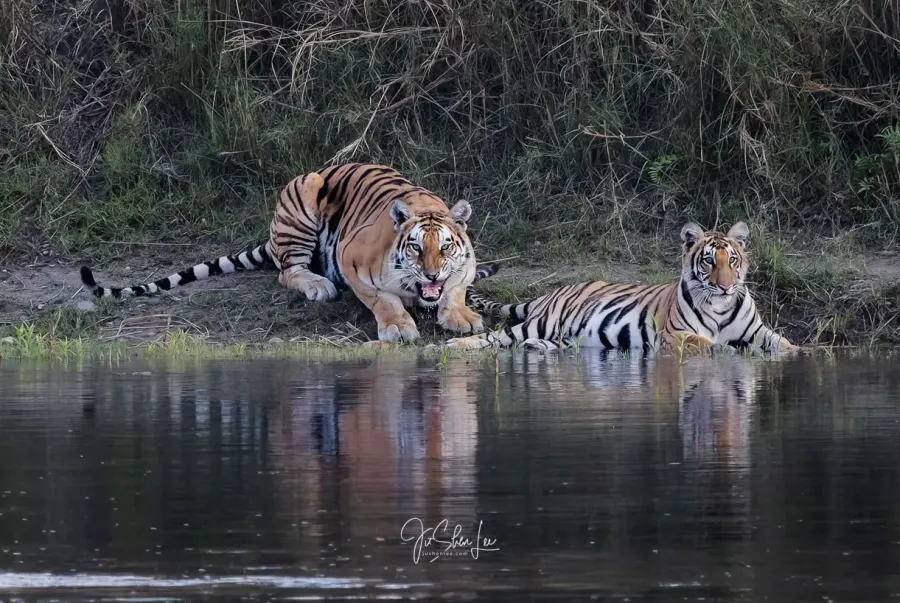
In southern Nepal, Chitwan National Park offers a completely different experience. Once covered by malaria-infested forests, the region is now one of Asia's premier wildlife destinations.
Here you may encounter:
- Greater One-Horned Rhinoceros
- Bengal Tigers
- Leopards
- Wild elephants
- Deer
- Monkeys
- Over 400 species of birds
Pokhara
Nestled beside Phewa Lake and surrounded by the Annapurna Himalayas, Pokhara offers the perfect combination of relaxation and adventure.
Popular attractions include:
- Davis Falls
- Gupteshwor Cave
- World Peace Pagoda
- Sarangkot viewpoint
- International Mountain Museum
- Lakeside cafés and restaurants
Bhutan – The Land of the Thunder Dragon
Unlike Nepal, independent travel in Bhutan is restricted. International visitors must travel on an organized tour accompanied by a licensed Bhutanese guide, helping preserve the country's culture and environment.
Some of Bhutan's most remarkable attractions include:
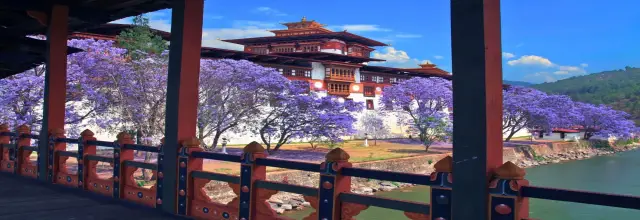
- Punakha Dzong, the former seat of government
- Chimi Lhakhang, the famous Temple of Fertility
- National Museum of Bhutan
- Traditional craft markets and artisan shops
The highlight for many travelers is hiking to the spectacular Tiger's Nest Monastery (Paro Taktsang), dramatically perched on a cliff over 900 meters above the valley floor.
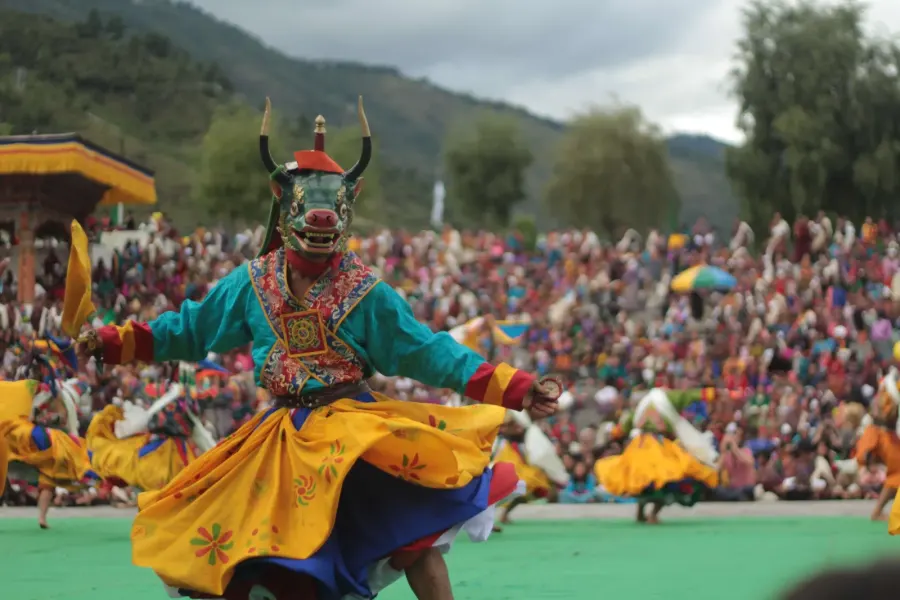
Bhutan's Buddhist traditions remain deeply woven into everyday life. Traditional dress—the Gho for men and the Kira for women—is still widely worn, particularly by government employees and during official occasions.
Tibet – Spiritual Traditions and High-Altitude Wonders
Most overland tours from Nepal enter Tibet by road, allowing travelers to gradually acclimatize to the rising altitude rather than flying directly into Lhasa.
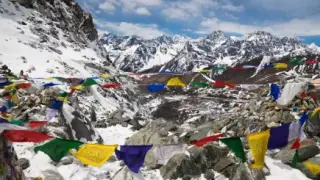
The journey across the vast Tibetan Plateau offers extraordinary scenery unlike anywhere else in the world.
Highlights include:
- Panchen Lama's Monastery (Tashilhunpo Monastery)
- Lhasa
- Potala Palace (UNESCO World Heritage Site)
- Jokhang Temple (UNESCO World Heritage Site)
- Barkhor Street and Bazaar
Beyond its magnificent monasteries and temples, Tibet offers vibrant local markets where visitors can purchase authentic Tibetan handicrafts, prayer flags, jewelry, and traditional souvenirs.
Travel Considerations
Travel within Tibet is regulated. Visitors must be accompanied by licensed guides and travel under special permits. Visitors should also respect local customs and avoid discussing politically sensitive topics with residents.
While Tibet's political history remains complex, most travelers leave with lasting memories of its incredible landscapes, spiritual heritage, and warm hospitality.
Why Choose a 21-Day Nepal, Bhutan & Tibet Tour?
If you have more time, each destination deserves a longer visit. However, if your vacation is limited, a carefully designed 21-day itinerary provides an excellent introduction to the Himalayas.
During one unforgettable journey, you'll experience:
- Ancient temples and UNESCO World Heritage Sites
- Hindu and Buddhist spiritual traditions
- The world's highest mountain landscapes
- Wildlife safaris in Nepal
- Bhutan's preserved culture and monasteries
- Tibet's iconic palaces and sacred temples
- Three unique cultures connected by the Himalayas
A Nepal, Bhutan, and Tibet tour is far more than a vacation—it's an immersive journey through the history, spirituality, and breathtaking landscapes of the Himalayas.