


Nepal After the Gen Z Protests: Is It Safe to Travel in 2026?
In September 2025, Nepal went through its most serious political upheaval in a generation, and the photos coming out of Kathmandu looked alarming from abroad. Here is what those photos left out: the protests lasted about a week, stayed inside a few government blocks of one city, and never touched the mountains. By March 2026 the country had elected a new government, and the US State Department had moved it back to a Level 2 advisory, the same caution level it gives France or Japan.
We guide treks for a living, out of an office in Kathmandu, so we field this question almost every week now. Is Nepal safe to travel in 2026? Yes, with ordinary care. What follows is the whole story told straight: what set the Gen Z protests off, how serious they got, where the trouble actually was, what the advisories say today, and the quieter aftermath that explains why so many young Nepalis are now leaving to study abroad.
What set off Nepal's Gen Z protests?
The 2025 Nepalese Gen Z protests were a youth-led, leaderless anti-corruption uprising that spread across the country in early September 2025. On 4 September, the government blocked 26 social media platforms, among them Facebook, Instagram, YouTube, and WhatsApp, for failing to register under new rules. That ban lit a fuse that had been laid for years. Young Nepalis were already angry about corruption, scarce jobs, and the flaunted wealth of political families, and shutting down the apps they used to say so pushed the anger into the streets within hours.
8 September 2025 turned deadly. Protesters converged on government buildings in Kathmandu, police opened fire, and for the first time in its modern history Nepal saw mass civilian deaths at a demonstration. Counts of the dead range from about 72 to 76, with roughly 2,660 injured, figures the government confirmed by May 2026. Human Rights Watch documented unlawful use of force by security forces in a November 2025 report.
K.P. Sharma Oli resigned as prime minister on 9 September 2025. Three days later, Sushila Karki, a 73-year-old former chief justice, was sworn in as interim prime minister, the first woman to hold the post. By 13 September the crowds had gone home. The months after were orderly: an interim cabinet, repairs to burned buildings, and a date set for a national vote.
So is Nepal safe to travel right now?
A Level 2 advisory is the second step on the US State Department's four-tier scale, and it means "exercise increased caution," the level it also gives France, Germany, and Japan. On 31 March 2026, the State Department lowered Nepal to Level 2 from the stricter warning it had posted during the unrest, citing stable conditions. A few weeks earlier, on 5 March 2026, Nepal held the election that put a chosen government back in charge. Both point the same way: the emergency is over.
For most visitors, the real risks in Nepal were never political. Altitude, mountain roads, and changeable weather shape a trek far more than any demonstration does, and that ordinary side of staying safe in Nepal deserves more of your planning than the headlines ever will.
Where the trouble was, and where you actually go
Kathmandu's government district absorbed almost all of the September 2025 violence, around Singha Durbar and the New Baneshwor parliament complex. Those are ministry zones. Thamel, where visitors stay, and the temple squares of Boudhanath and Patan sit across the city from the clashes, and the trekking trailheads are a long drive or a short flight beyond that. Walk through Kathmandu today and you would not know anything had happened.
What to actually do in 2026
A bandh is a general strike, a routine feature of Nepali politics, that shuts shops and stops traffic across an area for a day or two. Bandhs and the occasional demonstration still flare up, mostly in Kathmandu and the southern Terai plains, and they are the one way local politics might brush your trip, usually as a lost half-day rather than any real danger. Steer clear of any crowd that forms, leave a day of slack around domestic flights and long drives, and let your guide call the morning's plan. That is genuinely the whole of it.
Did any of this reach the trekking regions?
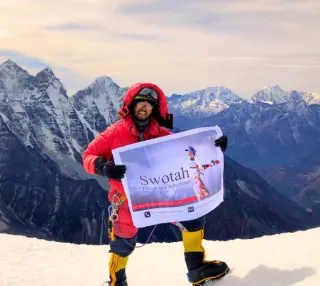
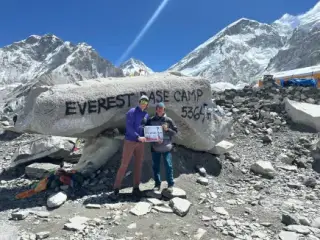
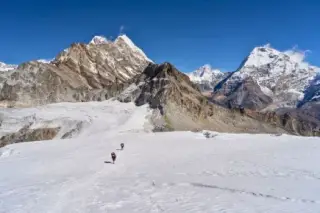
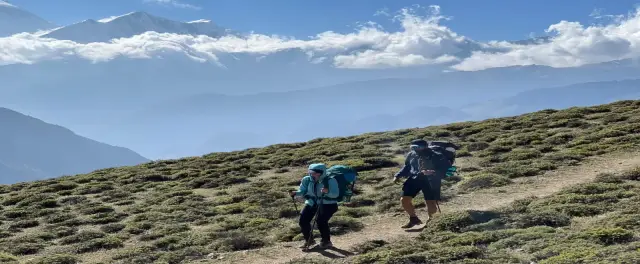
The Everest, Annapurna, Langtang, Manaslu, and Mustang regions never closed. The unrest was a city-centre event, days of travel from these valleys, and trekkers already on the trail mostly caught the news on their phones between teahouses. Groups on the Everest Base Camp Trek finished their autumn departures on schedule, and the Annapurna Base Camp season ran without a hitch. Lukla's flights and the Pokhara trailhead kept their usual weather-dependent timetables right through September.
The one thing to plan around is the Terai. Bandhs near Lumbini, Chitwan, or Bardiya can close a highway for a day, so if your route crosses the southern plains by road, give it a buffer or fly the leg instead.
The quieter story: why young Nepalis are leaving
Nepal's National Planning Commission warned in late 2025 that the country could lose up to a million workers a year to emigration unless reforms take hold, on top of an unemployment rate that had already reached a record 17 percent. The protests were the loud version of a frustration that usually shows up quietly, in airport departure lounges. For a decade now, the most common answer young Nepalis have given to a stalled economy is to leave, for work or for study.
Tens of thousands apply every year for a No Objection Certificate, the document the government requires before a student can study overseas, bound for Australia, Canada, the UK, and Japan. Choosing a country and a course has grown into its own small industry, which is why guides like Studination exist, mapping eleven destinations with their visa rules and costs for Nepali students. This matters to a visitor for one plain reason. The sharp, English-speaking young guide walking you up to Namche, or the woman running the cafe in Pokhara, belongs to the same generation weighing whether to stay. Money spent on the ground here is part of what keeps some of them home.
Should you book Nepal for 2026?
Yes, and you can plan it like any Level 2 trip. Buy travel insurance that covers trekking to your highest point, go with a licensed operator who can reshuffle a day if a bandh lands, and leave a little slack for weather. Check your own government's advisory the week before you fly, since the trend across 2026 has been steady improvement rather than a frozen calm. If you already know roughly when you want to come, our 2026 departure dates are set; if you would rather shape your own route, tell us what you have in mind. The trails never closed, and Nepal is ready for you.
Frequently asked questions
Is Nepal safe to travel in 2026?
Yes. The US State Department rates Nepal Level 2, "exercise increased caution," as of 31 March 2026, the same as France, Germany, and Japan. The September 2025 protests ended on 13 September, the trekking regions stayed open, and tourist areas were never the focus. Take normal precautions and you will be fine.
Did the Gen Z protests affect the Everest or Annapurna treks?
No. The Everest, Annapurna, Langtang, Manaslu, and Mustang regions kept running through the September 2025 protests, which stayed inside Kathmandu's government district. Lukla flights and the Pokhara trailheads ran on their normal schedules, and trekkers on the trail were not disrupted.
What is the current US travel advisory for Nepal?
Level 2, "exercise increased caution," set on 31 March 2026, down from the stricter warning during the unrest. Level 2 is the second of four tiers and covers dozens of popular countries, so it means travel with awareness, not avoidance. Check your own government's notice in the week before you fly.
What is a bandh, and will it affect my trip?
A bandh is a general strike that closes shops and halts road traffic across an area for a day or more, a normal part of Nepali politics rather than a sign of danger. Bandhs are most common in Kathmandu and the Terai, and usually cost a traveller a half-day, not their safety. Leave buffer time around road travel, or fly the affected leg.