


Kanchenjunga Region
Taplejung, far-eastern Nepal
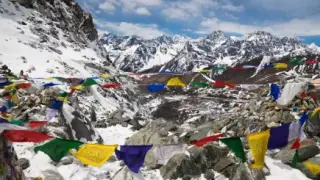
The world's third-highest mountain, in one of Nepal's least-visited corners. Kanchenjunga is sacred enough that climbers stop just short of the true summit, which makes it the only 8,000 m peak whose top has never been stood on.
Trips Starting from Kanchenjunga Region
Hand-crafted itineraries that start in Kanchenjunga Region, from a single sunrise day-trip to multi-week Himalayan expeditions.
.webp)
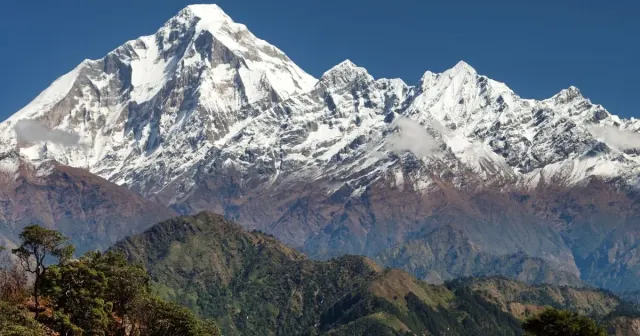
The Mountain Nobody Has Truly Summited
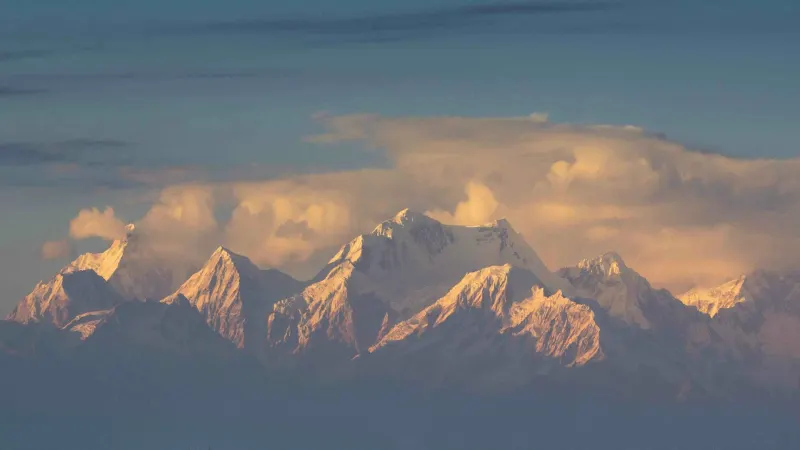
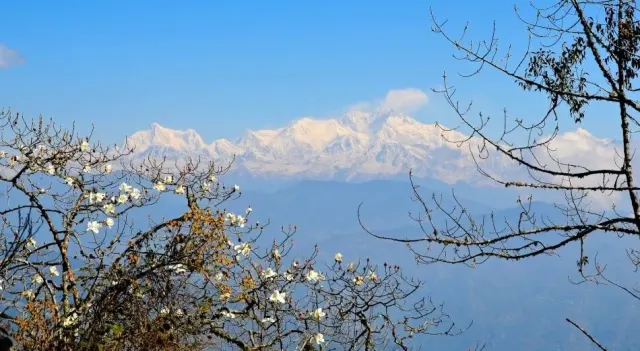
Kanchenjunga rises to 8,586 m on the Nepal-India border, the third-highest mountain on Earth. The name comes from Tibetan and is usually rendered as “five great treasures of the snow”, for its five summits and the five treasuries of the god said to live there: gold, silver, gems, grain and scripture. It was thought to be the world's highest mountain until the 1850s surveys corrected the record.
Joe Brown and George Band made the first ascent on 25 May 1955, and then did something unusual: by agreement with the Chogyal of Sikkim, they stopped a few feet below the true summit out of respect for its sanctity. Almost every climber since has kept that promise. It is the only 8,000 m peak whose actual summit remains untrodden, which is a more interesting fact about mountaineering than most.
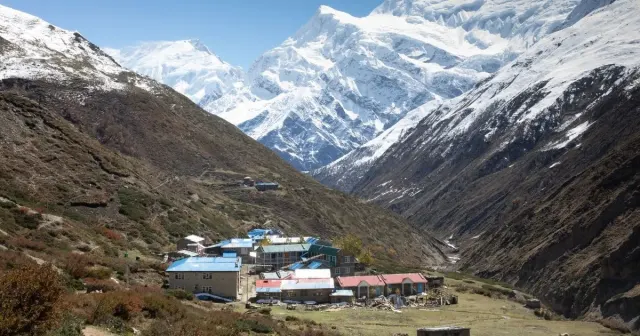
The Kanchenjunga Conservation Area protects 2,035 km² of forest, glacier and high pasture, with Limbu and Rai communities in the lower valleys. The base camp trek runs 20 to 25 days and is among Nepal's most committing: a restricted-area permit, a mandatory guide, two trekkers minimum, and long stretches without lodges. Pangpema, the north base camp, sits at 5,065 m looking straight at the north face. See eastern Nepal for the gentler trails nearby.
Things to do in Kanchenjunga Region
Standout experiences hand-picked by our local guides.
- 01Pangpema, North Base Camp5,065 m, facing the north face across 12 km of unbroken glacier.
- 02Oktang, South Base Camp4,730 m, with the southern flank and the Yalung Glacier in front of you.
- 03GhunsaA Tibetan-influenced village at 3,415 m with old gompas and a long yak-trading history. The acclimatisation stop.
- 04Limbu VillagesYamphudin and Mamankhe in the lower valleys, where animist tradition is still ordinary life.
- 05Sele LaA 4,290 m crossing linking the north and south base camp routes across wild high pasture.
- 06Pathibhara DeviA Hindu pilgrimage site at 3,794 m said to grant wishes. Nepali pilgrims outnumber trekkers here.
- 07Singalila RidgeThe Sikkim border ridge, with four of the world's six highest mountains in one line.
- 08Red Panda CountryOne of Nepal's last strongholds for red panda, alongside snow leopard and Himalayan black bear.
Best time to visit Kanchenjunga Region
Spring and autumn are the only realistic windows. The remoteness and the altitude make the shoulder months harder here than the same weeks would be in the Khumbu.
- ★ BEST SEASONSpringMarch – MayRhododendron through the lower valleys and settling weather on the high ground from mid-April. Snow can linger on Sele La into April.-8°C – 16°C
- MONSOONSummerJune – AugustFar-eastern Nepal takes the heaviest monsoon in the country. Landslides on the approach, leeches in the forest and no views. Not worth attempting.6°C – 20°C
- ★ BEST SEASONAutumnSeptember – NovemberThe best window. Clear air at Pangpema and stable conditions on Sele La. Nights at base camp go well below freezing by November.-12°C – 14°C
- MONSOONWinterDecember – FebruaryThe high route effectively closes. Snow shuts Sele La and the upper lodges, and the remoteness makes a weather problem a serious one. Lower valleys only.-25°C – 6°C