
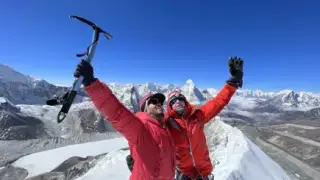
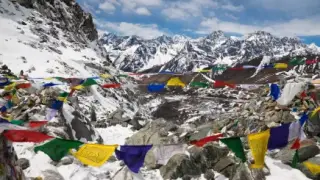

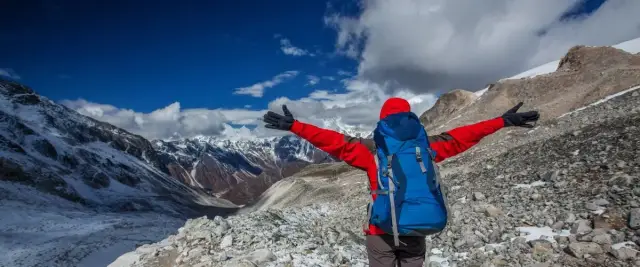

The Manaslu Circuit is a moderate to challenging trek. Most itineraries take about 14 days and cover roughly 177 km around Manaslu (8,163 m), with 5 to 7 hours of walking on most days. The hard part is altitude: you sleep at Dharamsala (4,460 m) and cross the Larkya La at 5,106 m on an 8 to 10 hour day. Fit walkers with some trekking experience manage it well. You need a licensed guide, a restricted area permit and a rest day in Samagaun or Samdo to acclimatise.
- Highest pointLarkya La, 5,106 m
- Highest nightDharamsala, 4,460 m
- LengthAbout 14 days, roughly 177 km
- GradeModerate to challenging
- Hardest dayDharamsala to Bimthang, 8 to 10 h
- RulesRestricted area, licensed guide required
Manaslu, the world's eighth-highest mountain, towers over 8,163 meters above sea level. The Manaslu Circuit trek is a roughly 177 km loop around the massif, usually walked over about 14 days and crossing the Larkya La at 5,106 m. Manaslu means "Mountain of the Spirit" in Sanskrit, and while climbers treat its avalanche-prone slopes with deep respect, the circuit trek around it is a different, far safer proposition.
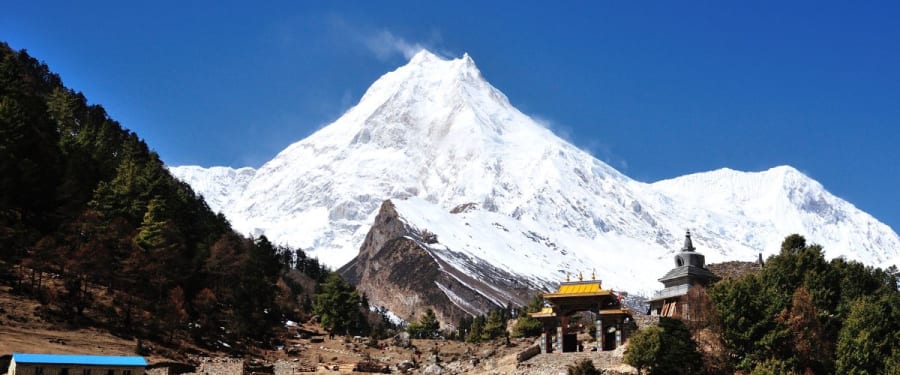
If you enjoy remote, dramatic landscapes, this trek belongs near the top of your list. If you have completed the Annapurna circuit trek, you will find the Manaslu Circuit a comparable challenge. Rugged trails, wide skies and remote scenery make it a favourite for trekkers who want a quieter alternative to the busier circuits.
How hard is the Manaslu circuit trek?
The Manaslu Circuit is usually graded moderate to challenging. It suits fit walkers with some multi-day trekking behind them, and the one truly hard day is the crossing of the Larkya La. Specific training is not mandatory, but you must train yourself and be in sound health to successfully complete the trek.
Distance and Duration
A proper Manaslu trek is roughly 177 kilometers, and the route follows the old Tibet-Nepal salt trade route accompanied by the Budhi Gandaki river. Ideally, the trek lasts for 14 days long.
With every step you take, the elevation increases and oxygen gets thinner. Walking long days on uneven trail for nearly two weeks is physically demanding.
Altitude sickness
If you are someone with breathing problems like asthma, we recommend you to consult a doctor before attempting this trek. Despite being unquestionably exceptional, this trek will physically challenge you to some extent. Acute mountain sickness (AMS) is the main risk on the trek, and it can affect fit and unfit trekkers alike.
Headache, vomiting, fatigue, confusion, sleep disturbance, and dizziness can give you a bad experience. Hence, AMS is something that is not to be taken lightly.
The highest altitude pass during the Manaslu circuit is Larkya La Pass. It is situated at an elevation of 5,106m. It is the hardest point of the trek because each breath there holds only about half the oxygen it would at sea level. Many trekkers feel headaches or breathlessness on the climb, which is why the night before at Dharamsala (4,460 m) and a slow pace matter so much.

Difficult trail
This trek is not as easy as a walk in the park, but an average person can definitely complete it with a decent effort. The route is well-trodden, but it is pretty bumpy with a lot of ups and downs and becomes harder when elevation increases.
The first couple of days alongside the Budhi Gandaki river will be tough because of the steep narrow trail. The trail that leads to Larkya La Pass will test your endurance because of its height.
Basic accommodation
Although being equally magnificent(if not more) as compared to other popular trekking routes in Nepal, this trail sees far fewer trekkers than the Everest or Annapurna routes, although numbers are rising fast: the Manaslu Conservation Area counted a record of roughly 15,000 visitors in 2025. Lodges are simpler as a result, and you should expect a basic setup in the higher villages. That said, lodges have improved noticeably in recent years, and Samagaun and Samdo now have several comfortable teahouses, some with hot showers and Wi-Fi.
The places with a high number of tea houses and accommodation are Soti Khola, Machha Khola, Jagat, Deng, Namrung, Lho, Samagaun, Samdo, Dharamsala, Bimthang and Dharapani.

Limited food choice
Food choice on the trail is limited, but teahouse menus are simple and filling. Popular Nepali dishes (rice, lentils, and vegetables) will be available in all shops, giving you enough energy to continue your trek.
Spaghetti is also served in most of the shops. Hot drinks such as tea and coffee are available at every teahouse.
Factors Affecting the Difficulty of the Manaslu Circuit Trek
Unpredictable weather and climate
The weather and climate in the Manaslu trek can change quickly. One minute it might be all sunny and peaceful, while another minute, it might get cloudy and dark. Outside the monsoon rain is less common, but a few minutes of downpour can significantly decrease the temperature.
Lack of training
If you have plenty of trekking experience, you are well prepared. But if this trek is your first one, you should definitely consider training for a month or two.
Guide and porter
The route is well-shaped, but you might encounter conflicting paths. Additionally, patchy mobile coverage means you cannot rely on Google Maps for navigation.
Carrying all your gear and supplies yourself will also slow you down. An experienced guide and porter will make your life easy throughout the journey.

Health
You must be in sound health to successfully complete the trek. It is recommended to do a full body checkup before attempting the trek. Carry any routine medication you need.
Time of the year
Trekking Manaslu in summer and the monsoon is hard going, with rain, leeches and slippery trail. Therefore, spring and autumn are the best seasons to trek Manaslu, with clearer skies and a more reliable pass. Even then, an early snowstorm can close the Larkya La for a few days, as happened in late October 2025.
Heavy Backpack
You should not carry useless items in your bag and think twice before packing. If you are going to carry your own bag, every step feels harder as the days add up and the air thins. Hence, you should create a checklist of only the essential items and stick to it.
Age
Age matters less than fitness and acclimatisation. Trekkers in their 60s complete the Manaslu Circuit regularly with sensible pacing, and it suits older children used to long walks, though very young children are not advised because of the altitude.
If you have any health concerns, get a check-up and discuss the trek with your doctor before booking.
Manaslu Circuit Difficulty at a Glance
Here is how each part of the challenge rates for a reasonably fit trekker in October or April.
| Factor | Rating | Why |
|---|---|---|
| Altitude | Hard | Five nights at 3,500 m or higher and a 5,106 m pass. Acclimatisation decides how the trek goes. |
| Larkya La day | Hard | About 650 m up from Dharamsala, then roughly 1,500 m down to Bimthang, often 8 to 10 hours. |
| Trail surface | Moderate | Narrow, rocky sections and landslide scars along the Budhi Gandaki in the first days. |
| Daily walking | Moderate | 5 to 7 hours on most days, with many climbs and drops between villages. |
| Lodges and food | Moderate | Simple teahouses, fewer choices above Samagaun, and only a few lodges at Dharamsala. |
| Navigation | Easy | One main trail, and a licensed guide is required anyway. |
Stage by Stage: Walking Hours and Sleeping Altitude
This follows our 14-day Manaslu Circuit. Walking times are typical figures and change with weather, fitness and pace. The bars show where you sleep each night.
| Stage | Time | Sleeping altitude | |
|---|---|---|---|
| Kathmandu to Machha Khola | 7 to 8 h drive | 870 m | |
| Machha Khola to Jagat | 6 to 7 h | 1,440 m | |
| Jagat to Deng | 6 to 7 h | 1,860 m | |
| Deng to Namrung | 6 to 7 h | 2,630 m | |
| Namrung to Shyala | 5 to 6 h | 3,500 m | |
| Shyala to Samagaun | 1 to 2 h | 3,530 m | |
| Samagaun to Samdo | 3 to 4 h | 3,875 m | |
| Samdo to Dharamsala | 3 to 4 h | 4,460 m | |
| Dharamsala over the Larkya La (5,106 m) to Bimthang | 8 to 10 h | 3,590 m | |
| Bimthang to Tilje | 5 to 6 h | 2,300 m |
The biggest jump in sleeping height comes from Namrung to Shyala, about 870 m in a day. Above 3,000 m, the Wilderness Medical Society advises sleeping no more than about 500 m higher each night and taking a rest day every three or four days. That is why many itineraries add a full day in Samagaun or Samdo, with a hike toward Manaslu Base Camp or Pungyen Gompa. Ask whether yours includes one.
The Hardest Day: Crossing the Larkya La
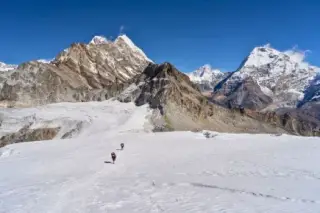
Pass day starts in the dark, usually around 4 am from Dharamsala, so you reach the top before the wind picks up. The climb is about 650 m over moraine and snow, slow rather than technical. The descent to Bimthang is long and steep, around 1,500 m, and on icy mornings microspikes help a lot. Most groups reach Bimthang after 8 to 10 hours on the move.
The One Real Hazard: Snow on the Pass
The Larkya La can close after heavy snow, even in the main season. In late October and early November 2025, an unseasonal storm left hundreds of trekkers stuck in Samagaun and Samdo. Rescuers flew out 128 people over two days, thousands more walked back down, and the route reopened on 2 November once the weather cleared. Spare days and a guide who will turn back are the best protection.
Tips to overcome the Manaslu Circuit Trek difficulty
Hydrate yourself regularly
The human body is about 60% water, and for all your vital organs to perform well, you need about 3-4 liters of water per day. Hydration also helps digestion and maintaining body temperature. If you want a pleasant experience, drink regularly through the day.
Take it slow
It is tempting to push the pace for the next view, but the trek is long, so move slowly and steadily to protect both your energy and your acclimatisation.
Carry only the essentials
If you choose not to hire a porter, you will be carrying around 15 kg of supplies. It includes first aid kits, energy bars, clothing, trekking gear, and other crucial items.
Packing irrelevant items will only make your journey stressful and exhausting.
Proper clothes and equipment
The right clothing makes a real difference. Warm layers, gloves, thick socks and broken-in boots keep you comfortable in changeable mountain weather.
Make sure these clothes, especially socks, dry quickly. Avoid cotton and denim. Quick-drying, warm and lightweight layers work best.
Hire a guide and porter if needed
Investing in a guide and porter will be beneficial if you want to wander freely without worrying much about navigation and carrying your supplies. Manaslu is a restricted area, so a licensed guide is mandatory anyway. Additionally, you will find the best spots for photos and videos if you enjoy photography.
Train yourself
You can hire a porter to carry your supplies, but you must walk alone to complete the trek. We recommend you to train yourself for at least 45 days before attempting the trek. You can prepare a routine training that involves cardio with weights, stretching, and a light workout.
Book the accommodation in advance
In October and April, lodges in Samagaun, Samdo and especially Dharamsala fill up fast. Letting your agency book rooms ahead is the wise choice. This way, you can make sure that you will not have to worry about accommodation and food until the trek ends.

Manaslu Circuit vs Annapurna Circuit vs Everest Base Camp
| Manaslu Circuit | Annapurna Circuit | Everest Base Camp | |
|---|---|---|---|
| Highest point | Larkya La, 5,106 m | Thorong La, 5,416 m | Kala Patthar, 5,545 m |
| Typical length | About 14 days | About 14 days | About 14 days |
| Hardest day | Larkya La crossing, 8 to 10 h | Thorong La crossing, 7 to 9 h | Gorak Shep and Kala Patthar |
| Permits | Restricted area permit plus MCAP and ACAP | ACAP and TIMS | Khumbu card and park permit |
| Overall grade | Hard | Moderate | Moderate |
Manaslu feels harder mainly because it is more remote and its pass day is longer. For a fuller comparison, read Manaslu Circuit vs Annapurna Circuit.
Permits You Need for the Manaslu Circuit
Manaslu is a restricted area, which shapes both the cost and the rules of the trek. You need a Restricted Area Permit (RAP), priced at US$ 100 for the first seven days from September to November and US$ 75 from December to August, plus the Manaslu Conservation Area Permit (MCAP) and Annapurna Conservation Area Permit (ACAP) at NPR 3,000 each. The RAP rules require a licensed guide, but since 22 March 2026 the old two-trekker minimum has been scrapped, so solo trekkers can now obtain the permit individually (see our Manaslu solo trekking permit guide). No separate TIMS card is needed on this route. All permits are arranged through a registered agency such as ours. See the full details on our Manaslu Circuit Trek page, or combine the circuit with the hidden valley on the Manaslu Circuit with Tsum Valley itinerary.
Manaslu Circuit Difficulty: FAQs
Can you see Everest from the Manaslu Circuit?
No, you cannot. Everest stands far to the east on the China border, while Manaslu rises in Gorkha district of west-central Nepal, so the two are in completely different regions. However, you can see Ganesh Himal (7,422 m), Himalchuli (7,893 m), Ngadi Chuli, also called Peak 29 (7,871 m), Rani Peak and the Shringi Himal range, whose highest point, Chamar, stands at about 7,165 m.
How long does the Manaslu Circuit Trek take?
The Manaslu circuit trek is about 177 kilometers long and follows a pristine Tibetan-Nepalese salt trade route along the Budhi Gandaki River. Ideally, the journey should take around 14 days.
Do you need a guide for Manaslu Circuit?
Yes, a guide is compulsory as per the Nepal government. Hiring a guide would be optimal if you want to ensure you won't have any problems with navigation. Your guide can also tell you about the culture and history of the places that you go through during the trek.
How much does it cost for the Manaslu Circuit trek?
A standard 14 to 17 day Manaslu Circuit package costs between US$ 1,200 and US$ 2,500 (see our Manaslu Circuit cost breakdown), depending on group size and service level. Restricted-area permits and the mandatory guide are included in that price, and our own 14-day Manaslu Circuit starts from USD 1,235.
How long is the Larkya La day?
Plan on 8 to 10 hours from Dharamsala to Bimthang, with an early start around 4 am. You climb about 650 m to the pass and then descend roughly 1,500 m.
Can a beginner do the Manaslu Circuit?
A fit beginner can, but it is a big first trek. If you have never walked several days in a row at altitude, consider a shorter trek first or choose an itinerary with a rest day in Samagaun or Samdo.
Is trekking to the Manaslu circuit trek safe?
Yes, with a licensed guide, a sensible itinerary and the right season. The main risks are altitude, landslides on the lower Budhi Gandaki trail in the wet months, and snow on the Larkya La. The climb from Namrung (2,630 m) to Samagaun (3,530 m) is steep, so a rest day in Samagaun or Samdo makes the pass day much safer. Go down if headache, vomiting or confusion get worse.
Is the Manaslu Circuit Too Hard for You?
The Manaslu Circuit is a moderate but demanding two-week trek through remote, dramatic country, well worth the effort for trekkers who want a quieter Himalayan loop.
The trek can be considered to be moderately difficult, and training for a couple of months will definitely be fruitful. Plan ahead and let your agency book lodges for the busy months.
If you can walk six or seven hours a day for a week, cope with basic lodges and take the pass day slowly, you can finish the Manaslu Circuit.