


Monsoon Trekking in Nepal 2026: Best Rain-Shadow Treks for July & August
The monsoon (June to September) is Nepal's quietest trekking season, but it is the best time of year for one group of trails: the rain-shadow treks. While Pokhara collects around 300 mm of rain in July, Upper Mustang gets roughly 30 mm in the same month, because the high Himalaya wrings the moisture out of the monsoon clouds before they reach the valley behind. The result is dry, clear, leech-free trekking in Upper Mustang, Upper Dolpo and Nar Phu while the rest of the country is under cloud, and for 2026 these restricted areas are also open to solo trekkers for the first time. This guide explains why rain-shadow treks stay dry, the best routes for July and August, what to expect, and the permits you need.
Why do rain-shadow treks stay dry in the monsoon?
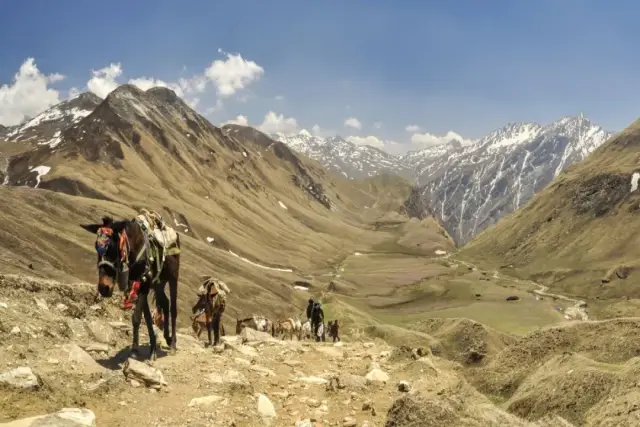
A rain-shadow trek is a route in the arid belt behind the main Himalayan range, where the monsoon releases its rain on the southern slopes before the clouds can cross the peaks. The Annapurna, Dhaulagiri and Manaslu massifs act as an 8,000-metre wall, so the valleys directly north (Upper Mustang, Upper Dolpo, Nar Phu and the upper Manang corridor) sit in a desert climate. Daytime skies are often clear, mornings are reliably bright, and the trails carry almost no leeches, the single biggest complaint about monsoon trekking in the lower hills. The trade-off is geography: you reach these valleys through wetter lowlands, so the journey in and out crosses the monsoon before the trek itself stays dry.
Upper Mustang: the classic monsoon trek
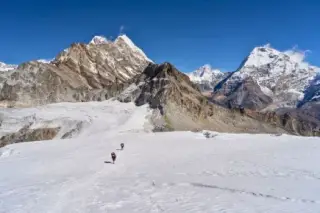
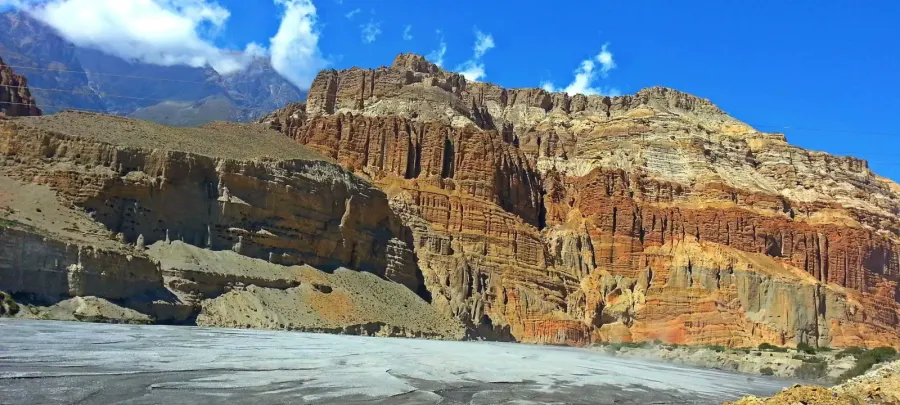
Upper Mustang is the most popular rain-shadow trek and the easiest to reach, a 10 to 16 day route into the former Buddhist Kingdom of Lo north of Kagbeni. The landscape is high desert: ochre and grey eroded cliffs, walled fields, cave monasteries and the medieval walled city of Lo Manthang at 3,840 m. July and August bring warm days, clear skies and the green of irrigated barley against the bare hills. The trek is graded moderate, with no technical climbing, and starts from a flight or drive to Jomsom rather than the weather-prone Lukla. For dates and routes see our Upper Mustang Trek, and for the 2026 fees and the new solo rule, our Upper Mustang permit guide.
Upper Dolpo: Nepal's remote rain-shadow wilderness
Upper Dolpo is the wildest of the rain-shadow treks, a 20 to 26 day expedition behind the Dhaulagiri massif into a Tibetan-Buddhist region of high passes and turquoise Phoksundo Lake. The area is so dry and remote that it is prime snow-leopard habitat, and the trek crosses several passes above 5,000 m, so it suits experienced trekkers with time to spare. Monsoon is one of the few windows the high passes are reliably snow-free. We run it as the Upper Dolpo Trek, the shorter Lower Dolpo Trek, and the wildlife-focused Snow Leopard Trek in Dolpo.
Nar Phu Valley: hidden valleys behind Annapurna
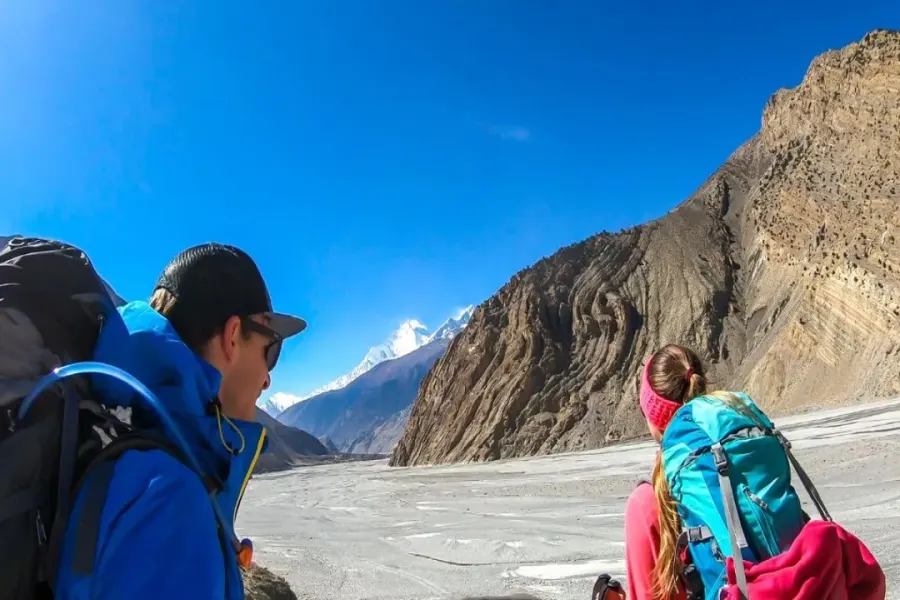
Nar Phu is a restricted valley system tucked behind the Annapurna massif, a 14 to 19 day route through two medieval Tibetan villages, Nar and Phu, that few trekkers reach. It combines the dry rain-shadow climate with the option to cross the Kang La (5,320 m) and join the Annapurna Circuit, so a monsoon Nar Phu trek can continue over the high, dry Manang-to-Muktinath stretch. The valley sees a fraction of the Annapurna foot traffic, which makes it one of the quietest dry-season options. See the Nar Phu Valley Trek for the full itinerary.
Other monsoon-friendly options
Two more routes work in the monsoon without committing to a full restricted-area expedition. The Manang-to-Muktinath section of the Annapurna Circuit sits in the same rain shadow, so the high half of the circuit (from Manang over the Thorong La to Muktinath and Jomsom) stays far drier than the green lower approach. Short treks around Lower Mustang and Jomsom also offer dry days and mountain views on a tighter schedule. The lower, southern trails, including the Manaslu approach and most of the Everest and Langtang routes, are wet and leech-heavy in July and August, so they are better left for autumn.
What to expect trekking Nepal in the monsoon
Monsoon trekking trades crowds for a few logistics. The advantages are real: dry trails, clear mornings, no leeches, very few other trekkers, lower lodge and flight prices, and lush green scenery on the approach. The drawbacks are mostly about getting in and out, since flights to mountain airstrips can be delayed by cloud, and afternoon build-up can close the views by mid-day. Rain-shadow treks reduce both problems because they start from road or Jomsom access rather than Lukla, and the dry air clears fast. Plan an early daily start to catch the clearest skies, pack a light waterproof for the approach, and build a spare day into any itinerary that depends on a mountain flight.
Permits and the 2026 solo rule
Every rain-shadow trek above runs through a restricted area, so each needs a Restricted Area Permit plus the relevant conservation permit, and a licensed guide from a registered agency is mandatory. The 2026 news is that on 22 March 2026 Nepal removed the two-trekker minimum across all 15 restricted-area districts, so a solo traveller can now obtain these permits individually. Upper Mustang costs USD 50 per person per day plus the Annapurna Conservation Area Permit; Nar Phu and Dolpo carry their own restricted-area rates. The same change applies to the Manaslu Circuit, so the whole restricted-area set opened up this year. A registered agency arranges every permit and confirms the current fees at booking.
Best monsoon treks at a glance
| Trek | Region | Days | Why it works in monsoon |
|---|---|---|---|
| Upper Mustang | North of Annapurna | 10-16 | Driest accessible route; reached via Jomsom, not Lukla |
| Upper / Lower Dolpo | Behind Dhaulagiri | 19-26 | Remote desert; high passes snow-free in summer |
| Nar Phu Valley | Behind Annapurna | 14-19 | Dry, quiet, can link to the high Annapurna Circuit |
| Annapurna Circuit (high half) | Manang to Muktinath | part of route | Upper section sits in the rain shadow |
Plan your monsoon trek
Monsoon is the season to trek Nepal's dry north while the famous trails are wet and crowded, and the 2026 solo rule makes the restricted rain-shadow routes easier to join than ever. Swotah arranges the permits, pairs you with a licensed guide, and times the itinerary around the clearest mountain weather. Browse the Upper Mustang, Nar Phu Valley and Upper Dolpo treks, or contact our team for a July or August departure with every permit included.