




Yarsagumba (Cordyceps) Nepal: Benefits, Cost & What Science Says
Yarsagumba (Ophiocordyceps sinensis), the Himalayan caterpillar fungus, is one of the most expensive natural products on Earth: top grades trade for more than the price of gold, with retail prices in China reported up to USD 100,000 per kilogram and Nepali harvesters earning a large share of their annual income in a single May-June season. It is a parasitic fungus that grows from the body of a ghost-moth caterpillar high in alpine meadows between roughly 3,500 and 5,000 metres, and traditional Tibetan and Chinese medicine has prized it for centuries as a tonic and aphrodisiac, the reason for its nickname "Himalayan Viagra". This guide covers what yarsagumba actually is, what the science says about its benefits, what it costs, and what to know about side effects.
Yarsagumba at a Glance
| Fact | Detail |
|---|---|
| Scientific name | Ophiocordyceps sinensis (formerly Cordyceps sinensis) |
| English name | Caterpillar fungus |
| Meaning of name | Tibetan yartsa gunbu: "summer grass, winter worm" |
| Where it grows | Alpine grasslands of Nepal, Tibet, Bhutan, and India, ~3,500–5,000 m |
| Harvest season | May to July, just after the snow melts |
| Main Nepali districts | Dolpa (around half of Nepal's harvest), Darchula, Rukum, Jumla, Mugu |
| Price range | Roughly USD 20,000–100,000+ per kg depending on grade and market |
What Exactly Is Yarsagumba?
Yarsagumba is neither plant nor worm but both halves of a gruesome partnership. The fungus Ophiocordyceps sinensis infects the underground larva of a ghost moth, slowly consumes it through the winter, and in spring sends a slender brown stalk up through the soil from the mummified caterpillar's head. Harvesters crawl across the meadows hunting that tiny stalk, then dig the intact caterpillar-fungus pair from the ground; an unbroken specimen is worth far more than a damaged one. The Tibetan name, yartsa gunbu, "summer grass, winter worm", describes exactly what the old herbalists thought they were seeing.
What Are the Claimed Benefits, and What Does Science Say?
Traditional Tibetan and Chinese medicine uses yarsagumba as a tonic for energy, libido, kidney and lung function, and recovery from illness. Modern research has identified active compounds, notably cordycepin and polysaccharides, and laboratory and animal studies suggest possible anti-inflammatory, antioxidant, and exercise-performance effects. The honest scientific summary, though, is that robust human clinical trials remain limited, and no major medical authority recognises yarsagumba as a treatment for any condition. Most rigorous studies have also used cultivated Cordyceps species rather than wild yarsagumba. Treat it as a traditional supplement with promising but unproven evidence, not as medicine, and treat any vendor promising cures with suspicion.
Why Is It So Expensive?
Scarcity, demand, and labour. Each piece must be found by eye and dug by hand at altitudes above 3,500 metres, the season lasts only weeks, and demand from Chinese buyers far outstrips supply. Harvests have declined through overharvesting and a warming climate, pushing prices further up. In Nepal's harvesting districts the season is a genuine economic event: entire villages, schools included, move up to the meadows in May and June, and for many families in Dolpa or Darchula the fungus provides more than half of annual cash income. Nepal legalised the trade in 2001 and collects royalties per kilogram; collectors need local permits, and the trade is regulated through community forest and national park rules.
How Much Does Yarsagumba Cost in Nepal?
Prices swing with grade (size, colour, intactness) and the year's harvest. At the meadow, collectors may receive the equivalent of USD 5 to 15 per piece; wholesale prices in Kathmandu commonly run NPR 800,000 to 2.5 million per kilogram (roughly USD 6,000 to 19,000); and retail prices abroad for top grades have been reported at USD 50,000 to over 100,000 per kilogram. A single high-quality piece bought in Kathmandu as a curiosity typically costs a few hundred to a few thousand rupees. If you buy, use a licensed herbal trader, since fakes (weighted, glued, or substituted specimens) are common at tourist-facing shops.
Potential Side Effects and Precautions
Reported side effects are generally mild and include digestive upset, dry mouth, and nausea. Sensible precautions, given the limited research: avoid it during pregnancy and breastfeeding; avoid it before surgery and alongside blood-thinning medication, since Cordyceps compounds may slow clotting; be cautious with autoimmune conditions and immunosuppressant drugs, as the fungus may stimulate immune activity; and keep it away from children. Anyone on regular medication should ask a doctor before taking it. None of this is medical advice; it is the standard caution list for an unstandardised wild supplement.
Frequently Asked Questions
Is yarsagumba legal to buy and export from Nepal?
Buying it in Nepal from licensed traders is legal. Export requires permits and paid royalties, and many destination countries have their own import rules for animal- and fungus-derived products, so check before flying with it.
Is it the same as the Cordyceps in supplement shops?
Usually not. Most commercial "cordyceps" supplements use cultivated Cordyceps militaris or fermented mycelium (Cs-4), which are related but different products grown in labs, at a tiny fraction of the price.
Can tourists join the harvest?
The harvest happens in remote, permit-controlled highlands, and collection rights belong to local communities. Travellers trekking in Dolpo in late spring may well see the harvest camps; joining the digging is not generally permitted.
What does a harvest season look like?
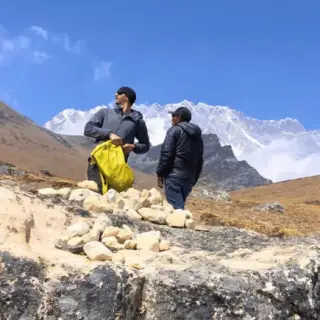
In Dolpa and the other harvesting districts, the season empties villages: schools schedule holidays around it, families camp for weeks on the meadows above 4,000 metres, and local committees police who may dig where. A skilled picker might find ten to thirty pieces on a good day, crawling shoulder to shoulder with hundreds of neighbours, and the season's earnings routinely decide whether a household clears its debts for the year. It is one of the most remarkable economic events in the Himalaya, and one of the least seen by outsiders.
Why is it called Himalayan Viagra?
Its oldest and most famous traditional use is as an aphrodisiac and vitality tonic. The scientific evidence for that effect in humans is, like most yarsagumba claims, limited.