


Why Visiting Nepal After the Flood Does More Than a Donation
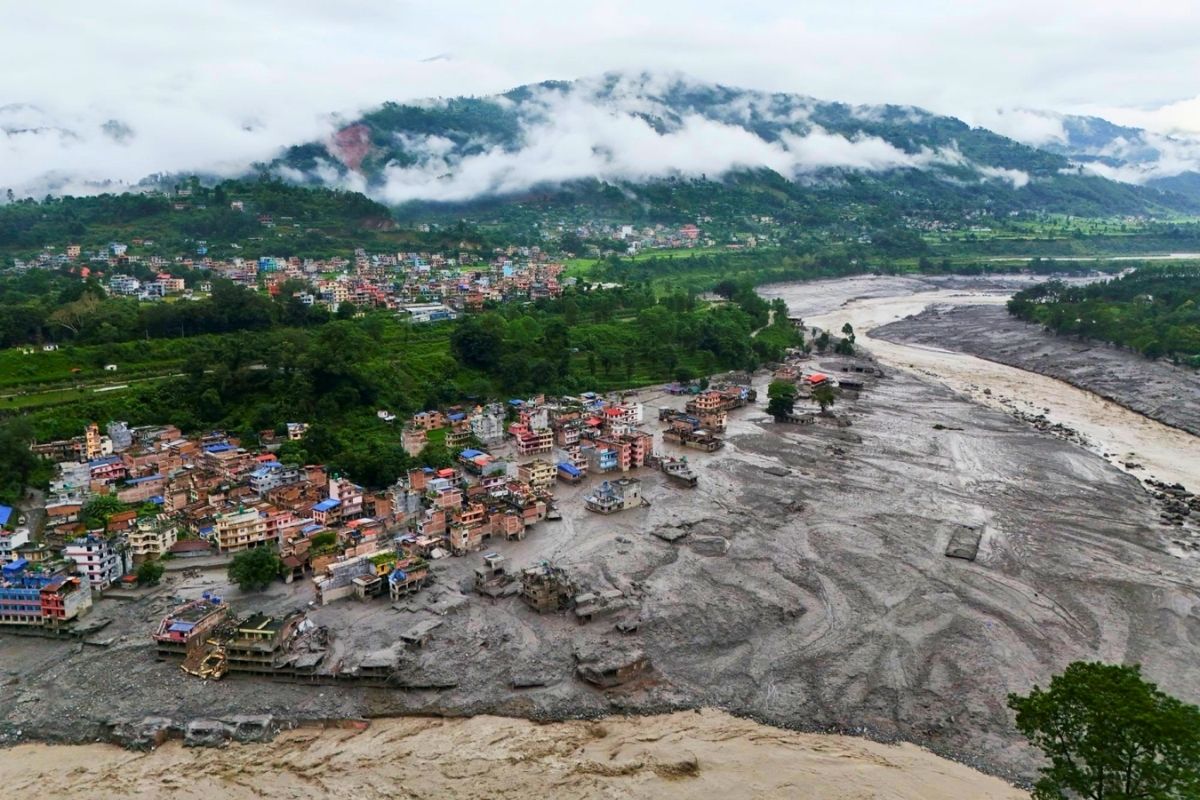
On 26 August a block of rock and glacier ice came off the north face of Langtang Lirung and sent a wall of water down the Bhotekoshi into the Trishuli. It destroyed the Rasuwagadhi border post, around 42 kilometres of road and some 41 bridges, and by 1 September the government's count stood at 987 dead and 3,916 missing. In the same week, our inbox filled with a second kind of message: people asking whether they should cancel October. This article is my answer to them. The flood hit one river corridor in one district. The cancellations are hitting the whole country, and they will go on hitting it long after the search teams have gone home. If you want to help Nepal recover, the most useful thing most of you can do is keep your booking. Below I set out what the money from a single trip actually pays for, what happened the last time visitors stayed away after a disaster, which parts of Nepal are open right now, and how a trip with us feeds the school fund we set up for the flood's children.
What the Rasuwa flood did, and what it did not do
The Rasuwa flood was a rock and ice avalanche that dammed the Lhende Khola on the Tibet border and then let go, not a slow-rising monsoon flood. The surge reached Nepal at about 08:37 and ran roughly 72 kilometres down the Bhotekoshi and Trishuli through Rasuwa and Nuwakot. Timure and Syabrubesi, the villages at the start of the Langtang and Tamang Heritage treks, were among the worst hit. The Betrawati to Rasuwagadhi road is gone in long stretches, and on 30 August the swollen Trishuli also took out a section of the Prithvi Highway at Krishnabhir in Dhading, which cut the main road between Kathmandu and Pokhara. We keep a dated log of all of this on our Rasuwa flood page, and the toll figures there come from the National Disaster Risk Reduction and Management Authority, timestamped, so you can check them against a national news desk.
Everything else that people come to Nepal for is untouched. Kathmandu, Bhaktapur and Patan are running as normal. Pokhara did not see a drop of floodwater. Lumbini is open. Lukla, Namche and the whole trail to Everest Base Camp saw no damage. The Annapurna Circuit and the Annapurna Base Camp trail are clear. Manaslu is clear of this event, though a separate spell of rain in early August damaged trail on the Dharapani to Larke section and we check that with our crews before every departure. Chitwan's lodges are operating, though the Trishuli rafting sections between Kathmandu and Pokhara are off. The one practical change for most itineraries is that the Kathmandu to Pokhara leg now goes by air instead of by road, and we have already rebooked our October groups onto flights.
Why a cancelled trip is a second disaster for Nepal
Nepal's travel and tourism sector was worth about 6.6 percent of GDP before the flood, according to the World Travel and Tourism Council, and supported around 1.19 million jobs on the council's 2023 count. Those are the headline numbers. The number that matters more is the calendar. Nepal's trekking economy runs on two short seasons, March to May and September to November, and autumn is the bigger of the two. In 2025 the country received 1,158,459 foreign visitors, a record, and October alone brought 128,443 of them. The flood came four weeks before that window opens. A guide who loses October does not lose a month of income. He loses something closer to a third of his year.
A trekking guide in Nepal earns roughly USD 20 to 35 a day while on the trail, a porter less, and tips make up 30 to 50 percent of what crews take home over a year. The base wage is rarely enough to carry a family through the quiet months on its own, which is why the two seasons matter so much and why so many crew members go to the Gulf or India when a season fails. At Swotah, more than 100 people depend on the autumn: guides, porters, cooks, drivers and office staff, most of them from the valleys our itineraries cross. If the October and November groups cancel, those 100 people are affected directly, and the lodge owners, farmers, jeep drivers and shopkeepers they spend with are affected next.
Deepak Raj Joshi, the former chief executive of the Nepal Tourism Board, told the Kathmandu Post on 28 August that "the industry will suffer post-disaster" and that the effects "could last at least six to seven months." I think he is right about the risk, and I think the length of it is in your hands rather than in the river's. The flood did its damage in about ten minutes. The damage from cancellations is done one email at a time, over months, by people who mean well.
What happened in 2015 when visitors stayed away
The Gorkha earthquake of 25 April 2015 is the closest precedent we have, and its lesson is uncomfortable. The earthquake killed close to 9,000 people and damaged parts of Langtang, Manaslu and the Kathmandu valley's heritage sites. Most of the trekking country, including the Everest trail below the Khumbu icefall and the whole Annapurna region, was walkable within weeks. Visitors stayed away anyway. Arrivals fell from 79,187 in March 2015 to 17,569 in May, dropped 55.6 percent across May to August compared with the year before, and finished 2015 down 31.8 percent, which was 251,148 fewer people than in 2014. Shiba Prasad Rijal's study of the earthquake's effect on tourism, published in the Tribhuvan University Journal, records that most of the lost visitors were avoiding regions that had no damage at all.
Recovery did not come from relief money. It came from people turning up. Tourism receipts turned in 2016 and then grew quickly, and a 2020 case study in the journal Sustainability noted that Nepal's tourism demand came back faster than the five to ten years the research literature expected after a disaster on the scale of Kobe in 1995. The difference was that trekkers, climbers and pilgrims returned within a year, and the lodges, guides and porters they paid rebuilt themselves without waiting for a grant. That is the pattern we need to repeat now, only faster, because this time the affected area is far smaller and the rest of the country never closed.
Where the money from one trek actually goes
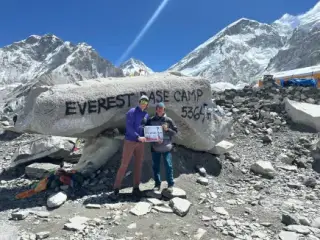
A trek is a cash transfer to rural Nepal that arrives in the form of wages, lodge bills and permit fees rather than as aid. Take a standard Everest Base Camp trek as an example. The largest single line after the international flight is people: a guide and a porter for roughly twelve trail days, paid at the rates above, plus their tips. The next line is the teahouses. Every night on the trail is a room and three meals bought from a family-run lodge in Phakding, Namche, Tengboche, Dingboche, Lobuche or Gorak Shep, and those families buy their rice, vegetables and gas from traders lower down the valley. Then there are permits: the Sagarmatha National Park entry fee and the Khumbu Pasang Lhamu Rural Municipality fee of NPR 3,000, which goes straight into the local council's budget for trail repair, waste collection and schools. Add the Lukla flight, the jeep from Kathmandu, and the small daily spending on tea, chocolate, hot showers and phone charging that keeps the smallest lodges open, and one trekker's two weeks supports somewhere between fifteen and twenty households before the money reaches anyone in Kathmandu.

The same arithmetic holds on the Annapurna Base Camp trek and the Annapurna Circuit, where the lodges of Chhomrong, Ghandruk and Manang were built and staffed on trekking income, and it holds even more directly on our Millennium Homestay Trek, where ten Newari villages between Kathmandu and Pokhara take the accommodation and food revenue themselves rather than through a lodge owner. On that trip the trek is the transfer. There is no levy on top of it, and nothing for an intermediary to skim.
Compare that with a donation. A donation to the Prime Minister's Disaster Relief Fund is the right thing to do for Rasuwa right now, and we say so on our flood page, because search, burial, shelter and road clearance need cash immediately and no trek pays for a Bailey bridge. But a donation reaches the corridor the flood hit. A trip reaches the 30 or so districts the flood did not hit, where the damage is loss of work rather than loss of a road, and where no relief fund is coming. Both are needed. Only one of them is at risk of not happening, and it is the trip.
Your trip and the flood's children
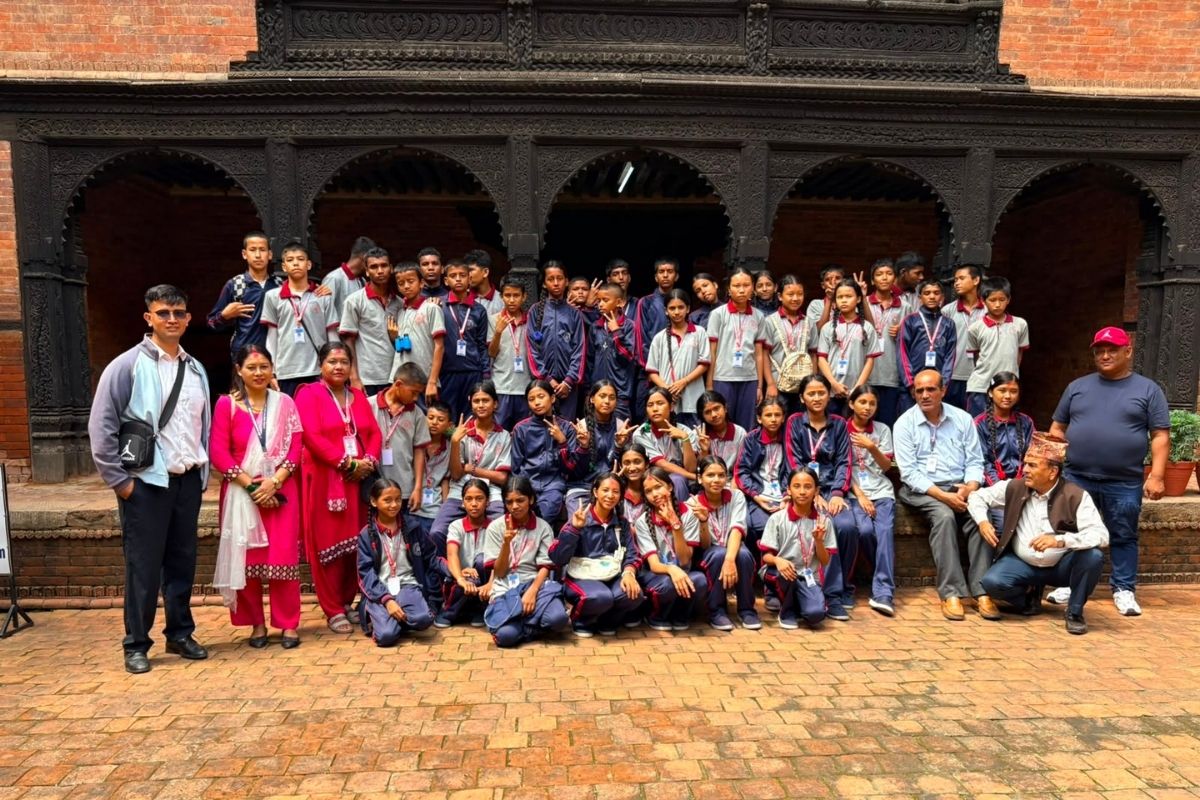
The flood destroyed 18 schools and damaged 20 more in Rasuwa and Nuwakot, and around 10,000 children now need help to carry on with their schooling. On 29 August we set up a schooling pledge on our commitment page: Swotah is funding two children from the affected villages through to the end of their +2 schooling, and we are aiming for 50 with help from clients and partner companies. The money for the two we have already committed to comes from operating income, which is another way of saying it comes from the trips we run this autumn. This is not a new arrangement for us. Our Trip for a Trip programme has taken community-school students from Tanahun and Shuklagandaki to Pokhara and Chitwan every year since 2017, and our scholarship rounds have been funded by clients who turned an Everest or Kailash trip into a giving round. The mechanism is the same now. You come, we run the trip, the trip funds the pledge, and a child in Timure or Syabrubesi stays in school instead of becoming an earner.
If you would rather fund a school place directly, you can do that on the same page, and we publish the year-by-year record so you can see where earlier rounds went. But I would ask you not to treat the two as alternatives. The client who cancels and sends USD 500 to the relief fund has helped Rasuwa and hurt everyone else. The client who comes and adds USD 500 to the school fund has done both.
Is it actually safe to come this autumn?
Safety in Nepal this autumn depends on where you go, and the answer for almost every itinerary we sell is yes. Nepal has not closed to tourism, the Nepal Tourism Board has not asked visitors to stay away, and the advisories from the US, UK and Australian governments are about Rasuwa district and the Tibet border road, not about the country. We paused four trips that start from Syabrubesi or run through Timure, and we revised two Tibet itineraries that used to cross at Kerung so that they fly Kathmandu to Lhasa instead. Every other departure is running. Our travel updates page lists the status of every trip we sell, and it is updated from one file so it cannot drift out of date section by section.
Weather is the other question people ask, and September is the tail of the monsoon rather than the middle of it. The rains thin out through the month, the trails dry, and by early October the skies over the Khumbu and the Annapurnas are the clearest of the year. Our piece on autumn in Nepal covers the month-by-month picture. The Dashain festival falls in mid-October this year and Tihar follows in early November, which means full lodges on the popular trails but also the best chance you will get of being invited into someone's home. For general precautions, our guide to health and safety when travelling in Nepal still applies, and the honest answer to whether Nepal is safe to travel now is the same one we gave after the 2015 earthquake: outside the affected district, yes.
How to travel so that the money stays here
Travelling responsibly after a disaster is mostly about where you sleep, who you hire and what you carry. A few concrete choices make the difference between a trip that helps and a trip that passes through.
- Book with an operator that employs its crew rather than hiring per trip. Day-hired porters have no income at all in a cancelled season. Staff on a payroll, as ours are, still get paid while we rebook. Ask any company you are considering how its guides are engaged.
- Sleep in teahouses and homestays, and spread your nights beyond the two or three lodges with the best Google rating. The smaller lodge at the far end of the village lost the same season as the big one and has less to fall back on.
- Tip in cash, at the end, to the person. Tips are a third to a half of crew income in a normal year, and this is not a normal year.
- Pay the permit fees without grumbling. Rural municipality fees are the closest thing Nepal has to a direct trail-to-council tax, and councils in Rasuwa and Nuwakot are the ones that will be rebuilding schools.
- Do not volunteer. Unskilled visitors in a disaster zone take a bed, a meal and a translator away from the people doing the work. Our position on volunteering in Nepal was clear before the flood and is clearer now.
- Add a night in Kathmandu or Pokhara on the way out. City hotels, restaurants and guides had their August bookings cancelled first and will feel October's absence hardest.
Our full responsible trekking guide goes into the plastic-free and Trash Man routines we run on every trek, and none of that has changed. What has changed is the urgency of the first item on the list.
What we are doing at Swotah
Swotah Travel has kept every guide, porter and office employee on the payroll since 26 August, and no one has been let go because a route closed. We have moved the four Langtang-side trips to a hold list rather than cancelling them, so that clients keep their dates and can switch to Everest, Annapurna, Manaslu or Mustang at no charge, and we will put Langtang back on sale the day the surveyors clear the corridor and not before. The Kathmandu to Pokhara road legs on our tours have been replaced with flights at our cost. Two Tibet itineraries now fly to Lhasa instead of driving to Kerung. And every trip that runs this autumn feeds the schooling pledge. That is the whole plan. It depends on people coming.
If you are holding an October or November booking with us or with anyone else, keep it. If you were thinking about Nepal for this autumn and the news put you off, the trails you were thinking about are open, and the people on them need you more this year than any other year I can remember. If you cannot come, give to the Prime Minister's fund and share this with someone who can. But if you can come, come. That is the help.
Frequently asked questions
Is Nepal open for tourists after the August 2026 flood?
Yes. The flood affected the Bhotekoshi and Trishuli corridor in Rasuwa and Nuwakot and the Tibet border crossing at Rasuwagadhi. Kathmandu, Pokhara, Lumbini, Chitwan and the Everest, Annapurna, Manaslu and Mustang trekking regions are open and operating. The Langtang valley, Gosainkunda and the Tamang Heritage Trail are on hold until the road is surveyed.
Should I cancel my Nepal trek in October 2026?
Not unless your trek starts from Syabrubesi. Everest, Annapurna, Manaslu and Mustang treks are running as scheduled. The only common itinerary change is that the Kathmandu to Pokhara leg goes by air while the Prithvi Highway is cut at Krishnabhir.
How does tourism help Nepal recover from a disaster?
Tourism is about 6.6 percent of Nepal's GDP and supports around 1.19 million jobs, most of them seasonal and rural. A trek pays guides, porters, lodge families, drivers and local councils directly, and the 2015 earthquake showed that arrivals returning in 2016 did more for the affected economy than relief funding did.
Is it better to donate or to travel to Nepal after the flood?
Both. Donate to the Prime Minister's Disaster Relief Fund for the immediate search, shelter and road work in Rasuwa. Travel for the 1.19 million people whose autumn season depends on visitors and who no relief fund is coming for.
Does my Swotah trip contribute to flood relief?
Yes. Swotah is funding two children from the flood-affected villages through to the end of +2 schooling from its own operating income, and aims to reach 50 with help from clients and partners. Details and the year-by-year record are on our commitment page.