




Lukla Flight Delays and Cancellations: What Trekkers Should Know
Lukla flights are delayed or cancelled whenever cloud, fog or wind affects the route, because the airport only operates in clear daylight. A day or two of disruption is common even in peak season, and the monsoon (June to September) brings multi-day gaps. In October 2023 bad weather grounded flights for six days and stranded more than 700 trekkers. Protect your trip with two spare days before your flight home, insurance that covers delays, and a plan B: a shared helicopter seat (about USD 500) or the jeep route via Salleri.
If you are trekking in the Everest region, sooner or later you will hear the words "Lukla flights are cancelled." Weather disruptions at the world's most famous mountain airstrip are a routine part of every season, and knowing how they work, and what your alternatives are, can save your whole trip. This guide explains why disruptions happen, what travellers did during one memorable week-long shutdown, and how to build an itinerary that survives one.
Nature has its own way of reshaping plans. In October 2023, a week of bad weather grounded flights and left more than 700 trekkers stranded, a textbook example of what can happen in any season. Here is how that episode unfolded, and what it teaches.
Case Study: The October 2023 Shutdown
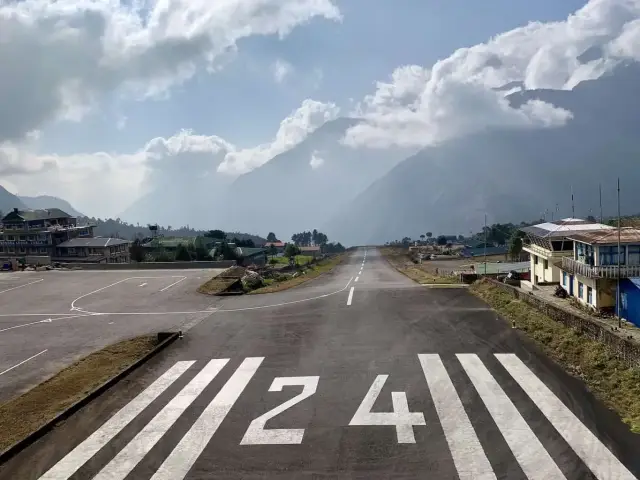
The pivotal Tenzing Hillary Airport in Lukla, known to be a gateway for those venturing to the Khumbu region and the majestic Sagarmatha (Mount Everest), saw its operations halted. Bad weather stopped flights for six days in a row.
Such interruptions during Autumn - the busiest time for the airport, given its proximity to the base camp of the world's highest mountain - magnified the problem. Many tourists expecting a flight from Ramechhap Airport to Lukla had to change their plans.
Seeking Alternatives Amidst The Chaos
With the spirit of adventure burning bright, many tourists turned to alternative solutions. Instead of waiting indefinitely for their flight to Lukla, several took flights to Phaplu Airport. For others, the journey became a road trip, with jeeps taking them to Phaplu, from where they embark on hikes to continue their journey.
However, not all stories have a workaround. Several travellers had to sadly call off their treks due to time constraints. Tour operators found themselves in the difficult position of trying to accommodate their clients amidst these uncertainties.
Airlines Adapt and Respond
In response to the weather challenges, airlines adjusted their operations. After a two-day halt at Ramechhap Airport, flights were redirected to Phaplu Airport. This alternative not only offers tourists a solution but also shortens the distance to Lukla from Ramechhap. Local reports counted about eight flights to Phaplu in a single day.
Meteorologists in Kathmandu reported "dense cloud coverage and intensified gusts" lasting several days, which raised the risks for flights operating small fixed-wing aircraft.
The Ripple Effect on Tour Operators and Local Business
The disruption hit more than tourists. Tour operators faced anxious clients and reshuffled logistics, and helicopters struggled with the same weather. "Private helicopter services remain limited, with their pricing structures proving prohibitive for the average budget-conscious adventurer," stated Ajay Kumar Shrestha, Founder of Swotah Travel, who has run hiking trips in the Everest region since 2012.
Hotels around Ramechhap Airport, which can hold about 350 tourists at a time, filled up as cancellations left people waiting.
What the 2023 Shutdown Teaches
Tourism to Nepal kept growing after 2023, with more than a million international visitors a year, so flight queues in peak season are getting longer, not shorter.
The October 2023 shutdown ended, as they all do, and trekkers flew on to Lukla within the week.
Why Lukla Flights Get Disrupted So Often
Tenzing-Hillary Airport sits at 2,845 m on a sloping shelf above the Dudh Koshi valley, with a 527-metre runway that ends in a wall of mountain. Flights operate only in clear daylight under visual flight rules, so morning fog, afternoon cloud build-up, or wind anywhere along the route stops everything. Even in the prime October-November and March-May windows, a day or two of cancellations per week is normal, and during the monsoon, multi-day gaps are routine. Add to this the Manthali shuffle: in peak seasons, most Lukla flights operate not from Kathmandu but from Manthali (Ramechhap), a four- to five-hour drive from the capital, to ease congestion at Tribhuvan airport.
Your Alternatives When Flights Stop
When the fixed-wing fleet is grounded, you still have options. Helicopters often fly in marginal weather that stops planes. A shared seat to or from Lukla typically costs around USD 500 per person, more when demand spikes. Flying to Phaplu instead adds two to three days of walking (or a jeep ride to Surke followed by a short walk up to Lukla) but keeps the trek alive. The full overland option, a jeep from Kathmandu to Surke, has become genuinely practical since the road reached Surke in January 2025. See our guide on how to get to Lukla without flying.
Lukla Flight Disruption Risk by Month
A general pattern from past seasons, not a forecast. Even in a low-risk month, a single cloudy morning can stop flights.
| Month | Disruption risk | Why |
|---|---|---|
| January | Moderate | Clear days, but morning fog and the odd snowfall |
| February | Moderate | Cold, with snow some days |
| March | Moderate | Spring haze builds in the afternoons |
| April | Moderate | Busy season, afternoon cloud |
| May | Moderate | Pre-monsoon cloud increases late in the month |
| June | High | Monsoon cloud and rain |
| July | High | Peak monsoon, multi-day gaps |
| August | High | Peak monsoon, multi-day gaps |
| September | High | Monsoon clears late in the month |
| October | Moderate | Mostly clear, but late storms happen, as in 2023 |
| November | Low | Most stable weather of the year |
| December | Low | Clear and cold, fewer flights |
What to Do If Your Lukla Flight Is Cancelled
- Stay calm and stay close. Airlines rebook cancelled passengers in order, usually on the first flights the next morning.
- Ask your agency about a shared helicopter seat. When planes can't fly, helicopters sometimes can, and seats fill fast.
- If you're flying in and the delay runs past two days, consider the jeep to Surke, or shorten your trek, for example to Namche and Tengboche.
- If you're flying out, tell your agency your international flight date at once so they can prioritise you.
- Keep every receipt. Insurance with trip-delay cover pays for extra nights and rebooked flights.
How to Build a Disruption-Proof Itinerary
Three rules cover most situations. First, build at least two buffer days between your trek's end and any international flight. The airlines will rebook you on the next available seat, but in peak season that queue can be days long. Second, buy travel insurance that covers trip delays and helicopter evacuation, and keep enough cash or credit to self-rescue if you choose not to wait. Third, treat the disruption risk seasonally: it is lowest from late October to early December, moderate in spring, and high in the monsoon. Our guides to Lukla airport and the best time for the Everest Base Camp trek cover the planning side in detail.
Lukla Flight Delays: FAQs
How often are Lukla flights cancelled?
Often enough that you should plan for it. In peak season a day or two of delay is common, and in the monsoon flights can stop for several days in a row.
Why do Lukla flights leave from Ramechhap?
To ease congestion at Kathmandu's airport, most Lukla flights in spring and autumn operate from Manthali (Ramechhap), a four to five hour drive from Kathmandu. Outside those seasons they usually leave from Kathmandu.
How many buffer days do I need for the Everest Base Camp trek?
At least two between the end of your trek and your international flight. Our 14-day itinerary builds in time in Kathmandu, and we can add more on request.
Does travel insurance cover Lukla flight delays?
Only if your policy includes trip delay or missed connection cover. Check the wording, and keep receipts for extra hotel nights and rebooked flights.