


Nepal raised its climbing royalties on 1 September 2025. A foreign climber now pays USD 15,000 for Everest's normal route in spring, USD 7,500 in autumn and USD 3,750 in winter or summer. Trekking peaks below 6,500 m, such as Island Peak, Mera and Lobuche East, cost USD 350 in spring and USD 175 in the other seasons. Other 8,000 m peaks are USD 3,000 in spring. Then add a refundable garbage deposit, from USD 500 on a small Khumbu peak to USD 4,000 on Everest, plus park fees and insurance. Your agency files everything. And 97 remote peaks in Karnali and Sudurpaschim carry no royalty at all until about August 2027.
- Rates in force since1 September 2025
- Everest, springUSD 15,000 (was 11,000)
- Peaks under 6,500 mUSD 350 spring, 175 other seasons
- Other 8,000 m peaksUSD 3,000 spring
- Issued byDepartment of Tourism or NMA, via an agency
- Royalty-free97 peaks, Aug 2025 to about Aug 2027
Climbing a peak in Nepal requires a permit, and the cost runs from about USD 350 for an NMA trekking peak like Island or Mera to USD 15,000 for Mount Everest. Nepal revised its climbing royalties in September 2025, so several fees rose, while 97 newly opened peaks are currently royalty-free. This guide sets out the 2026 permit costs by peak and season, the documents you need, and how to apply.
Peak climbing in Nepal allows one to explore the high Himalayas, experience nature, push personal limits, and gain physical fitness. Whether you are an experienced climber or a beginner looking to try something new, peak climbing in Nepal can be an exciting and rewarding experience. However, before taking on a peak climbing adventure, there are some essential things to know and prepare for.
Aspiring peak climbers must obtain a permit to climb specific peaks in Nepal legally. This blog will discuss the requirements for peak climbing permits and the cost of peak climbing permits in Nepal.
Peak Climbing Permits And Cost In Nepal
The Government of Nepal has issued a set of rules and regulations for peak climbing in Nepal. It is for climbing the mountains that are listed under the section of Appendix '1.' The Government of Nepal first issued the Mountaineering Expedition Regulations in 1979 and has amended them several times since, most recently with the royalty revision that took effect in September 2025.
As per the regulation, any mountaineer or team wanting to climb the major expedition peaks needs a permit from the Department of Tourism, while the Nepal Mountaineering Association (NMA) issues permits for its listed trekking peaks such as Island Peak, Mera, and Lobuche East. They need to send an application to climb the mountain in the form mentioned in the regulation of Appendix 2. If approved, the permit covers a set climbing period for that peak and season, and your operator confirms the exact dates.
Expedition-peak permits are processed through the Department of Tourism in Kathmandu, and trekking-peak permits through the NMA office. Your registered operator handles the paperwork in either case.

What are the Peak permit Costs of Nepal?
The permit cost of peaks differs from season to season in Nepal. All the rates on this page are the ones in force since 1 September 2025, when Nepal raised royalties for almost every height band. While the Spring and Autumn seasons are the peak season of climbing, the price is higher than in the summer and winter seasons.
Similarly, the cost also differs from one peak to another. If climbing Mount Everest, you must be prepared to make more expenses than climbing other mountains. The permit cost is also relatively higher than others. To obtain the climbing license in spring for Everest, you now need to pay USD 15,000 (raised from 11,000 in September 2025). A fee of USD 7,500 applies in autumn, while winter and summer cost USD 3,750. The 2025 rule changes also raised the insured sum for Nepali guides and expedition staff to NPR 2 million each, up from NPR 500,000. A draft went further and proposed NPR 5 million of death-and-repatriation cover for climbers, so ask your operator exactly what your policy must include.
The NMA trekking peaks are far cheaper than an Everest expedition. After the 2025 royalty revision, the popular trekking peaks under 6,500 m, such as Mera, Island and Lobuche East, cost USD 350 per climber in spring and USD 175 in autumn, winter and summer, up from USD 250, USD 125 and USD 70. NMA peaks above 6,500 m, such as Chulu East, sit in a higher band of around USD 500 in spring. Even at the new rates, the gap between a trekking peak and Everest is enormous.
Nepal Climbing Royalties for Foreign Climbers (from 1 September 2025)
These are the per-person royalties for a foreign climber, in US dollars, with the pre-2025 rates beside them. Spring runs March to May, autumn September to November. Winter and summer share one rate. Manaslu is the odd one out. Autumn, its busiest season, costs twice the spring rate.
| Peak or height band | Spring | Autumn | Winter and summer | Old rate (spring / autumn / winter-summer) |
|---|---|---|---|---|
| Everest, normal (South Col) route | 15,000 | 7,500 | 3,750 | 11,000 / 5,500 / 2,750 |
| Everest, other routes | 10,000 | 5,000 | 2,500 | n/a |
| Other 8,000 m peaks (not Everest or Manaslu) | 3,000 | 1,500 | 750 | 1,800 / 900 / 450 |
| Manaslu (8,163 m) | 1,500 | 3,000 | 1,500 | n/a |
| 7,501 to 7,999 m | 1,000 | 500 | 250 | 600 / 300 / 150 |
| 7,001 to 7,500 m | 800 | 400 | 200 | 500 / 250 / 125 |
| 6,501 to 6,999 m (not Ama Dablam) | 500 | 250 | 200 | 400 / 200 / 100 |
| Ama Dablam (6,812 m) | 1,000 | 1,000 | 500 | 400 / 400 / 200 |
| Below 6,500 m, incl. NMA trekking peaks | 350 | 175 | 175 | 250 / 125 / 70 |
Rates as published in the Department of Tourism schedule effective 1 September 2025 and reported by the Kathmandu Post (January 2025) and Nepal operators. "n/a" means we could not confirm the old figure. A few agency pages still show the pre-2025 table, so if a quote looks cheap, ask which year it uses.
Spring Royalty: New Rate vs Old Rate
Everest sits far off this scale at USD 15,000, so it is left out. Dark bars are the 2025 rates. Pale bars are the old ones.
| Band | New vs old (spring) | Fee |
|---|---|---|
| Other 8,000 m peaks | USD 3,000 was USD 1,800 | |
| Manaslu (autumn is the dearer season) | USD 1,500 was n/a | |
| 7,501 to 7,999 m | USD 1,000 was USD 600 | |
| Ama Dablam | USD 1,000 was USD 400 | |
| 7,001 to 7,500 m | USD 800 was USD 500 | |
| 6,501 to 6,999 m | USD 500 was USD 400 | |
| Below 6,500 m | USD 350 was USD 250 |
Royalties for Nepali Climbers
Nepali citizens pay royalties in rupees, at far lower rates. On Everest's normal route the spring fee doubled from NPR 75,000 to NPR 150,000 under the 2025 revision, according to the Kathmandu Post. One wire report ties the NPR 150,000 figure to autumn instead, so confirm the season. The other bands were revised too. We have taken down the old rupee table because it mixed pre- and post-2025 figures, and the NMA or the Department of Tourism can give the current rate for a named peak.
Garbage Deposit and Other Fixed Costs
Every team also pays a refundable garbage deposit. It comes back once officials confirm the team carried its waste down. In the Khumbu and Annapurna ranges the deposit depends on the peak:
| Peak | Deposit | USD |
|---|---|---|
| Everest | USD 4,000 | |
| Other peaks over 8,000 m | USD 3,000 | |
| 7,001 to 8,000 m, and Ama Dablam | USD 2,000 | |
| 6,501 to 7,000 m | USD 1,000 | |
| Below 6,500 m | USD 500 |
Other regions use a different scale, so check with your operator. Peaks below 6,500 m need no government liaison officer. On top of the royalty you pay park or conservation-area entry and any local municipality fee. For Island Peak or Lobuche that means the Sagarmatha National Park permit (NPR 3,000) and the Khumbu card (NPR 3,000). Mera adds the Makalu Barun park fee. Since 27 February 2024 Everest climbers also rent a tracking chip for about USD 10 to 15.
2025 Climbing Rules That Come With the Permit
The Sixth Amendment to the mountaineering regulations, gazetted in February 2025, banned solo climbs on Everest and the other 8,000 m peaks. Teams there now need one guide for every two climbers. On lower peaks every team still needs at least one guide, and all permits go through a registered agency. A 2025 tourism bill also proposed that Everest climbers first summit a 7,000 m peak in Nepal. That rule had not been passed by October 2026.
Royalty-Free Climbing on 97 Peaks (2025 to 2027)
Alongside the fee rises, the cabinet waived the climbing royalty on 97 peaks for two years from August 2025. Seventy-seven are in Karnali Province and 20 in Sudurpaschim, ranging from about 5,870 m to 7,132 m, among them Saipal, Api and Kanjiroba. The aim is to ease congestion on Everest and draw climbers into Nepal's poorer far west. The peak royalty is free on these mountains during the window, though you still pay for a guide, logistics, rescue insurance and any conservation or local-government permits. Ask your operator which of the 97 peaks suit your dates and experience, and see our guide to the 97 free peaks.
Documents Required To Obtain Peak Climbing Permits In Nepal
-
Passport-sized Photos
-
Copies of your valid passport
-
Copies of your valid visa
-
The royalty payment (foreign climbers pay in US dollars through their agency)
-
Application forms
-
Insurance that covers helicopter rescue at your peak's altitude
What to Know Before You Go: Peak Climbing in Nepal?
Before a peak climb in Nepal, you need a few things in order. The climbers are suggested to ensure they have all the necessary permits and visas. Without them, you cannot legally climb any listed peak in Nepal, so choose the right company and guide to help you through the process.
Besides that, your physical and mental fitness also matters in peak climbing in Nepal. It would help to be prepared to take on any challenges throughout the climb. If you are new to peak climbing, always hire a professional guide and do not attempt the climb alone. Since 2025 the rules require a guide on every team anyway.
Also, you should be donned in suitable clothing and have proper gear when climbing the peak. Warm clothes are recommended, while wind-resistant jackets, thermals, and sleeping bags are the most needed during your climb.
Also, climbing gear like sturdy boots, crampons, axes, duffle bags, and others are required.
Accommodation is simple once the climb begins. On trekking peaks such as Island Peak or Mera, teahouses cover the walk in, and tents take over from base camp up. Your operator supplies the camping kit and food for those nights.
Safety comes first on any peak climb in Nepal. As said earlier, you should hire a professional guide so that they will be able to provide advice and guidance on the best routes and safety measures. Obtaining all the necessary safety gear, such as helmets, harnesses, ropes, etc., is also essential before the climb. Also, you should always carry first aid kits, emergency oxygen, and other immediate medical supplies. Finally, monitoring the weather conditions closely is essential, as storms can come up quickly and cause danger on the mountain.
Getting Your Peak Permit
A permit is required to climb any listed peak in Nepal legally. To obtain a peak climbing permit, applicants must meet specific eligibility requirements and provide the required documents. The cost of peak climbing permits varies depending on several variables, including the time frame of the expedition, the number of participants, the season, and the peak.
Your registered operator submits the application and documents to the Department of Tourism in Kathmandu for expedition peaks, or to the NMA for its trekking peaks. You never queue at the office yourself.
Peak climbing in Nepal is an incredible experience that offers world-class views and unforgettable memories. With proper preparation, climbers can get a peak climbing permit without much trouble and climb safely and legally.
Ready to Climb?
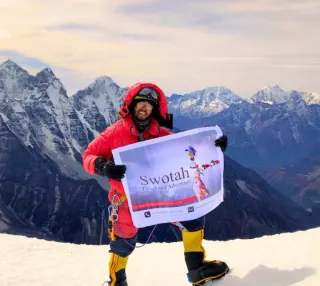
Swotah Travels is a licensed operator for Nepal peak climbing expeditions. We handle permits, logistics, experienced guides, and equipment support for popular peaks including Island Peak, Mera Peak, and Lobuche Peak. Contact our team to start planning your climb.
Peak Climbing Permits in Nepal: FAQs
How much is an Everest climbing permit in 2026?
USD 15,000 per foreign climber on the normal South Col route in spring, USD 7,500 in autumn and USD 3,750 in winter or summer. Other routes cost USD 10,000 in spring. Nepali climbers pay NPR 150,000 on the normal route in spring. Add the USD 4,000 garbage deposit, which is refundable.
How much does an Island Peak or Mera Peak permit cost?
USD 350 in spring and USD 175 in autumn, winter or summer, since both are below 6,500 m. The garbage deposit is USD 500. You also need the trekking permits for the area: the Sagarmatha National Park permit and Khumbu card for Island Peak, and the Makalu Barun park fee for Mera.
Can I climb a peak in Nepal without a guide?
No. Since February 2025, teams on 8,000 m peaks need one guide for every two climbers, and every team on a lower peak needs at least one guide. Permits are only issued through a registered agency.
Which peaks in Nepal are free to climb?
The 97 peaks in Karnali and Sudurpaschim provinces whose royalty was waived for two years from August 2025. You still pay for a guide, logistics, insurance and any local permits.
Is the garbage deposit refundable?
Yes. It is returned once officials confirm your team brought its waste back down. The amount runs from USD 500 below 6,500 m to USD 4,000 on Everest in the Khumbu and Annapurna ranges.