


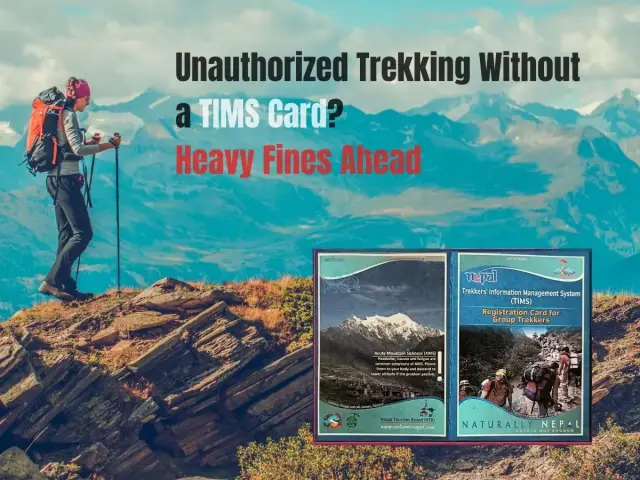

Since 1 April 2023, Nepal no longer gives TIMS cards to independent trekkers. You can only get one through a registered trekking agency, and in the 14 regions on the Nepal Tourism Board's list you must walk with a licensed guide. The card costs NPR 2,000, or NPR 1,000 for SAARC citizens. A trekker caught on those trails without a guide or TIMS card can be fined NPR 12,000 and stopped. Two big exceptions. The Everest region doesn't use TIMS at all, and restricted areas such as Manaslu, Upper Mustang and Kanchenjunga use a Restricted Area Permit instead.
- TIMS feeNPR 2,000 (about USD 13)
- SAARC citizensNPR 1,000
- Where to get itOnly through a registered agency
- Guide requiredYes, on listed routes outside the Khumbu
- Fine for trekkersNPR 12,000 and the trek stopped
- Fine for agenciesNPR 10,000 per trekker
- Not needed inEverest region and restricted areas
- ExemptClimbers with a permit, children under 10, heli visitors
Can you trek in Nepal without a TIMS card? In most of the country, no. The 336th executive committee meeting of the Nepal Tourism Board, held in April 2023, implemented the "Tourist Information Management System (TIMS) Regulations 2079", and those rules were still in force in October 2026.
Under these rules, the Free Individual Trekkers (FIT) TIMS card was abolished with effect from 1 April 2023. On the routes covered by the rule, every trekker must take a licensed trekking guide and get the TIMS card through a registered trekking company.
The Trekking Agencies' Association of Nepal (TAAN) welcomed the move. Its chairperson at the time, Nilhari Bastola, said he was confident that the new guidelines related to the Trekkers’ Information Management System (TIMS) will make trekking and mountaineering tourism in the country safer and more secure.
The Trekking Agencies Association of Nepal (TAAN) has been advocating for policy reforms to make mountain tourism safe, regulated, business-friendly, employment-oriented, and sustainable through cooperation with various stakeholders for a long time.
The Fine for Trekking Without a TIMS Card
Foreign tourists can be fined if they are found trekking in one of the listed regions without a TIMS card and a trekking guide. The Nepal Tourism Board also doubled the TIMS fee for trekkers in organised groups, from NPR 1,000 to NPR 2,000.
Under the 2023 rules, a trekker found in a listed region without a TIMS card or a guide can be fined NPR 12,000 (about USD 78) and stopped from continuing the trek.
A trekking company that sends trekkers into these regions without TIMS cards faces a fine of NPR 10,000 (about USD 65) per trekker.
How strictly is this checked? It depends on the trail. TIMS cards are checked at park and conservation-area checkposts, such as the ACAP posts on the Annapurna routes. In 2023 trekking operators told ExplorersWeb that some TIMS checkpoints had not reopened after the pandemic, so enforcement was patchy. Don't plan around that. If you book with a registered agency, the agency gets the card for you and the guide carries the paperwork.
How Much Does a TIMS Card Cost in 2026?
Before April 2023, independent trekkers from outside SAARC paid NPR 2,000 for a TIMS card and trekkers in an agency group paid NPR 1,000. Now every foreign trekker pays NPR 2,000 (about USD 13).
Trekkers from SAARC countries pay NPR 1,000 (about USD 7).
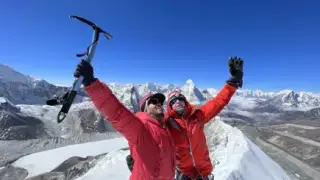
Climbers who hold a mountaineering or trekking-peak permit don't need a TIMS card, but they must carry the climbing permit.
Tourists who travel by helicopter to the trekking area and return by the same means are also exempt from purchasing TIMS. Those who go for trekking or return by other means are required to purchase TIMS.
Children under 10 don't need a TIMS card. Everyone else trekking in the listed regions, the Everest region aside, has to walk with a licensed guide.
TIMS Fees and Fines at a Glance
Fees and fines set by the Nepal Tourism Board in April 2023. No change to these amounts had been announced by October 2026.
| Item | Compared with the NPR 12,000 fine | Amount |
|---|---|---|
| TIMS card, foreign trekker | NPR 2,000 | |
| TIMS card, SAARC citizen | NPR 1,000 | |
| Before April 2023, trekker in a group | NPR 1,000 | |
| Before April 2023, independent trekker | NPR 2,000 | |
| Fine for a trekker without TIMS or guide | NPR 12,000 | |
| Fine for an agency, per trekker | NPR 10,000 |
Regions on the 2023 TIMS and Guide List
From 1 April 2023, trekkers visiting specific protected areas in Nepal must be accompanied by a licensed trekking guide and possess a trekking agency-issued TIMS card.
The guidelines contain a list of 44 trekking trails in Kanchenjunga, Makalu Barun, Everest, Rolwaling, Panchpokhari Bhairabkunda, Helambu, Langtang, Ganesh Himal-Ruby Valley, Manaslu, Annapurna, Mustang, Dhaulagiri, Dolpa and Humla where trekkers must be accompanied by a guide.
The following trekking regions and routes were named in the 2023 list. Two groups work differently in practice, the Everest region and the restricted areas, as explained in the next section.
|
Trekking Region |
Name of the Trek |
|
Kanchenjunga Region |
1. Kanchenjunga Base Camp via Sele La Pass Trek 2. Kanchenjunga Basecamp Trek 3. Kanchenjunga Base Camp Nango Pass Trek 4. Lumba Sumba Pass Trek |
|
Makalu Barun Area |
1. Makalu Basecamp Trek 2. Sherpani Col Pass Trek |
|
Everest Region |
1. Everest Basecamp Trek 2. Gokyo Trek 3. Cho La Pass Trek 4. Gokyo Renjo La Pass Trek 5. Three Passes Trek 6. Everest View trek 7. Mera Peak Trek 8. Amphu Labtsha Pass |
|
Rolwaling Region |
1. Rolwaling Trek 2. Tashi Labtsha Pass Trek |
|
Panchpokhari Bhairabkunda Area |
Panchpokhari Trek |
|
Helambu Region |
1. Helambu Trek 2. Gosaikunda Trek |
|
Langtang Region |
1. Langtang Trek 2. Langtang Gosaikund Trek 3. Tamang Heritage Trek 4. Tamang Heritage Langtang Trek 5. Ganja La pass Trek 6. Tilman Pass |
|
Ganesh Himal-Ruby Valley Area |
Ganesh Himal - Ruby Valley Trek |
|
Manaslu Region |
1. Manaslu Circuit Trek 2. Manaslu - Tsum Valley Trek 3. Tsum Valley Trek |
|
Annapurna Region |
1. Annapurna Circuit Trek 2. Nar Phu Annapurna Circuit Trek 3. Mesokanto / Tilicho Pass Trek 4. Poon Hill-ABC Trek 5. Khopra Trek 6. Mardi Himal Trek 7. Sikles Tara Hill Trek |
|
Mustang Region |
1. Upper Mustang Trek 2. Saribung Pass Trek |
|
Dhaulagiri Region |
Round Dhaulagiri |
|
Dolpo Region |
1. Upper Dolpo - Jomsom Trek 2. Upper Dolpo Trek 3. Lower Dolpo Trek 4. Kagmara Pass Trek |
|
Humla Region |
Humla Limi Valley Trek |
Planning a trek? First check whether your route needs a guide and a TIMS card. If it does, a government-registered trekking agency has to arrange both.
Where You Do Not Need a TIMS Card
There are two big exceptions to the system. The Everest region scrapped TIMS entirely: the Khumbu Pasang Lhamu Rural Municipality collects its own local entry fee (NPR 3,000, or NPR 2,000 for SAARC citizens) alongside the NPR 3,000 Sagarmatha National Park permit, and solo trekkers are still welcome there without a guide. Restricted areas such as Manaslu, Upper Mustang, and Upper Dolpo work differently too: they use their own Restricted Area Permits issued by the Department of Immigration, and a registered guide has long been compulsory there regardless of TIMS. Since a Department of Immigration notice in March 2026, a single trekker can apply for a restricted area permit alone, but the licensed guide is still required. For everything else, from Langtang to the Annapurna Circuit, budget for the TIMS card and a licensed guide, and read our guides on the solo trekking rule and how to hire a guide in Nepal before you fly.
TIMS Card Rules by Region (October 2026)
| Region | TIMS card? | What you need |
|---|---|---|
| Everest (EBC, Gokyo, Three Passes) | Not used | Khumbu municipality card NPR 3,000 plus Sagarmatha National Park permit NPR 3,000 |
| Annapurna (ABC, Circuit, Poon Hill, Mardi Himal) | Yes | TIMS plus ACAP NPR 3,000, with a licensed guide |
| Langtang, Helambu and Gosaikunda | Yes | TIMS plus the Langtang National Park permit, with a licensed guide |
| Manaslu Circuit and Tsum Valley | RAP instead | Restricted Area Permit plus MCAP and ACAP |
| Upper Mustang | RAP instead | Restricted Area Permit USD 50 a day plus ACAP |
| Kanchenjunga | RAP instead | Restricted Area Permit USD 20 a week plus KCAP NPR 2,000 |
| Climbing peaks with an NMA permit | Not needed | The climbing permit covers it |
Permit details for the restricted areas follow our guides to Manaslu, Upper Mustang and Kanchenjunga. For every permit in one place, see our guide to trekking permits in Nepal.
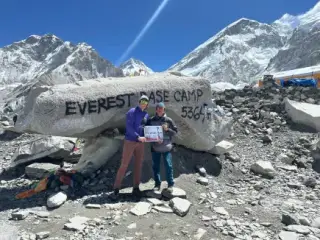
When the rules came in, local authorities in the Everest region and others objected, arguing that the guideline unfairly restricted foreigners' freedom of movement. The Khumbu Pasang Lhamu Rural Municipality kept its own system, which is why trekkers heading to Everest Base Camp still buy the municipality card instead of a TIMS card.
TAAN argued that the TIMS fee rise was necessary to provide a secure environment for trekkers, as the money would be used to maintain trekkers' checkpoints. Despite the criticism, TAAN has stood by the system, saying it serves both the country and its trekkers.
TIMS Card FAQs
Can I still get a TIMS card on my own?
No. Since 1 April 2023 the card is issued only through registered trekking agencies, and it comes with the requirement to walk with a licensed guide.
Do I need a TIMS card for Everest Base Camp?
No. In the Khumbu you pay the Khumbu Pasang Lhamu Rural Municipality fee of NPR 3,000 and the NPR 3,000 Sagarmatha National Park permit instead. A guide is not enforced there in 2026, though most trekkers still take one.
How much is the fine for trekking without a TIMS card?
NPR 12,000 per trekker, and you can be stopped from continuing. Agencies face NPR 10,000 per trekker. These amounts come from the Nepal Tourism Board's April 2023 rules as reported by The Himalayan Times, and checks vary from one checkpost to the next.
Who doesn't need a TIMS card?
Climbers with a mountaineering or trekking-peak permit, children under 10, and visitors who fly into a trekking area by helicopter and fly back out the same way.
Do restricted areas need a TIMS card?
On Manaslu, Upper Mustang and Kanchenjunga the Restricted Area Permit takes its place. Since March 2026 one trekker can apply for that permit alone, but a licensed guide is still compulsory.