
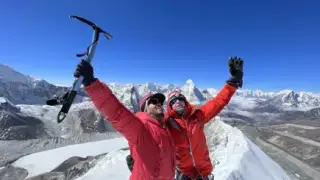
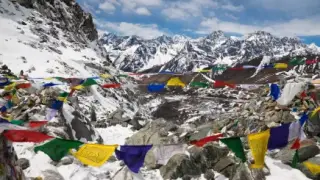

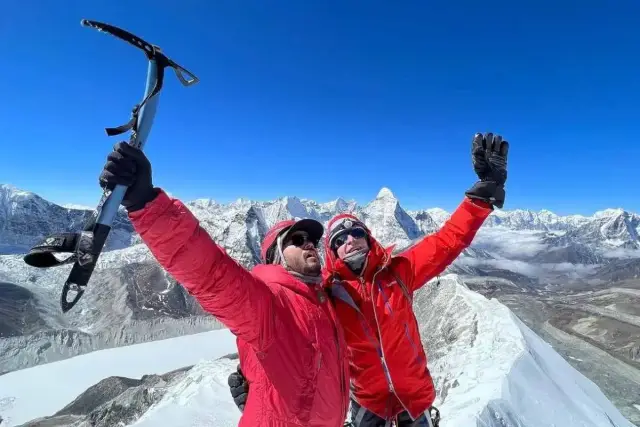

Nuptse (7,861 m) is one of the hardest climbs in the Everest region. Fewer than 40 people had stood on its true summit by the end of 2024, according to the Himalayan Database. Everest had 13,737 summits by the end of 2025. Every route is steep mixed rock, snow and ice, the top is a corniced knife-edge ridge, and an expedition takes about six weeks. You need earlier climbs above 6,000 m and solid rope skills. Trekkers can still see the whole Nuptse wall from Everest Base Camp and Kala Patthar.
- Height7,861 m (25,791 ft)
- Location2 km west-southwest of Everest
- NameTibetan for "west peak"
- First ascent16 May 1961, Dennis Davis and Tashi Sherpa
- SummitersFewer than 40 by end of 2024
- Expedition lengthAbout 6 weeks (Swotah: 43 days)
- Where to see itEverest Base Camp and Kala Patthar
Are you a professional climber and looking for your next climbing gig? If yes, consider climbing Mount Nuptse, for it will be the adventurous climb of your life. Like Mount Everest and other famous peaks, Mount Nuptse also offers a test of your climbing techniques through several natural barriers. So if you are daring enough to take the risks of the mountains in Nepal, you should probably try climbing Mount Nuptse.
Mt. Nuptse, located in the Khumbu region of Nepal, is situated at a height of 7,861 meters above sea level. It is considered one of the most challenging mountains to climb, with its steep slopes and icy ridges. It would help if you were in great physical shape to climb this mountain and have strong mental endurance because it can get freezing at night, and there are no trees or plants for shelter. There are also crevasses you must be careful not to step on when walking around on the snow or ice.

So, have you ever thought about climbing Mt Nuptse? If you're game to try, then this article is for you. It will go through the difficulty of climbing Mt Nuptse and what it entails. Please find out how difficult it is, as well as how to start training for a climb!
You might have done a little research, but the information is all over the place. Some sources say it's a challenging climb, while others claim it's not as rugged as other mountains in the area. You need to figure out who to believe.
This article will give you the straight dope on Mt. Nuptse.
We'll talk about what makes this climb difficult or easy, and we'll give you tips on how to make the ascent go as smoothly as possible.
Overview of Mt. Nuptse
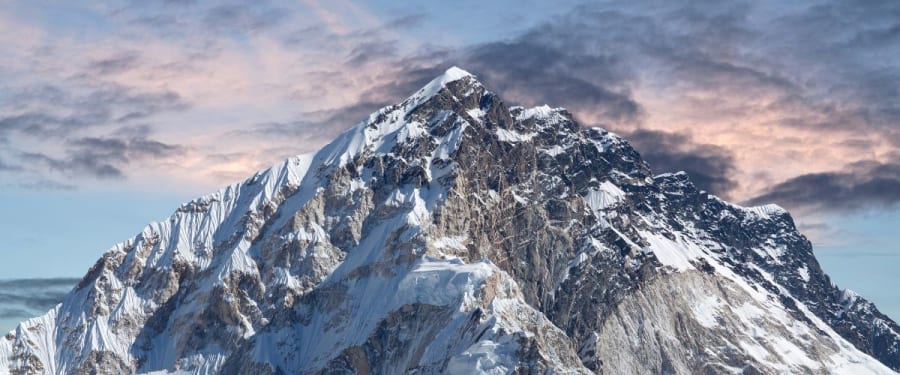
Mt. Nuptse is one of the best-known mountains in the Everest region, because its wall fills the view from Everest Base Camp. It towers 7,861 meters (25,791 feet) and is part of the Everest Massif in the Himalayas. Despite its proximity to Mt. Everest, Nuptse is rarely climbed: first climbed on 16 May 1961 by Dennis Davis and Tashi Sherpa of a British expedition led by Joe Walmsley, it had fewer than 40 summiters by the end of 2024, according to the Himalayan Database, because the climbing is far more technical than the standard route on Everest itself.
The climb to the summit of Mt. Nuptse is no joke. It is a difficult and dangerous climb: a full expedition typically takes four to six weeks including acclimatization. There is no marked line on the upper mountain, and fixed ropes are only there if your team puts them in, so route-finding is part of the climb, and there are many areas where a wrong step could mean a fatal fall.
Why Nuptse Is Harder Than It Looks
Nuptse sits 2 km west-southwest of Everest, at the western end of the Lhotse-Nuptse massif, and its name is Tibetan for "west peak". From Everest Base Camp it blocks the view of Everest's summit. The huge wall you photograph from the tents is Nuptse.
Every route up it is technical. The North Ridge starts from Camp 2 in the Western Cwm, the camp Everest and Lhotse climbers share, but its steep mixed sections go well beyond anything on Everest's normal route. The south face lines are serious alpine climbs. Then comes the summit. It's a corniced knife-edge ridge, and plenty of climbers have stopped at a shoulder just short of the true top, which partly explains the tiny summit count.
Nuptse and Its Neighbours
Bars start at 5,000 m so the differences show.
| Peak or point | Height (bars from 5,000 m) | Metres |
|---|---|---|
| Everest | 8,848.86 m | |
| Lhotse | 8,516 m | |
| Nuptse | 7,861 m | |
| Ama Dablam | 6,812 m | |
| Island Peak | 6,189 m | |
| Kala Patthar | 5,545 m | |
| Everest Base Camp | 5,364 m |
Nuptse Climbing History: Key Dates
| Date | What happened |
|---|---|
| 16 May 1961 | First ascent by Dennis Davis and Tashi Sherpa of a British expedition led by Joe Walmsley. Chris Bonington, Les Brown, James Swallow and Pemba Sherpa reached the top the next day. |
| 1975 | Four climbers from a joint British Army and Royal Nepalese Army expedition died in falls while trying for the second ascent. |
| 19 Oct 1979 | Second ascent, by Georges Bettembourg, Doug Scott, Alan Rouse and Brian Hall. |
| 2013 | Kenton Cool and Alex Txikon reached the summit without bottled oxygen. |
| 2017 | Helias Millerioux, Frederic Degoulet and Benjamin Guigonnet opened a new route on the south face. |
| 8 May 2023 | A Madison Mountaineering team led by Garrett Madison made the first fully guided ascent, with fixed ropes and bottled oxygen. |
| 12 May 2025 | Jay Whiting and Dawa Tenji Sherpa summited. It was Dawa Tenji's third ascent, the most by anyone. |
Sources: Wikipedia, the Himalayan Database and ExplorersWeb (June 2025).
What to Consider Before Taking on Mt. Nuptse?
So you've decided to take on the challenge of Mt. Nuptse. Good for you! But before you start the tour and pack your bags, there are a few things you need to consider.
Mt. Nuptse is a challenging climb, and it's essential to be adequately prepared before starting. You'll need to be in excellent physical condition and have plenty of experience climbing steep snow, ice and mixed rock at altitude. The expedition can take anywhere from 30 to 45 days, so you'll also need to be well-equipped with camping gear, food, and water.
You also should think of getting help and support - so hiring a guide is a better idea. With the help of your guide, you will get 24/7 support while climbing the mountain. Whether or not you are an experienced climber, you will need a hand since no one knows what happens to you on a solo expedition. Since Mount Nuptse might not be everyone's cup of tea, your guide can make it worthwhile and easier to summit the peak.
In addition, we suggest you have insurance. You can have medical, life, and travel insurance during your stay in Nepal. Check that your policy covers helicopter rescue up to 7,861 m, because many trekking policies stop at 6,000 m. Insurance ensures compensation if anything tragic happens to you during your expedition.
And last but not least, you'll need to have a sound understanding of mountaineering safety procedures and execute them flawlessly under challenging conditions. This is not a climb for the faint of heart – it will require determination, skill, and a lot of hard work.
Are you up for the challenge?
Nuptse Permit and Royalty
Nuptse falls in Nepal's 7,501 m to 7,999 m royalty band. Before 1 September 2025 a foreign climber paid USD 600 in spring and USD 300 in autumn. Nepal raised mountaineering royalties on that date, and operators now quote about USD 1,000 for spring and USD 500 for autumn, so confirm the figure with your expedition organiser before you budget. The walk in also needs the Khumbu municipality card (NPR 3,000) and the Sagarmatha National Park permit (NPR 3,000).
How to Build Up to Nuptse
Most climbers who reach Nuptse's summit have several Himalayan expeditions behind them. Swotah's own trip notes ask for previous expedition experience above 6,000 m. A sensible order looks like this.
| Step | Climb or trek | Height | What it teaches you |
|---|---|---|---|
| 1 | Everest Base Camp and Kala Patthar | 5,545 m | Weeks at altitude, cold nights, how your body acclimatises |
| 2 | Island Peak or Lobuche East | 6,189 m / 6,119 m | Crampons, fixed ropes, jumar and abseil |
| 3 | A technical 6,500 m to 7,000 m peak, such as Ama Dablam | 6,812 m | Steep mixed climbing and several high camps |
| 4 | Nuptse | 7,861 m | Long technical days above 7,000 m and a corniced summit ridge |
Essential Gear for Your Nuptse Climb
Without proper gear, Nuptse's expedition is not possible, so you will need to ensure that you have the right gear for your Mt. Nuptse climb. Since temperatures can fall to -30 degrees Celsius or lower high on the mountain, you must be careful taking warm clothes and the right gear when you start the expedition.
Similarly, the steep landscape makes your adventure risky. So having quality equipment with you makes your trip worthwhile and safe. If you are confused about how to get gear and equipment, let us help you.
Here's a list of essentials that you won't want to be without:
-
Goggles or sunglasses: The sun is incredibly bright up there, and you'll want to protect your eyes.
-
Sunscreen: The higher altitude means the sun is more intense, so slather it on thick.
-
Warm Clothes: The temperature plunges far below freezing once the sun goes down, so warm clothes are a must-have. Thermal clothes, winter jackets, and wind-proof outfits are some of them.
-
Mountaineering boots: You'll need insulated double or triple boots that take crampons. Ordinary hiking boots won't do above base camp.
-
A headlamp: It gets dark at night, so a headlamp is essential for finding your way around.
-
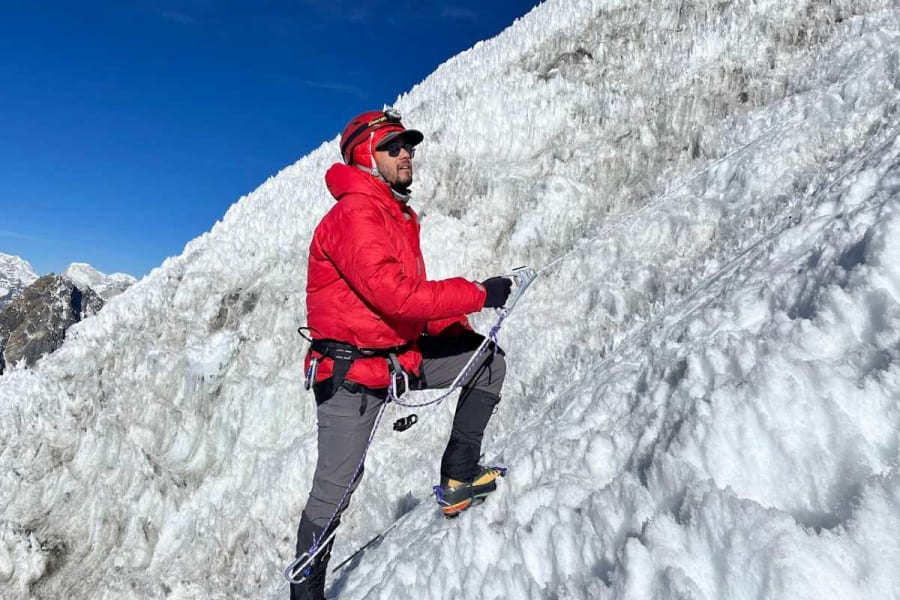
Technical kit: Crampons, a harness, a helmet, two ice tools, ascender and belay device. Summit day on Nuptse is steep ice and mixed ground.
-
Down suit and mitts: Above 7,000 m you climb in a full down suit, with heavy mitts and spare liner gloves.
You can buy proper gear and equipment here in Kathmandu. Several stores and shops in Thamel, Kathmandu, deal with the supply of essential mountaineering items ranging from affordable to expensive ones. So the option is yours to take quality products at a high rate or go with the medium and affordable one.
Physical and Mental Challenges of the Climb
Mt. Nuptse is not a mountain to be taken lightly. At 7,861 meters (25,791 feet) it's very high, though its prominence is only 319 m, so it counts as part of the Lhotse-Nuptse massif. It's located in a remote part of Nepal. The climb is physically and mentally challenging, and you need to be prepared for both before undertaking such a journey.
Physically, it would help if you are in good shape. This isn't a hike. It's an expedition, and even with Sherpa support you'll be climbing technical ground and carrying loads between camps. You need to be able to handle long days of challenging climbing, sometimes in inclement weather. So, it will be better if you are physically prepared and are abundant in stamina and energy.
Mentally, it would help if you are prepared for the isolation. You'll be spending days, sometimes weeks, in remote areas with few people around. This can be taxing even for the most experienced climbers. It's essential to be mentally prepared for the challenges you'll face both on the mountain and in your head.
Strategies for Overcoming Difficulties on a Climbing Trip
You'll have little or no phone signal on the mountain, there will be challenging obstacles, and stormy weather is always possible, but that's all part of the fun. Here are a few things to remember as you prepare for your trip.
-
First and foremost, come prepared. Do research the route you'll be taking and ensure you have the proper gear. There's nothing worse than being halfway up a mountain and realizing you don't have the right equipment.
-
Secondly, be realistic about your skill level. If this is your first time climbing, start with a smaller mountain. With much experience, it will be convenient for you to work your way up to Mt. Nuptse.
-
Finally, remember that Mother Nature is in charge. Be flexible with your plans and be prepared for anything. The most important part of an expedition is to have fun and enjoy the experience.
Safety Tips for Making the Most of Your Adventure
When planning an adventure, it's essential to be prepared and know what you're getting yourself into. Get some of the few safety tips that you should always keep in mind if you're thinking of climbing Mt. Nuptse:
-
Make sure you have the proper equipment. This includes mountaineering boots, crampons, a harness, ropes and a sturdy tent.
-
Know your limits. If you're short on mountaineering experience, hire a guide and build up on smaller peaks first.
-
Be aware of the weather conditions and be prepared for changes.
-
Stay hydrated and fueled. Bring plenty of water and snacks with you.
-
Listen to your body. If you're feeling tired or sick, turn back.
So, is Mt. Nuptse's climb a difficult one? It depends on your level of experience, expertise, and physical ability. If you have no prior mountaineering experience, take a less challenging peak first. Remember to always take into account the weather conditions, too. With proper preparation and planning, a Mt. Nuptse climb can be a rewarding experience.
Where Trekkers Can See Nuptse
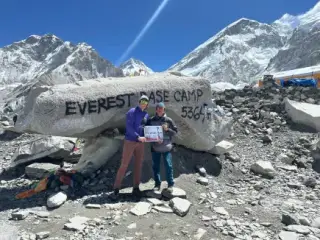
You don't need a climbing permit to see it. On the Everest Base Camp trek, the Nuptse and Lhotse wall rises above the trail from Tengboche (3,867 m), with Everest's tip peeking over it. Higher up, the path from Gorak Shep to base camp runs beneath Nuptse's walls. At Kala Patthar (5,545 m) you get the full view of Everest's summit pyramid, standing right beside Nuptse.
Nuptse Climb: FAQs
Is Nuptse harder to climb than Everest?
Technically, yes. Everest's normal route has fixed ropes, ladders and thousands of past ascents. Nuptse's routes are steeper, often unfixed, and finish on a corniced ridge. Everest is about 1,000 m higher, so the altitude is worse there.
How many people have climbed Nuptse?
Fewer than 40 by the end of 2024, according to the Himalayan Database. Dawa Tenji Sherpa has summited three times, more than anyone else.
How long does a Nuptse expedition take?
About six weeks. Swotah's Mount Nuptse Expedition runs 43 days, covering the trek in, acclimatisation rotations and a summit window.
Can a beginner climb Nuptse?
No. You need earlier expeditions above 6,000 m, ideally a technical peak such as Ama Dablam, plus solid rope work on steep ice.
Can I see Nuptse on the Everest Base Camp trek?
Yes. It's in view from Tengboche onward and dominates the skyline at base camp and Kala Patthar.