


Conquer Cho La Pass - A Guide to Trekking this Himalayan Pass
Are you ready for an adventure of a lifetime in the heart of the Himalayas? Then, brace yourself for the Conquer Cho La Pass trek - one of the region's most stunning and challenging hikes. Cho La Pass, standing tall at an altitude of 5,420 meters, offers breathtaking views of glaciers, snow-capped peaks, and alpine meadows. This guide will take you through the essential tips, tricks, and information you need to learn to trek this majestic pass successfully. But before we begin, let me ask you a question: Have you ever trekked in the Himalayas?
Unleash your inner adventurer with the Gokyo Cho La Pass Everest Base Camp Trek. This trek is not for the faint of heart but for those daring enough to take on the technical challenges it presents. With a mix of 8-9 hour days and the majority being 5-6 hours, this trek promises to be a thrilling experience.
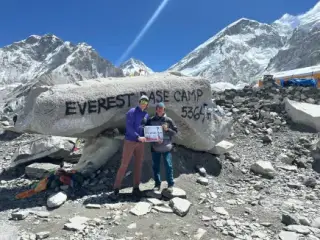
This is an adventure to the soul of the Himalayas, a place where iconic wonders such as Namche Bazaar, Tengboche Monastery, Gorak Shep, and the legendary Everest Base Camp await. But wait, there's more! Test your endurance and cross the formidable Cho La Pass (5,420 m) to reach the mesmerizing Gokyo Lakes, elevating your experience to new heights.
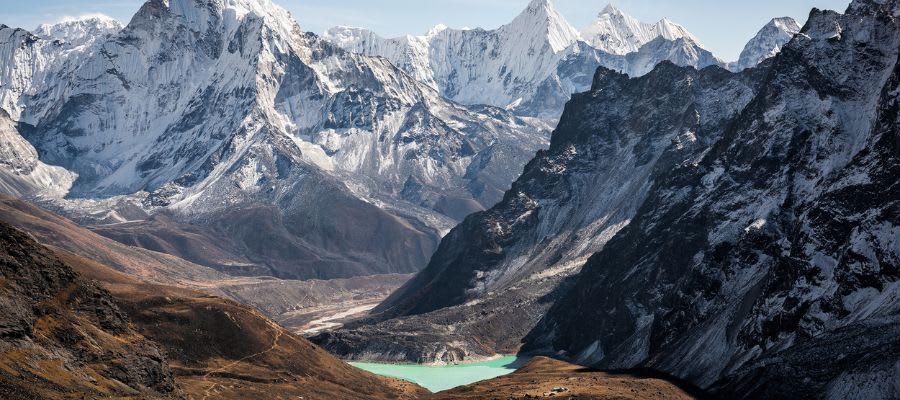
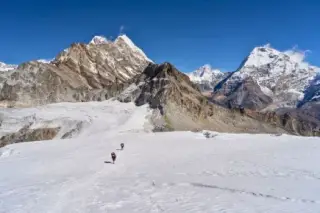
Photo: Cho la pass
Overview of Cho La Pass
Cho La Pass is one of the world's most well-known mountain passes. It is located in the Himalayan mountain range and is along the common route between two of the most popular trekking destinations in Nepal - the Gokyo Valley and the Everest Base Camp. This passage serves as a key and mesmerizing bridge between two paths, transforming it into a rich and rewarding journey for those daring enough to essay upon it. This idyllic paradise is celebrated for its shimmering lakes and the magnificent peak of Gokyo Ri. Adventurers often extend their stay in Gokyo, relishing the chance to explore some of the picturesque day hike trails.
Venture forth on a journey like no other with the Cho La Pass, where the chance to cross a glacier awaits. Tread with caution as you cross the frozen landscape, taking steps on microspikes that resemble tiny crampons to ensure a safe passage over the icy pass. The Cho La Pass is also part of the Three Passes trek, which offers a more extensive trekking experience, featuring two more passes - Kongma La and Renjo La, and a visit to the famous Everest Base Camp.
The Cho La Pass is situated at an altitude of 5,420 meters (17,782 ft) and connects the village of Dzongla (4,830 meters (15,850 ft)) to the east and the village of Dragnag, also written Thagnak (4,700 meters / 15,400 ft) to the west. The distance between Dzongla and Dragnag is 5.86 mi / 9.43 km. The trek up and over the Cho La Pass is challenging, taking around 7+ hours and involving a climb of almost 2,000 feet in elevation. The trail begins with a slight incline before quickly gaining all of the elevations towards the high point of the Cho La Pass. This trek section is challenging, as all the elevation gains are made within a 2 km / 1.2 miles stretch.
The region surrounding the Cho La Pass is steeped in the ethos of Buddhism, a fact unmistakably displayed by the presence of numerous monasteries, temples, and stupas in the isolated villages spotted along the trekking trail. The inhabitants of these villages, known for their warm hospitality, offer a rich cultural tapestry that greatly enhances the trekking encounter.
Enclosed within the lush valleys of Cho La Pass lies a rich deposit of cultural diversity, where esteemed ethnic communities such as the Sherpas reside as proud residents, with Rai and Kulung communities in the lower Solu valleys.
The Sherpas, with their unparalleled mountain climbing skills and warm hospitality, combined with the region's intricate cultural diversity, guarantee an enriching experience soaked in cultural richness.
For Cho La pass trek, the common starting point from the east is Dzongla. However, suppose you opt for a westward trek. In that case, the two most prevalent starting points are Dragnag (situated near the pass) and Gokyo, which lies an additional 2.58 miles or 4.15 kilometers westward from Dragnag. The initial mile of the trail presents a serene, unchallenging landscape. A gentle decline leads you to a steep and zigzag ascent, taking you past a tiny glacier runoff stream and through a ragged passage. After reaching the summit of this strenuous climb, you'll find a tranquil resting spot with stunning views overlooking Dragnag (labeled as "Camp" on some maps).
The Best Time to Trek Cho La Pass
The Chola Pass Trek is at its prime during the temperate seasons of Autumn and Spring, where September, October, and November, as well as March, April, and May, bask in stable weather and climatic conditions, forging an ideal trekking atmosphere. While other times of the year offer the potential for trekking with proper preparation, winter, and monsoon, bring challenging weather fluctuations to the Everest region.

Photo: Cho La pass during spring
Cho La pass trek during winter can be daunting, as heavy snow restricts passage across the Cho La pass, causing it impassable to trek. The frigid temperature can plummet to a bone-chilling -20°C during the night and early morning, adding to the challenge. As spring arrives, it brings the perfect weather for our journey with warm and inviting days, with daytime temperatures lower on the trail climbing above 10°C in the sun, though the pass itself stays bitterly cold.

Photo: Cho La pass during winter
Cho La Pass Trekking Difficulty
As with any trekking trip, difficulties in Cho La Pass Trek stem primarily from two primary sources: physical exhaustion and environmental hardships. From the very start, trekkers often face fatigue due to strenuous climbs, some of which are steep inclines and declines along rugged terrain.
This part of the trip is usually the most challenging as it requires strength and stamina to get to the top of the pass. Aside from the physical hardships, high altitude can make the journey harder as the air gets thinner, the climates harsher, and breathing becomes more difficult. Voyageurs should plan frequent breaks and take some form of medication to lessen the effects of the altitude. In addition to difficult terrain, expeditions should also expect tough weather and extreme climatic conditions as the mountain passes can experience heavy snow and rain showers.
Trekkers should be aware of the possibility of landslides and avalanches, particularly during the spring season. Poor visibility caused by fog, blizzards, and snow are additional dangers to anticipate and can cause delays and frustration. Despite the rigors of the journey, the trek rewards adventurers with priceless and unparalleled experiences of the beautiful Himalayas in this remote region. By facing difficulties and overcoming them, one can truly appreciate the tour's beauty and witness the Himalayas' magnificence.
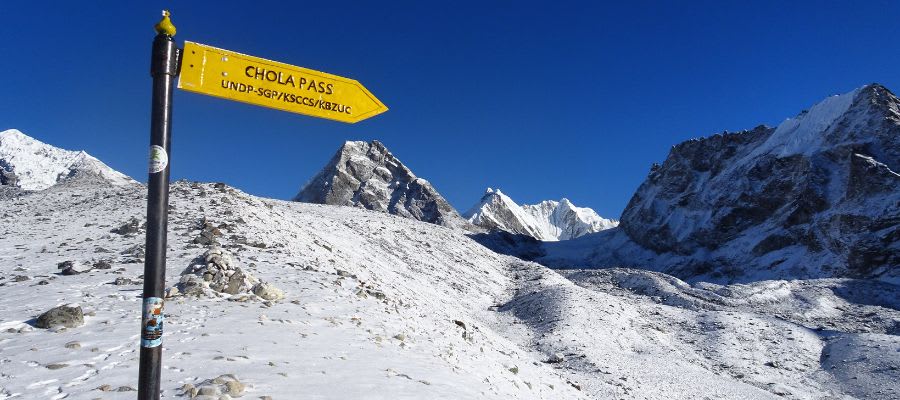
Cost for Cho La Pass Trek
The price tag for the Cho La Pass journey varies based on your selected package. Itineraries that include Cho La, such as the Gokyo-EBC crossing or the full Three Passes trek, run 14 to 18 days and typically cost USD 1,400 to 2,200 per person. That covers permits, a licensed guide, teahouse accommodation, meals on the trail, and Lukla flights; porters, tips, and gear rental are extra. Furthermore, depending on the time of year and the trekker's preferences, the cost of gear rental, carrying help, and other expenses may escalate the overall price.
Route For Cho La Pass Trek
Cho La Pass Trek is one of Nepal's most spectacular and demanding trekking journeys. It traverses through the rugged and beautiful trails of the Everest region, providing trekkers with stunning views of the world's highest peak and an unforgettable experience.
Starting at Lukla, a 35-minute flight from Kathmandu, the trek takes you along the Dudh Koshi River through Phakding, Thado Koshi, and Ghat Sherpa villages. You'll encounter various farming terraces, bird species, and monasteries (gompa) along the way. After a few hours of trekking, you reach Namche Bazaar, the largest Sherpa town in the region and home to a hilltop monastery.
Journeyers continue on a path to the picturesque Dole and Machhermo, located in the Khumbu's elevated height. Experience the richness of Sherpa culture and admire the stunning mountain vistas. The trek then ventures upward towards Lobuche, the final village, en route to conquering the challenging Cho La Pass.
Most itineraries build in acclimatization days at Dingboche or Dzongla before attempting the crossing. After you're suitably acclimatized, your journey continues to the Cho La Pass at an altitude of 5420m. Prayer flags, chortens, and Buddhist memorial stupas mark the pass and offer breathtaking views of Everest and neighboring peaks. The winding path leads to the Everest Base Camp, showcasing the Khumbu Icefall and the Khumbu Glacier. The path then takes a southern turn, leading through Gorakshep and to the Kala Patthar summit, where the awe-inspiring view of the sun rising over Everest and its neighboring peaks, Lhotse, Nuptse, and Makalu, awaits. The trek then descends to Pheriche and concludes at Namche Bazaar, circling back to the beginning. Finally, retrace Lukla and return to Kathmandu via flight.
Conquering Cho La Pass is an incredible experience for any trekker looking for an ultimate challenge and breathtaking scenery. Trekkers who have completed the journey have fuelled the imagination of others with their vivid tales of the mountains, craggy cliffs, and sub-zero temperatures.