
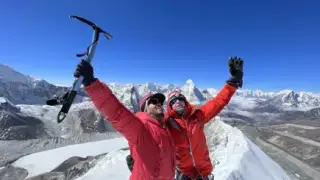


Take a guide in Nepal for three reasons. On most treks it is the law: since 1 April 2023 foreign trekkers in national parks and conservation areas must walk with a licensed guide, although the Everest region does not enforce it. A guide makes the altitude, route and rescue decisions that go wrong most often for people walking alone. And in the cities and villages a guide turns temples, customs and conversations you would otherwise walk past into something you understand. A licensed trekking guide costs about USD 25 to 40 a day, usually split between two or three trekkers.
- Guide rule on treksRequired in national parks and conservation areas since 1 Apr 2023
- Everest regionRule not enforced by the local municipality
- Restricted areas (Manaslu, Upper Mustang, Kanchenjunga)Licensed guide always required
- Trekking guideAbout USD 25 to 40 a day
- Porter or porter-guideAbout USD 20 to 25, or 25 to 35 a day
- TipAbout 10% of the crew's wages, on the last day
- City sightseeingGuide optional, licensed city guides available
A licensed trekking guide in Nepal costs USD 25 to 40 per day, and for most trekking regions the question of whether to hire one was settled by regulation: Nepal Tourism Board has required foreign trekkers to go guided in national parks and conservation areas since 1 April 2023, though the Everest region does not enforce it. The better argument is what a guide actually adds. Nepal's 2021 census counted 142 caste and ethnic groups with their own customs, festivals, and food cultures, the trails change with every monsoon, and altitude does not negotiate. A good guide helps with all three. Here are the benefits, the rules, and the costs.
Safety on the Trail and in Town
Safety is the first thing most travellers think about, and nobody wants to end up somewhere crime or natural hazards are common. Serious crime against visitors is uncommon in Nepal, and many women travel safely on their own. Still, a guide lowers the odds of petty theft, overcharging and scams, simply because someone local is watching out for you. Our Nepal safety guide covers the wider picture.
In addition, guides know the local weather and the hazards of each season, from monsoon landslides to winter snow on the passes. When conditions turn, they are the person most likely to make the right call about waiting, turning back or taking another trail.
Getting to Know the Culture

When you prefer a guide for your trip, it doesn’t matter whether you are trekking or on a city tour. You will get to understand the unique culture far more easily. Understanding people, their culture, traditions and customs is never easy in a new country, and a local who can explain what you are seeing is the quickest way in. With so many ethnic groups, each with its own customs, the festival, the shrine or the meal in front of you often has a story that is easy to miss on your own.
Breaking the Language Barrier
Language Barrier is one of the major problems in communicating smoothly with people of another country. Neither you get the meaning of what they say, nor do they understand you, which, in certain circumstances, creates misunderstandings as well. In such situations, a guide comes to your rescue. Most licensed guides speak good English, some speak other languages too, and all of them speak Nepali and often the local language of the area.
Guides who work with foreign visitors every season understand how travellers think, what they worry about and what they want to know. That makes them good translators of culture as well as words.
Finding the Right Trail
 Tourists trekking with their guide
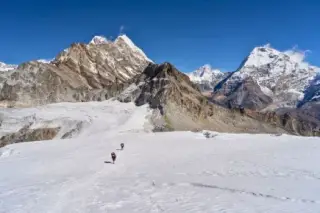
Detailed directions to the destination can be found in the region maps. Through this, you will know the route, but the truth is unsure as the maps may have been made years ago, and during the course of time, the carved paths may have been altered. If you hire a guide, then there is no fear of off-course and getting lost in an unknown place. Guides know the area well, including where a landslide has moved the trail or a new road has replaced the old path, so you reach the destination by the best way available that season.
This was the main reason given for the 2023 guide rule. Nepal Tourism Board's director told Al Jazeera in March 2023 that the board receives about 40 to 50 cases of missing trekkers a year, while industry figures quoted by the Kathmandu Post put it at 10 to 15. The president of the Trekking Agencies' Association of Nepal said at the time that most trekkers who die or disappear were walking alone without a guide.
Familiarize with Unique Customs
Another thing about Nepal that makes every visitor confused and embarrassed is customs. Each and every indigenous community of Nepal has its own customs and traditions, which are totally different from each other.
However, some common customs are unfamiliar to visitors: eat and pass things with the right hand, beef is rarely served because the cow is sacred to Hindus and killing one is illegal, and shoes come off before entering a kitchen, a home or a temple. Therefore, through the help of a guide, you can know such matters well, which creates a rational relationship between visitors and local communities and avoid annoyance.
Experience Authentic Homestay

Another benefit of having a guide along is that you can easily experience the authentic homestay of Nepal. They are the best bridge that lets you get any homestay in the rural areas of Nepal that lets you live among the locals and get the authentic experience of their culture, tradition, rituals, beliefs, and practices.
Local Knowledge
You will definitely get significant knowledge when you travel with a guide. Guides are most probably the natives of the place or may have visited the destination numerous times and as a result, know everything about the place, which they share during the trip. They can answer the questions a guidebook leaves open.
Once in a Lifetime Experience
Experiences can be good or bad depending on your choice and situation. Having a guide is like finding a friend in an alien country with whom you can share all your problems, interests, preferences and the things you desire to perform on your trip.
Besides that, a good guide knows the side trips, festivals and village visits that are not in any itinerary, and can fit the ones you want into the days you have.
Save Time and Money
A good guide does not just show you where to go, they help you spend your money wisely. Knowing which teahouses offer fair prices, which routes are currently in the best condition, and which permits you genuinely need can save you both time and significant expense. Licensed trekking guides also complete first-aid and altitude training as part of their licence course, and they know where the nearest phone signal, health post or helicopter landing site is. That is a practical layer of safety no map or travel app can replace.
Is a Guide Mandatory in Nepal?
For most regions, yes in principle. Nepal Tourism Board's rule, in force since 1 April 2023, requires foreign trekkers, whether alone, in a couple or in a group, to hire a licensed guide through a registered agency for treks in national parks and conservation areas. TIMS cards (NPR 2,000) are now issued only through agencies. Restricted areas such as Upper Mustang, Manaslu, and Kanchenjunga have always required a guide without exception, and since March 22, 2026, even solo trekkers can obtain restricted area permits provided a licensed guide accompanies them. Enforcement varies, and the Everest region's local municipality has said independent trekkers may still enter there, but the practical advice is simple: plan on a guide. Full details sit in our explainer on the guide rule and solo trekking and our guide to trekking permits in Nepal.
What Does a Guide Cost?
A licensed guide costs about USD 25 to 40 per day and a porter USD 20 to 25, with the porter-guide hybrid (a porter who also speaks English and knows the route) at about USD 25 to 35. Booked through a registered agency, the rate covers the guide's insurance, food, and lodging, so there are no hidden trail costs on your side. Tipping is customary at about 10 percent of the crew's wages for good service, handed over on the final day. Spread across a group of two or three trekkers, professional guidance costs each person roughly USD 8 to 20 a day, which is modest insurance for a Himalayan trek. Our guide to hiring a guide for Everest Base Camp breaks the costs down further.
Trekking With or Without a Guide
The table compares the two on the points that matter most on a Nepal trek. The first row reflects the 2023 rule and how it is applied in 2026.
| Point | With a licensed guide | Without a guide |
|---|---|---|
| Legal status (most protected areas) | Meets the rule | Not allowed except where not enforced, mainly the Everest region |
| Restricted areas | Required | Not possible |
| Permits and checkpoints | Handled by the guide and agency | You queue and pay yourself, TIMS only through an agency |
| Altitude decisions | Someone else watching for symptoms and pacing the climb | You judge your own symptoms, which is hard at altitude |
| Route finding after landslides or snow | Local knowledge of detours | Maps and apps, often out of date |
| Emergency or rescue | Guide calls the agency and insurer, knows the landing sites | You arrange it, often without signal or Nepali |
| Language and culture | Translation and context | Gestures and goodwill |
| Cost | About USD 25 to 40 a day, shared by the group | Free but higher risk |
Do You Need a Guide in Kathmandu and the Cities?
No. No law requires a guide for sightseeing in Kathmandu, Patan, Bhaktapur or Pokhara, and many visitors explore the Durbar Squares on their own. A licensed city guide is still worth it for a first visit, because the temples, courtyards and festivals are dense with history that is not signposted. Licensed guides carry a government licence card, so ask to see it, and agree the fee and the length of the tour before you start. Our top attractions of Kathmandu and Pashupatinath Temple guides help you plan the day.
Most heritage sites charge foreign visitors an entry fee at the gate. These are the figures most travel listings give for 2026. They change and listings disagree, so carry cash in rupees and check the board at the ticket counter.
| Site | Foreigner entry fee (approx.) | Note |
|---|---|---|
| Kathmandu Durbar Square (Basantapur) | NPR 1,000 | Lower rate for SAARC visitors |
| Patan Durbar Square | NPR 1,000 | Lower rate for SAARC visitors |
| Bhaktapur Durbar Square and old city | About NPR 1,800 (some listings say 1,500) | One ticket covers the historic city |
| Pashupatinath Temple | About NPR 1,000 | Main temple open to Hindus only |
| Boudhanath Stupa | About NPR 400 | Listings vary |
| Swayambhunath Stupa | About NPR 200 | Listings vary widely |
How a Guide Helps in an Emergency
Most trekking emergencies in Nepal start with altitude sickness, a fall or an illness that gets worse overnight. A guide spots the early signs, gets you down, and calls the agency, which then works with your insurer to arrange a helicopter if one is needed. That only works if your policy covers trekking to the height you are going, usually up to 6,000 m with helicopter evacuation, so read our insurance guide before you book.
How to Choose a Good Guide
Book through a registered agency, ask for the guide's licence, and check that the agency insures its crew and pays fair wages. Our step-by-step guide to how to hire a guide in Nepal covers the questions to ask, and our guide to choosing a travel agency in Nepal explains what a registered operator should offer.
Find the Right Guide for Your Nepal Trip
Whether you are planning a multi-week high-altitude trek or a cultural tour of the Kathmandu Valley, a professional guide transforms the experience. Want to stay with a local family along the way? Read our guide on 10 reasons to choose a homestay over a hotel, your guide can arrange this too. For the best festivals and cultural events to plan around, see our list of festivals you should not miss in Nepal. Ready to start planning? Browse our full range of guided Nepal treks and tours.
Frequently Asked Questions
Is a guide mandatory for trekking in Nepal?
On most treks, yes. Since 1 April 2023 foreign trekkers in national parks and conservation areas must walk with a licensed guide booked through a registered agency. The Everest region does not enforce the rule, and restricted areas such as Manaslu and Upper Mustang have always required a guide.
How much does a trekking guide cost in Nepal?
About USD 25 to 40 a day for a licensed guide, USD 20 to 25 for a porter and USD 25 to 35 for a porter-guide. Through an agency the rate includes the guide's food, lodging and insurance. Plan to tip about 10% of the crew's wages at the end.
Do I need a guide to visit Kathmandu's Durbar Squares?
No. City sightseeing does not need a guide by law. A licensed city guide is useful on a first visit, and you pay the site entry fee either way.
Is a porter-guide enough instead of a full guide?
On easier, busy teahouse routes a porter-guide often works well and costs less. On high or remote routes, and in restricted areas, a fully licensed guide is the safer and usually the required choice.
How do I know a guide is licensed?
Ask to see the government licence card, book through a registered agency, and confirm the agency arranges the guide's insurance. Our guide-hiring checklist has the full list of questions.