


Annapurna I is harder and far more dangerous to climb than Everest, even though it's 758 meters lower. By the latest Himalayan Database figures, about 13 climbers have died on Annapurna for every 100 who reached the top, against about 2.5 on Everest. Everest is higher, colder and more crowded, but it has fixed ropes, bottled oxygen and hundreds of support staff every spring. Annapurna's danger is avalanches on its main routes, and far fewer teams attempt it. Most people should start with a trek to Everest Base Camp or Annapurna Base Camp.
- Everest height8,848.86 m (29,032 ft)
- Annapurna I height8,091 m (26,545 ft)
- First ascentsAnnapurna 1950, Everest 1953
- Deaths per 100 summitsEverest about 2.5, Annapurna about 13
- Spring 2026 permitEverest USD 15,000, Annapurna USD 3,000
- Swotah expedition lengthEverest 64 days, Annapurna I 48 days
You're thinking about climbing a Himalayan peak. But which one? There are many high-altitude mountains in the world, and Nepal has eight of the world's fourteen peaks above 8,000 meters. If you had to summit one, will you take Annapurna or Everest? Climbing Everest or Annapurna is undoubtedly a challenging task.
The journey leading to the top is even more impressive. Climbers must first trek through the Himalayas, which can take weeks or even months. The terrain is rough, and the air is thin, making it a difficult journey for anyone, let alone someone who isn't acclimated to the high altitude.
Both peaks rise above 8,000 meters but differ in difficulty and other factors. Let's compare the two mountains and see which one is a better fit for you.
Overview of Everest and Annapurna Mountains
Only fourteen mountains on Earth rise above 8,000 meters. Everest is the highest of them, and Annapurna I, at 8,091 meters, is the tenth highest.
Comparing Everest and Annapurna, Everest is the taller of the two, but Annapurna is thought to be harder to climb.
Everest vs Annapurna at a Glance
The figures below come from the Himalayan Database, Alan Arnette's 2026 count and Nepal's Department of Tourism. Ascent and death totals change every season.
| Mount Everest | Annapurna I | |
|---|---|---|
| Height | 8,848.86 m (2020 survey) | 8,091 m |
| World rank | 1st | 10th |
| First ascent | 29 May 1953, Edmund Hillary and Tenzing Norgay | 3 June 1950, Maurice Herzog and Louis Lachenal, the first 8,000er ever climbed |
| Main route | South Col from Nepal | North Face (1950 line) |
| Total summits | 13,737 (to end of 2025) | 559 (to early 2025) |
| Deaths | 339 (1922 to 2025) | 75 |
| Main killer | Altitude, exhaustion, falls, Khumbu Icefall | Avalanches |
| Spring permit, foreigners | USD 15,000 | USD 3,000 |
| Swotah expedition | 64 days | 48 days |
Differences in the Routes to the Top
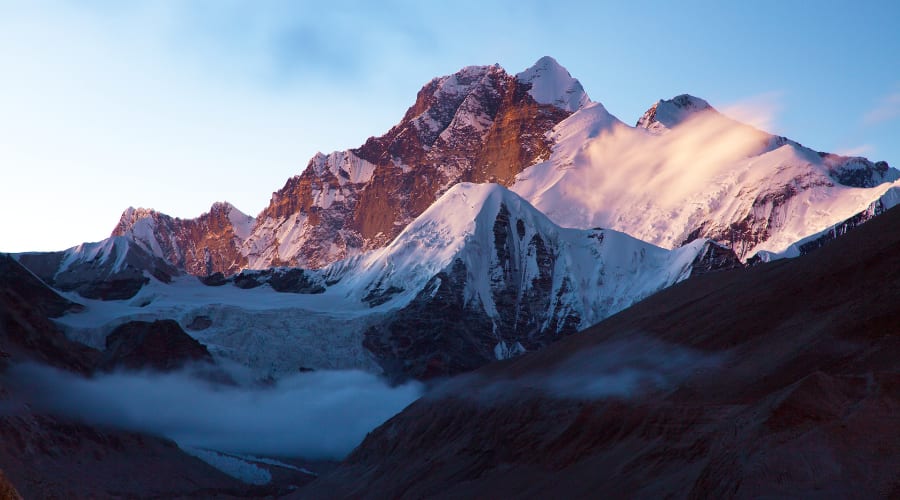
There are two main routes to the top of Everest: the South Col route from Nepal and the North Ridge from Tibet. The South Col is the classic line first climbed in 1953 and remains the most-used route, though it funnels climbers through the dangerous Khumbu Icefall. The North Ridge avoids the icefall but is colder, windier, and depends on permits from the Chinese side. China issued no Everest permits for spring 2026, so every 2026 summit came from Nepal.
Annapurna is most often attempted via the North Face, the line of the 1950 French first ascent, with the Northwest Ridge and the immense South Face as harder alternatives. Every route is seriously threatened by avalanches.
What Are the Difficulties of Each Climb?
When it comes to climbing Everest and Annapurna, a few key differences set each mountain apart. Everest is much taller than Annapurna. It's the tallest mountain in the world, at 8,848.86 meters (29,031.7 feet). Because of its height and the extreme conditions that come with climbing it, Everest is considered to be one of the most challenging mountains to summit.
In contrast, Annapurna is much shorter, at 8,091 meters (26,545 feet), but it's also considered the most dangerous mountain to climb. For decades a higher percentage of climbers died on Annapurna than on any other 8,000-meter peak. So, while Everest may be taller and more complex, Annapurna is more deadly.
Understanding the Risks of Each Peak
As you can imagine, climbing any mountain comes with risks. But when you're dealing with two behemoths like Everest and Annapurna, those risks are amplified. Look at some of the dangers you might face on each peak.
- Everest: avalanches, crevasses, freezing temperatures, high winds, lack of oxygen
- Annapurna: avalanches, rockfalls, falling ice, glaciers, crevasses
As you can see, both mountains come with their fair share of dangers. Everest is higher, which means colder temperatures and less oxygen, but Annapurna's avalanche-raked slopes have historically killed a far higher proportion of those who attempt it, which is why most mountaineers rank Annapurna as the more dangerous peak.

Mental Challenges of Climbing Annapurna
You're about to attempt one of the world's most physically and mentally demanding feats. Are you up for it?
Climbing Mt. Annapurna is no easy task. It requires immense physical strength, stamina, and willpower. But it's also essential to be mentally prepared for the challenge.
The mental challenges of climbing Annapurna are just as daunting as the physical ones. You'll face extreme weather conditions, dangerous terrain, and deadly obstacles. You'll need to be strong enough to stay focused and motivated when things get tough.
If you're not prepared for the mental challenges, you may likely turn back before reaching the summit. So make sure you're ready for anything before attempting this climb.
Physical Demands of Climbing Everest
When you're climbing Mt. Everest, there are a lot of physical demands. You have to be able to carry a lot of weight, traverse rugged terrain, and be in excellent physical condition.
On a commercial expedition, Sherpa staff carry the tents, oxygen and food to the high camps, so most clients climb with a pack of about 8 to 12 kg. You still have to haul it for 10 to 14 hours on summit night, on bottled oxygen, above 8,000 meters.
Traversing rugged terrain is also essential. The trail up Mt. Everest is treacherous, with many obstacles, and if you can't traverse it, you'll have difficulty reaching the top.
Finally, it would be best if you were in excellent physical condition. The climb up Mt. Everest is strenuous and requires a lot of stamina. You won't get far unless you're in good shape.
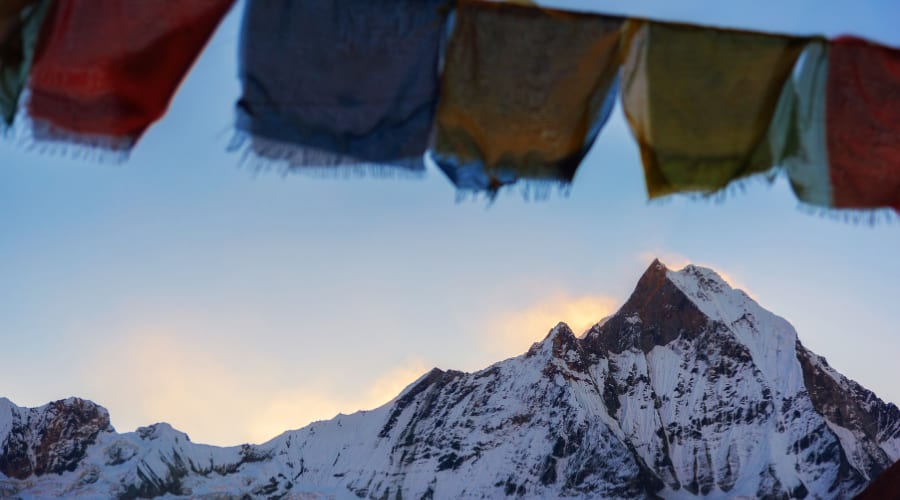
Comparing Altitude And Elevation
So, what's the difference between Everest and Annapurna? Well, for starters, Everest is about 760 meters higher than Annapurna. To be precise, Everest is 29,031.7 feet, while Annapurna is 26,545 feet.
And that's not all. The weather conditions on Everest are also notoriously harsh. You're dealing with sub-zero temperatures and high winds. On Annapurna, meanwhile, the defining hazard is the avalanche risk on its heavily loaded slopes.
So which one is harder? It depends on what you're looking for. Everest is the way to go if you're looking for a challenge. Annapurna I is considered much tougher than Everest. In 2012 its death-to-summit ratio stood at about 32 percent (61 deaths for 191 summits), the worst of all fourteen 8,000-meter peaks and higher even than K2. Better forecasting, fixed ropes and helicopter rescue have since pulled it down to about 13 percent, still roughly five times Everest's rate.
Deaths per 100 Summits
This is the number most mountaineers quote when they call Annapurna the deadliest 8,000er. It compares deaths with successful summits, so a crowded peak like Everest looks safer than it feels on summit day.
| Peak and year | Deaths per 100 summits | Rate | Basis |
|---|---|---|---|
| Annapurna I, 2012 | 32% | 61 deaths, 191 summits | |
| Annapurna I, latest | 13.4% | 75 deaths, 559 summits (Himalayan Database via Guinness World Records) | |
| Everest, end of 2025 | 2.5% | 339 deaths, 13,737 summits (Alan Arnette, 2026) |
Annapurna's rate fell because many more teams now climb it each spring with fixed ropes and helicopter backup. Most of its deaths still happen in avalanche zones on the lower North Face, which a climber can't train their way out of.
Weather Conditions on Everest And Annapurna
The temperatures vary significantly on Everest and Annapurna, often reaching extremes. In May, the summit of Everest usually sits around -25 to -30 °C (-13 to -22 °F), while Base Camp afternoons can climb above freezing. Annapurna is not as extreme, but temperatures can fall to around -30 degrees Fahrenheit in winter.
Both mountains have very high wind speeds. The jet stream can blast the summit of Everest at up to 175 mph outside the short May window, and Annapurna sits in the same jet stream, so its upper slopes take hurricane-force winds too.
Both weather conditions pose a significant challenge to climbers attempting to reach the summit. The cold can cause climbers to become very tired, and the wind can knock them off balance.
How to Cope With Altitude Sickness?
If you feel the effects of altitude sickness, it will be better to return to a lower altitude as soon as possible. You might also be prescribed medication to help with the symptoms.
Acetazolamide is a medication that can help prevent altitude sickness, and I always make sure to bring it with me when I'm climbing. It makes your blood slightly more acidic, which pushes you to breathe faster and deeper, so you acclimatize sooner. It also makes you pee more.
Dexamethasone is another medication that can be used to treat the symptoms of altitude sickness. It's a steroid that works by reducing inflammation and can be taken orally or injected. Both drugs need a prescription, and dexamethasone is an emergency treatment for HACE (brain swelling), never a way to push higher.
You should be evacuated from the mountain if things get worse.
Overcoming Barriers on the Everest or Annapurna
The thing about mountains is that they're constantly changing. Ice can form overnight, rocks can fall during the day, and the weather can turn on a dime. All of these factors can make the route up Everest and Annapurna pretty treacherous.
To overcome these obstacles, climbers must think on their feet and be quick problem-solvers. For example, if a section of the route is icy, climbers need to find a way around it without losing footing. And if a rock falls, they need to determine the best way to proceed.
Climbers also need to have a lot of stamina and endurance. After all, they deal with high altitudes, extreme cold, and often little oxygen. Not to mention, they're carrying all of their gear with them as they climb. So climbers must be in top physical shape before attempting to summit Everest and Annapurna.
Here are a few tips and tricks that might come in handy if you're planning on taking on both Everest and Annapurna:
- Make sure you have the proper equipment. This includes everything from your clothing to your camping gear and climbing harness.
- Train, train, train. You must be in peak physical condition before attempting either of these mountains. Consider hiring a personal trainer or joining a mountaineering club to get started.
- Remember to consider the importance of acclimatization. When you're finally on the mountain, take things slowly to allow your body to adjust to the altitude.
- Be prepared for anything. Both peaks can be unpredictable, so it's essential to have a backup plan (or two).
Permits and Rules for 2026
Nepal raised its climbing royalties on 1 September 2025. A foreign climber now pays USD 15,000 for Everest in spring, up from USD 11,000, and USD 3,000 for Annapurna I or any other 8,000er, up from USD 1,800. Autumn permits cost USD 7,500 for Everest and USD 1,500 for the other 8,000ers.
The same amendment banned solo climbs on peaks above 8,000 meters and cut permit validity from 75 to 55 days. Everest climbers also rent a tracking chip and carry their waste back down. A rule that would require a 7,000-meter summit in Nepal before Everest was still a proposal in 2026.
Not Ready to Climb? Trek to Both Base Camps
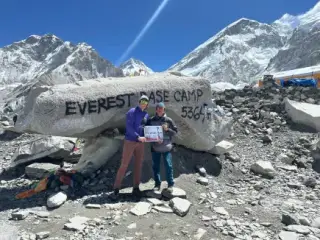
Most people who search this question end up trekking. Everest Base Camp sits at 5,364 meters, and the classic route through Namche and Tengboche takes 14 days. Annapurna Base Camp, at 4,130 meters, sits inside the Annapurna Sanctuary, right below the South Face that made the mountain famous. It's lower and shorter, and since April 2023 you need a licensed guide to walk there.
| Trek | Highest point | Days | From |
|---|---|---|---|
| Everest Base Camp Trek | 5,545 m (Kala Patthar) | 14 | USD 1,620 |
| Annapurna Base Camp Trek | 4,130 m | 14 | USD 1,000 |
Our Annapurna Base Camp vs Everest Base Camp guide compares the two treks day by day.
Conclusion
Climbing Everest and Annapurna is no small feat, but with proper preparation, anything is possible.
So, what's the bottom line? Both Everest and Annapurna are challenging. But because of the rough terrain, weather, and the lack of technical and local support, and with the worst historical fatality ratio of any 8,000er, Annapurna is more arduous, dangerous, and harder to climb than Mount Everest.
So, if you're considering climbing Everest or Annapurna, now you know a little about what you're getting yourself into. It's a challenging task by any means, but with the proper training, preparation and climbing in the proper season, it's possible. Make sure to consult with a professional to create a training program that will best prepare you for the challenges you'll face on the mountain.
Everest vs Annapurna: FAQs
Is Annapurna harder to climb than Everest?
Yes, for most climbers. Annapurna I has fewer fixed ropes, fewer teams and avalanche-prone routes, and about 13 people have died for every 100 summits. Everest's rate is about 2.5.
Which is higher, Everest or Annapurna?
Everest, at 8,848.86 meters. Annapurna I is 8,091 meters, 758 meters lower, and the tenth highest mountain in the world.
How much does it cost to climb Annapurna I?
The spring permit alone is USD 3,000 for foreigners from September 2025. A full guided expedition costs far more once you add Sherpa support, oxygen, camps and insurance. Ask us for a current quote.
Do you need to climb other peaks before Everest or Annapurna?
Every serious operator expects 6,000 and 7,000-meter experience first, such as Island Peak, Lobuche East or Ama Dablam. Nepal's proposed 7,000-meter rule wasn't law in 2026, but expedition leaders still check your climbing record before they take you.
Can a beginner see both mountains?
Yes. The Everest Base Camp trek takes 14 days and reaches 5,545 meters at Kala Patthar. The Annapurna Base Camp trek takes 14 days and reaches 4,130 meters. Neither needs climbing skills.