


Tsum Valley Trek 2026: Route, Permits, Difficulty and Itinerary
The Tsum Valley is a restricted Buddhist valley in Gorkha district, north of the Manaslu Circuit, opened to foreign trekkers in 2008. You leave the Manaslu trail at Lokpa (about 2,240 m) and walk up through Chumling, Chhokangparo and Nile to Mu Gompa, about 3,700 m and close to Tibet. On its own the trek takes 12 to 19 days with no high pass. Add the Manaslu Circuit and the Larkya La (5,106 m) and it grows to about 22 days. You need the Tsum and Manaslu restricted area permits, MCAP and a licensed guide, but no TIMS card. Swotah’s Tsum Valley trek is 19 days from USD 1,750, and Manaslu with Tsum is 22 days from USD 1,975.
- LocationGorkha district, Manaslu Conservation Area
- Opened to trekkers2008
- Highest point, Tsum onlyMu Gompa, about 3,700 m
- Highest point, with the circuitLarkya La, 5,106 m
- PermitsTsum RAP, Manaslu RAP, MCAP (plus ACAP via Dharapani)
- GuideLicensed guide mandatory
- Best seasonsMarch to May, late September to November
The Tsum Valley trek in Nepal is an off-the-beaten-path adventure that offers a distinctive blend of scenic beauty, cultural diversity, and rugged terrain. The eighth-highest mountain in the world, Mount Manaslu (8,163 meters/26,781 feet), rises above the Manaslu region, which the journey passes through. The trek climbs into the quiet, culturally significant Tsum Valley, a restricted Buddhist valley near the Tibetan border known for its old monasteries and remote villages.
Tsum Valley Trek Highlights
Beautiful landscapes
During the trip, you pass through various landscapes, including alpine forests, high-altitude grasslands, and mountain peaks covered with snow. Peaks in view include Manaslu (8,163 meters), Ganesh Himal (7,422 meters) and the Shringi Himal from the Tsum Valley, and Annapurna II (7,937 meters) from the Larkya La if you complete the circuit.
Cultural diversity
The Tsum Valley is home to the Tsumba, a Buddhist people of Tibetan origin with their own dialect, while Gurung villages line the lower Budhi Gandaki. You’ll meet the locals and learn about their cultures and traditions along the way.
You may observe the Gurung people’s traditional way of life as you pass through the Gurung villages on the lower trail, and some families welcome trekkers into their homes.
Diverse flora and fauna
During the trek, you will pass through various settings, from high-altitude grasslands to subtropical woods. You’ll encounter diverse flora and fauna, such as bamboo forests and rhododendron woods and many bird and animal species.
Blue sheep and Himalayan tahr are often seen above the tree line. Snow leopards live here too but are rarely seen. A 2024 camera-trap study counted only 13 adults across the whole Manaslu Conservation Area.
Moderately challenging
A decent level of physical fitness is necessary for the demanding Manaslu Tsum Valley Trek. It suits trekkers in good physical shape, because it involves several days above 3,000 meters, and the combined route crosses the Larkya La at 5,106 meters. The Tsum Valley on its own has no high pass.
The Manaslu region repays the effort.
Tsum Valley
The Tsum Valley, a hidden gem in the Himalayas, is a significant highlight of the Tsum Valley Trek. It’s a culturally rich and remote region that opened to foreign trekkers only in 2008. You’ll have the chance to visit ancient monasteries, explore remote villages, and learn about the unique culture and traditions of the Tsum people.
Larkya La Pass
The Larkya La Pass, located at an elevation of 5,106 meters, is another significant feature of the Manaslu Circuit Trek. The pass gives wide views of the nearby peaks, including the Manaslu and Annapurna ranges.
Manaslu Circuit Tsum Valley Trek Route
Tsum Valley and Manaslu Circuit Altitude Profile
The stops below follow Swotah’s 22-day route. Tsum sits between Lokpa and Mu Gompa, and the Larkya La is the only point above 5,000 meters.
| Stop | Altitude | Meters |
|---|---|---|
| Machha Khola | 870 m | |
| Jagat | 1,440 m | |
| Philim | 1,570 m | |
| Chumling | 2,386 m | |
| Chhokangparo | 3,010 m | |
| Nile | 3,361 m | |
| Mu Gompa | 3,700 m | |
| Lokpa | 2,240 m | |
| Deng | 1,860 m | |
| Namrung | 2,630 m | |
| Samagaon | 3,530 m | |
| Samdo | 3,875 m | |
| Dharamsala | 4,460 m | |
| Larkya La (pass) | 5,106 m | |
| Bimthang | 3,590 m | |
| Tilje | 2,300 m | |
| Besisahar | 760 m |
The route used to begin at Arughat, a small town in Nepal’s Gorkha District. Jeeps now drive on up the Budhi Gandaki, and Swotah’s Manaslu with Tsum trek starts walking at Machha Khola (870 meters). The Tsum-only trip still starts and ends at Arughat. Either way the trail follows the Budhi Gandaki River past small villages and suspension bridges.
From Machha Khola the trail climbs to Jagat, where the restricted zone begins, and on to Philim. A little beyond, at Lokpa (about 2,240 meters), it leaves the main Manaslu Circuit path and climbs into the Tsum Valley to Chumling. Deng comes later, after you walk back down from Tsum to rejoin the circuit.
Often referred to as the “Shangri-la of Nepal,” the Tsum Valley is a hidden gem in Nepal. Numerous historic monasteries and cultural landmarks can be found there, making it a unique location for Buddhists. You can see monasteries, temples, and other cultural landmarks while trekking through the settlements of Chumling, Chhokangparo, and Nile in the Tsum Valley.
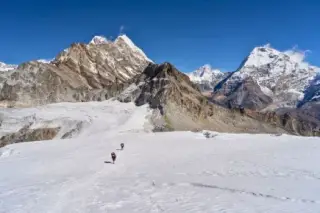
The highest point in the Manaslu Circuit with the Tsum Valley Trek is the Larkya La Pass, which can be reached by continuing the trek from the Tsum Valley. The pass, at 5,106 meters (16,752 feet), gives wide views of the surrounding mountains.
From the Larkya La the trail drops to Bimthang and Tilje, then reaches Dharapani, where a jeep takes you down to Besisahar.
The full Tsum Valley and Manaslu Circuit route covers roughly 180 kilometres (112 miles) of trail, less now that jeeps reach further up the valley. Swotah runs it in 22 days door to door from Kathmandu. The Tsum Valley on its own takes 12 to 19 days, depending on side trips.
Here is Swotah’s 22-day Manaslu Circuit with Tsum Valley itinerary.
Day 1: Arrive in Kathmandu (1,400 m)
Day 2: Kathmandu sightseeing
Day 3: Drive to Machha Khola (870 m)
Day 4: Trek to Jagat
Day 5: Trek to Philim (1,570 m)
Day 6: Trek to Chumling (2,386 m)
Day 7: Trek to Chhokangparo (3,010 m)
Day 8: Trek to Nile (3,361 m)
Day 9: Trek to Mu Gompa (3,700 m)
Day 10: Trek back to Chhokangparo (3,010 m)
Day 11: Trek to Lokpa (2,240 m)
Day 12: Trek to Deng (1,860 m)
Day 13: Trek to Namrung (2,630 m)
Day 14: Trek to Shyala (3,500 m)
Day 15: Trek to Samagaon (3,530 m)
Day 16: Trek to Samdo (3,875 m)
Day 17: Trek to Dharamsala (4,460 m)
Day 18: Cross the Larkya La (5,106 m) to Bimthang
Day 19: Trek to Tilje (2,300 m)
Day 20: Trek to Dharapani, drive to Besisahar (760 m)
Day 21: Drive to Kathmandu
Day 22: Departure
If you prefer to skip the Larkya La Pass and only explore the Tsum Valley, you can return via the same path you initially trekked, avoiding the need to complete the circuit. Swotah’s 19-day Tsum Valley trek does exactly that and finishes back at Arughat.
Tsum Only or Tsum With the Manaslu Circuit?
Both routes share the walk in along the Budhi Gandaki. The difference is what happens after Mu Gompa: you either walk back the way you came or carry on round Manaslu and over the Larkya La.
| Tsum Valley only | Tsum + Manaslu Circuit | |
|---|---|---|
| Swotah trip length | 19 days | 22 days |
| Start and finish | Arughat, out and back | Machha Khola to Besisahar |
| Highest point | Mu Gompa, about 3,700 m | Larkya La, 5,106 m |
| Permits | Tsum RAP, Manaslu RAP, MCAP | Tsum RAP, Manaslu RAP, MCAP, ACAP |
| Difficulty | Moderate | Challenging |
| Crowds | Quiet | Moderate crowds on the circuit |
| From | USD 1,750 | USD 1,975 |
What to See in the Tsum Valley
Tsum is a beyul, a hidden valley in Tibetan Buddhist tradition, and since 1920 its villages have kept the Shyagya, a local agreement that bans killing animals. You won’t see hunting or slaughter here, and meat is scarce on the menu.
- Mu Gompa (about 3,700 m): the valley’s highest monastery, close to the Tibetan border. The National Trust for Nature Conservation dates it to around 1895.
- Rachen Gompa (about 3,240 m): a nunnery in the Shiar Khola valley, where nuns still keep the daily chanting.
- Milarepa’s Cave (Piren Phu): a cliffside cave near Burji where Buddhists believe the poet-saint Milarepa meditated.
- Gumba Lungdang (about 3,200 m): a nunnery on the side trip toward Ganesh Himal base camp.
Tsum Valley Trek Accommodation
The Manaslu Circuit Tsum Valley trek often includes accommodation in lodges or teahouses. These simple lodging services are situated along the trail and provide essentials like meals, mattresses, and blankets. It pays to choose a reliable trekking company, because the quality of the accommodation varies. In upper Tsum, beds are in small lodges, homestays and monastery guesthouses at Mu Gompa and Rachen Gompa.
Accommodations can be decent in the larger settlements and more fundamental in the smaller and isolated villages. Pack a sleeping bag, toiletries and other essentials, and expect basic facilities.
Overall, it is vital to be prepared for basic accommodation facilities. And to bring your essential items to ensure a comfortable and safe stay during the Manaslu Circuit Tsum Valley trek.
Food and drinks
The Tsum Valley is located in a remote region of Nepal. So, food and drink availability may be limited compared to more urban areas of Nepal. However, there are still a variety of local dishes and drinks you can try while on the Tsum Valley trek.
Some local dishes that you may come across in the Tsum Valley include:
Dal Bhat
A traditional Nepali dish consisting of rice, lentil soup, and vegetables
Momos
Momo is a Nepali dumpling filled with vegetables or meat.
Thukpa
A Tibetan-style noodle soup with vegetables or meat
Sel roti
A traditional Nepali bread made from rice flour and shaped into a circular form.
Dhindo
A thick porridge made from millet, buckwheat, or corn flour.
Yak cheese
Made from the milk of yaks, which are a type of Himalayan mountain cow and often used in dishes like momos, sandwiches, and pasta
Tibetan bread
A flatbread from wheat flour cooked on a flat grill is often served with butter or cheese.
Higher up in Tsum, kitchens lean on tsampa, buckwheat bread, potatoes and butter tea. Because of the Shyagya ban on killing animals, meat is rare, so order vegetarian. For menu prices along the route, see our Manaslu food guide.
Breakfast is usually served between 7:00 and 8:00 in the morning. It typically includes a range of foods such as bread, oatmeal, eggs, and coffee or tea. Around noon, a main dish like daal bhat or a sandwich is often offered for lunch. Dinner is served in the evening and may consist of soup, spaghetti, or curries. Along with these meals, you will also have the chance to try some native snacks and drinks.
Along the way, you can also buy soft drinks, chocolate, and other food or refreshments.
Tea, coffee, and bottled water are among the beverages that are frequently on hand in the Tsum Valley. It is important to remember that the availability of particular meals and beverages may change based on the area and the season. Be ready to try new foods, because some places lack easy access to fresh produce.
Drinking plenty of water and having electrolyte tablets or powder on hand will help you maintain your hydration while on the trek. Tell your guide or trekking company about any dietary restrictions or allergies so they can make the proper preparations. Packing a few of your non-perishable snacks and supplements is a good idea.
Tsum Valley Trek difficulty
The Manaslu Tsum Valley trek is considered moderately difficult and requires excellent physical fitness and endurance. The expedition requires long hiking days, some lasting up to 7-8 hours. The trail has several steep ascents and descents and can be pretty rocky and irregular in some spots.
The altitude of Larkya La Pass and the chilly weather make this part of the trip very demanding. People prone to Altitude Sickness should watch out for this spot.
The Tsum Valley with Manaslu Circuit trek can be logistically tricky and physically demanding as it goes through secluded and remote locations. Trekkers should be ready for unforeseen delays caused by bad weather or other conditions.
Overall, hikers used to long days on the trail and with good endurance can take on the Tsum Valley with Manaslu Circuit trek. Climb slowly, use the nights at Mu Gompa and Samagaon to acclimatise, and follow your guide’s advice. Our Manaslu difficulty guide breaks down the hardest days.
Permits Required for Manaslu Tsum Valley Trek and Its Cost
Several permits are necessary for the Tsum Valley trek and the Manaslu Circuit. The Manaslu Conservation Area Project (MCAP) permit is one of the major permits. It costs a flat NPR 3,000 (about USD 20) per person, valid for the duration of your trek. No TIMS card is needed, because the restricted area permits below replace it. Restricted-area rules require a licensed guide and permits arranged through a registered trekking agency. Since 22 March 2026 one trekker can get the restricted area permit alone, but the guide is still required. Our guide to trekking Manaslu without a guide explains the rule.
Two restricted area permits apply. The Tsum Valley RAP costs USD 40 for the first 7 days from September to November and USD 30 from December to August, then USD 7 a day. The Manaslu RAP costs USD 100 for the first 7 days from September to November (then USD 15 a day) and USD 75 from December to August (then USD 10 a day). The stretch from Jagat to Lokpa lies inside the Manaslu restricted zone, so most agencies issue the Manaslu RAP even for a Tsum-only trek. Ask yours to confirm. If you finish over the Larkya La and exit through Dharapani, you also need the Annapurna Conservation Area Permit, NPR 3,000 (about USD 20). The 2026 Manaslu permit guide and our Nepal permits hub have the full fee tables.
A local Chumnubri Rural Municipality fee, reported at about NPR 1,000 to 2,000 per person, is also collected near Jagat. No official schedule is published, so check the amount when you book.
Fees can change with the season and with new rules, so check current costs with your agency before you go.
Is the Tsum Valley Trek Right for You?
The Manaslu Circuit with Tsum Valley trek is a long, demanding route through mountain scenery, Buddhist villages and rough trail. It suits fit hikers who are used to long days on foot. If three weeks is too much, the Tsum Valley on its own gives you the monasteries without the high pass. Climb slowly and give yourself time to acclimatise.
Tsum Valley Trek: FAQs
Do I need a guide for the Tsum Valley trek?
Yes. The Tsum Valley is a restricted area, so a licensed guide is mandatory and the permits are issued through a registered agency. Since March 2026 one trekker can get the permit alone, but still walks with a guide.
How many days does the Tsum Valley trek take?
The Tsum Valley on its own takes 12 to 19 days, depending on side trips. Combined with the Manaslu Circuit and the Larkya La, plan on about 22 days from Kathmandu.
Which permits do I need for Tsum Valley?
The Tsum Valley RAP, the Manaslu RAP for the Jagat to Lokpa stretch, and MCAP. Add ACAP if you exit over the Larkya La to Dharapani. You don’t need a TIMS card.
What is the highest point of the Tsum Valley trek?
Mu Gompa, at about 3,700 m, if you only do Tsum. On the combined route the Larkya La, at 5,106 m, is the high point.
When is the best time to trek Tsum Valley?
March to May and late September to November. Monsoon rain brings landslides to the Budhi Gandaki trail, and winter snow closes the Larkya La. Our month-by-month Manaslu guide covers each season.